Pioneer CDJ-3000 vs Denon SC6000: which is worth buying?
Last updated: September 9, 2026
The Pioneer CDJ-3000 and Denon SC6000 are both high-end professional players, but they take quite different approaches.
The Denon SC6000 offers more features in several areas: a 10.1-inch touchscreen, Dual Layer for playing two tracks simultaneously from one player, built-in Wi-Fi, streaming, optional internal storage, onboard track analysis and eight performance pads.
The CDJ-3000 offers a more familiar experience for most professional DJs, excellent build quality and the rekordbox and Pro DJ Link ecosystem commonly found in professional booths.
The price gap is substantial. Using August 2026 reference prices, approximately €1,250 for the SC6000 and €2,400 for the CDJ-3000 per unit, the Denon offers value that is difficult to match.
If you already use Engine DJ and know the Denon ecosystem, we would clearly choose the SC6000 for its features and price. If you want to practise and work with a setup similar to those commonly found in clubs and professional booths, we would choose the CDJ-3000.
Sounds Market Score
Pioneer CDJ-3000: 9.4/10
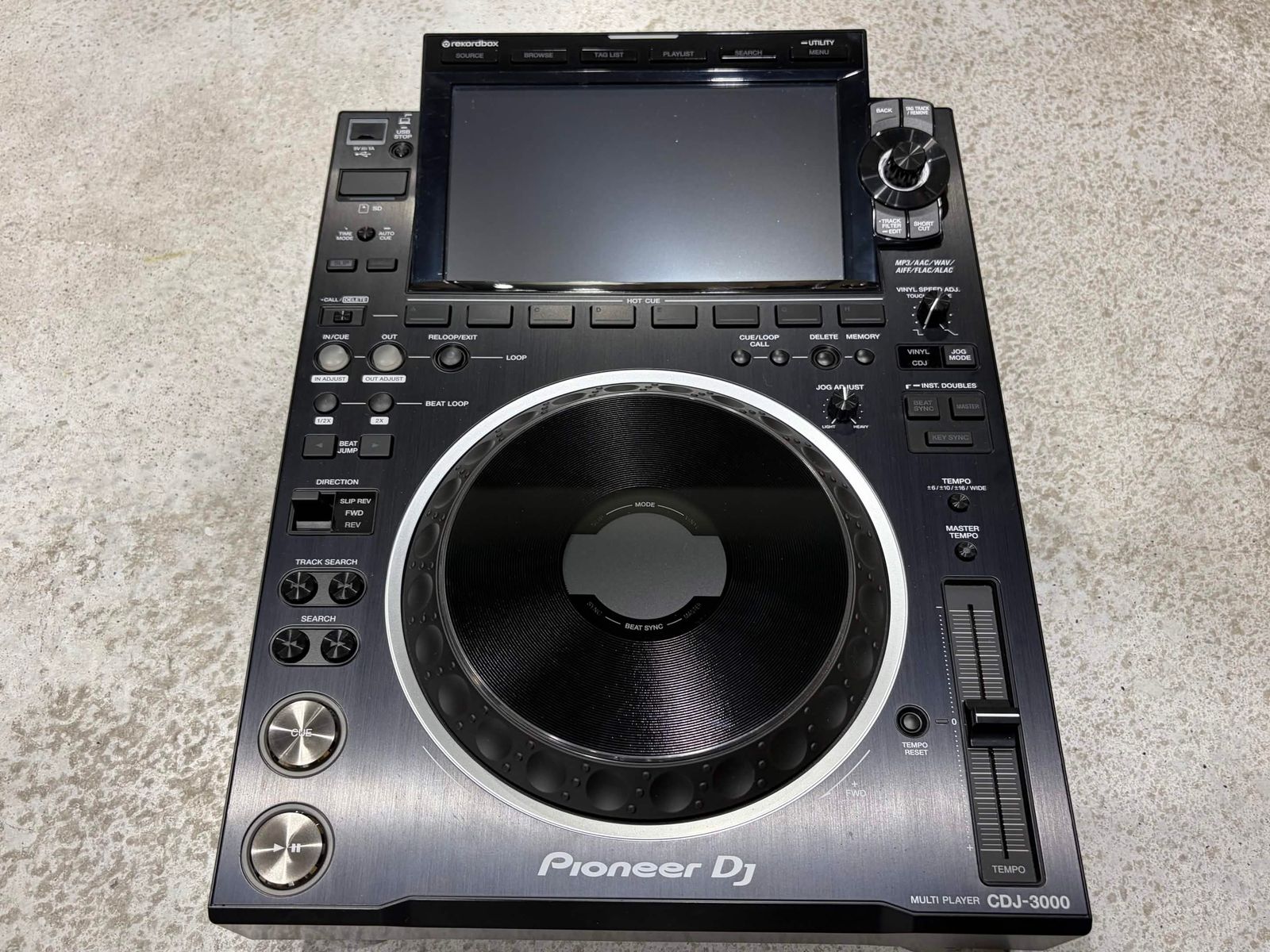
One of the most complete and solid professional players available. It stands out for its build quality, performance, rekordbox integration and widespread presence in professional booths. Its main disadvantage against the SC6000 is price. Some repairs and replacement parts can also be considerably more expensive than on earlier generations.
Denon SC6000: 9.1/10
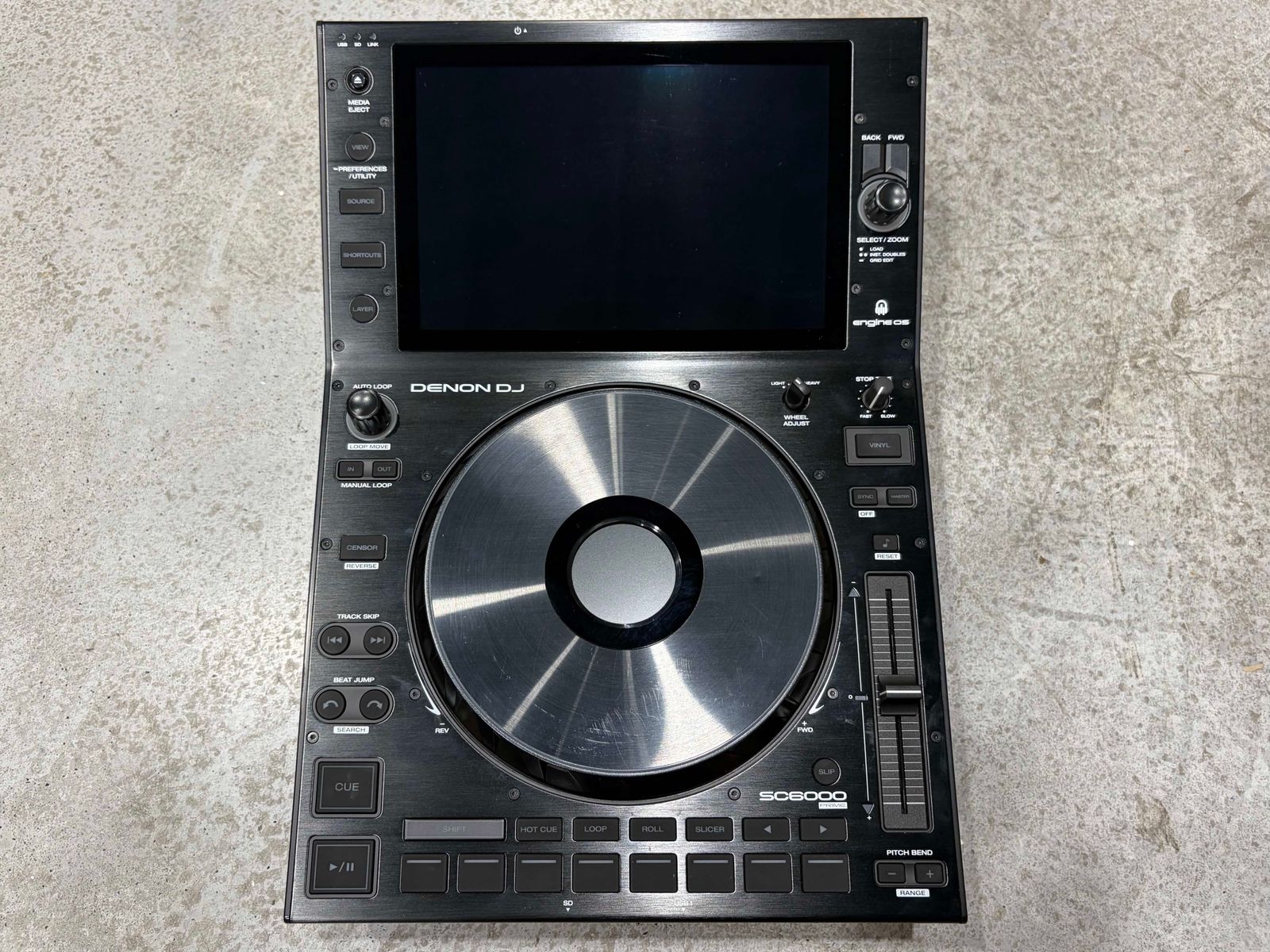
An exceptionally capable player with outstanding value for money. Dual Layer, a 10.1-inch screen, Wi-Fi, streaming, optional internal storage and standalone analysis give it an advantage over the CDJ-3000 in several areas. Its lower overall score mainly reflects our preference for Pioneer's construction, the more limited availability of Denon spare parts and its smaller presence in professional booths.
CDJ-3000 vs Denon SC6000: key differences
| Feature | Pioneer CDJ-3000 | Denon SC6000 |
|---|---|---|
| Screen | 9-inch touchscreen | 10.1-inch multitouch screen |
| Playback | One deck | Two decks with Dual Layer |
| Hot Cues / pads | Eight physical Hot Cue buttons | Eight performance pads |
| Built-in Wi-Fi | No | Yes |
| Standalone streaming | Yes, depending on service and configuration | Yes |
| Track analysis | rekordbox / supported functions | Directly on the player |
| Internal storage | No | Internal SATA bay |
| USB | Yes | Three USB ports |
| SD | Yes | Yes |
| Jog wheel | With central display | 8.5-inch with central display |
| Main software | rekordbox | Engine DJ / Engine OS |
| Pro DJ Link | Yes | No |
| Dual Layer | No | Yes |
| Best suited to | Professional and club environments | Features and value for money |
Screen and browsing
The Denon SC6000 has a 10.1-inch HD multitouch screen, compared with the CDJ-3000's 9-inch screen.
Beyond the size difference, Engine OS allows you to do a great deal directly on the player, including browsing libraries, managing playlists and analysing tracks that have not been analysed beforehand.
The CDJ-3000's 9-inch touchscreen offers functions such as Touch Preview, Touch Cue, Stacked Waveform and 3Band Waveform.
Both interfaces are fast and highly capable. Preference and familiarity matter here: a rekordbox and Pioneer DJ user will immediately recognise the CDJ-3000's workflow, while someone used to Engine DJ has a huge range of options directly on the SC6000.
Dual Layer: two decks in one player
This is probably one of the SC6000's biggest functional advantages.
Each SC6000 can play two different tracks simultaneously using Dual Layer. Each layer also has independent audio outputs, so you can send them to separate mixer channels.
In practice, this means you can control two decks from a single SC6000. The CDJ-3000 works as a traditional player, with one track per unit.
For DJs who use multiple decks, Dual Layer substantially changes the balance between cost, space and what a setup can do.
Performance pads and Hot Cues
The CDJ-3000 has eight physical Hot Cue buttons below the screen.
The SC6000 uses eight multifunction performance pads. Alongside Hot Cues, they provide creative functions such as loops, rolls and slices.
The different approaches are clear again. Pioneer keeps a recognisable layout optimised for the CDJ environment, while Denon offers something closer to the flexibility of modern controllers and performance systems.
If you use a lot of creative functions during a set, the SC6000 gives you more options directly from its pads.
Wi-Fi, streaming and internal storage
The SC6000 was designed from the outset as a connected player.
It has built-in Wi-Fi and wired network connectivity, allowing direct access to supported streaming services. It also provides three USB ports, an SD card reader and an internal SATA bay for an optional storage drive.
You can therefore keep a music library inside the player itself.
The CDJ-3000 has also gained cloud and streaming functions, but its architecture remains more closely tied to rekordbox and Pro DJ Link.
For a DJ who wants maximum flexibility in where their music comes from, the SC6000 is a particularly complete platform.
Track analysis
Another important difference is that the SC6000 can analyse tracks on the player itself.
Connect music that has not been analysed beforehand and Engine OS can generate the necessary information directly on the hardware. This gives you considerable freedom when working with libraries from different sources.
The Pioneer ecosystem works best when tracks have been prepared in rekordbox in advance. That is no problem for many professional DJs because they already prepare their libraries before a set, but Denon's approach offers greater independence from a computer.
Performance and speed
Both players are extremely fast.
The CDJ-3000 uses a dedicated MPU that brought a substantial performance improvement over earlier CDJ generations. The SC6000 runs Engine OS on a multicore platform and also offers very fast loading, browsing and analysis.
In our experience, the Denon SC6000 is a fast and capable player. We would not make speed the deciding factor: both have enough performance for virtually any professional use.
Engine DJ vs rekordbox
This is probably more important than many of the physical specifications.
The CDJ-3000 is deeply integrated with rekordbox and Pro DJ Link. The SC6000 runs Engine OS and uses Engine DJ for library preparation and management.
Both ecosystems let you prepare music, analyse tracks, create playlists and manage the information needed for a set.
However, rekordbox has an important advantage for many DJs: it is the environment they will commonly encounter when using Pioneer players in professional booths. Practising at home on CDJ-3000s means using much the same environment you will later find in many clubs.
With Denon, you need to get used to a different interface and workflow. That does not make Engine DJ worse. In some areas it offers more freedom and features, but it is a different ecosystem.
What actually changes when you are DJing?
The SC6000 gives you more ways to organise a set, particularly through Dual Layer and its performance pads. Its connectivity, internal storage options and onboard analysis also make it easier to work independently of a computer.
The CDJ-3000's advantage is familiarity: its controls, browsing and workflow resemble the setups commonly found in professional booths.
If you already use Denon and Engine DJ, that advantage largely disappears. If you are practising at home to work in clubs with Pioneer DJ equipment, we consider it an important factor.
Is there a difference in sound quality?
Both players offer professional audio quality.
The Denon SC6000 provides 24-bit/96 kHz digital output, while the CDJ-3000 also has an audio architecture designed for professional installations.
At Sounds Market, we would not use sound quality as the main reason to choose one over the other. The mixer, sound system and the rest of the audio chain have a major influence on the final result.
We consider features, ecosystem, construction, price and maintenance much more important in this comparison.
Build quality
In our experience, we prefer the CDJ-3000's construction and materials.
The SC6000 is a well-built professional player, but the Pioneer feels better to us in terms of certain components and overall construction.
That does not mean we consider the SC6000 a low-quality product. Quite the opposite: our overall opinion is very positive. In a direct comparison, however, we give the CDJ-3000 the advantage here.
Reliability: CDJ-3000 vs Denon SC6000
Pioneer CDJ-3000
Our experience with the CDJ-3000 is very positive. It is robust, uses good materials and is ageing well.
Spare parts availability is relatively good, although components cost more than on earlier Pioneer generations.
On some units we service the jog wheel bearings, and we pay particular attention to the touchscreen and the jog wheel's touch detection. Overall, we consider it a very reliable player.
Denon SC6000
Our overall assessment of the SC6000 is also positive. It is fast, powerful and packed with features.
One issue we have encountered on some units concerns jog wheel touch detection. Over time, certain units can stop detecting contact correctly, affecting normal operation.
This does not mean every SC6000 will develop the problem, but it is one of the points we check especially carefully when a used unit arrives.
The Sounds Market workshop's view
From a workshop perspective, there is an important difference between these ecosystems that a specification table usually misses: spare parts availability.
Pioneer DJ generally offers better component availability and a more developed repair network.
With Denon, obtaining certain parts can be considerably harder. We have encountered repairs that were technically straightforward but became difficult simply because the required part was hard to source. There are also fewer workshops accustomed to repairing Denon players.
At Sounds Market we work with both brands, but parts availability matters when buying a player you want to maintain for many years.
On the SC6000, we pay particular attention to jog wheel operation and sensitivity. On the CDJ-3000, we also check the bearings, jog touch detection and touchscreen operation.
We consider both players reliable overall, while currently giving Pioneer the advantage for construction, parts availability and ease of long-term maintenance.
Reference prices on the used market
Based on our experience of the used market, the August 2026 reference prices are approximately:
Denon SC6000: €1,250 per unit
Pioneer CDJ-3000: €2,400 per unit
Prices vary with condition, included accessories and market changes.
That means a difference of around €1,150 per player or €2,300 for a pair. It is a substantial gap.
Is the CDJ-3000 worth the extra money?
If we look only at features and price, no.
The Denon SC6000 offers even more possibilities in certain areas and costs almost half as much. At these reference prices, a pair of SC6000s costs around €2,500, compared with roughly €4,800 for a pair of CDJ-3000s.
The reasons to pay more for Pioneer lie elsewhere: construction, parts availability, rekordbox and, especially, familiarity with the setup commonly found in professional booths.
If you already know Engine DJ and do not need to replicate a Pioneer setup, the SC6000 offers exceptional value.
Which player do we recommend for you?
Buy the Denon SC6000 if...
- You want the best possible value for money.
- You already use Engine DJ.
- You want Dual Layer.
- You want a 10.1-inch touchscreen.
- You value built-in Wi-Fi and streaming.
- You want to install internal storage.
- You use performance pads and creative functions.
- You do not need to replicate a typical Pioneer booth exactly.
- You want extensive features for considerably less money.
Buy the Pioneer CDJ-3000 if...
- You want to use rekordbox.
- You want to practise with a setup similar to those commonly found in clubs.
- You prioritise build quality.
- Spare parts availability and long-term support matter to you.
- You already know how Pioneer CDJs work.
- You work professionally in different booths.
- Budget is not your main deciding factor.
Comparison ratings
The category ratings are relative to the models compared in this guide. The Sounds Market Score represents our overall assessment of the product and remains independent of the comparison.
| Category | Pioneer CDJ-3000 | Denon SC6000 |
|---|---|---|
| Features | 9/10 | 10/10 |
| Reliability | 9.5/10 | 8.5/10 |
| Build quality | 9.5/10 | 8.5/10 |
| Value for money | 7.5/10 | 10/10 |
| Professional / club use | 10/10 | 8/10 |
| Sounds Market Score | 9.4/10 | 9.1/10 |
The Sounds Market Score is an overall editorial rating and does not necessarily equal the arithmetic mean of the categories above.
What other comparisons often miss
Dual Layer changes the amount of hardware you may need. A single SC6000 can play two tracks simultaneously and send them to separate mixer channels. Its value goes beyond having one extra feature.
The CDJ-3000's professional presence has practical value. Learning and practising with a widely established ecosystem brings benefits that a specifications table cannot capture.
Parts availability can determine whether a repair is practical. A Denon repair may be complicated by sourcing the component, even when the fault itself is not particularly complex.
The SC6000 can cost roughly half as much on the used market while offering more in several areas. More features do not automatically make it the right player for everyone, but if you already feel comfortable with Engine DJ, spending over €2,000 extra on a pair of CDJ-3000s is difficult to justify on features alone.
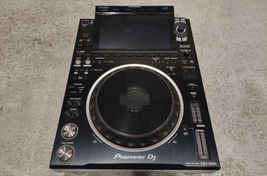
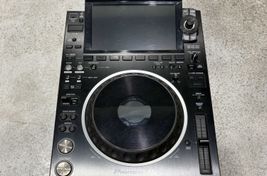
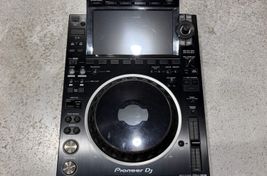
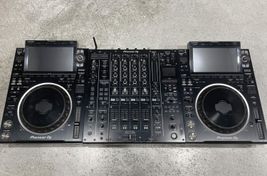
Pioneer CDJ 3000 currently available
See all ->
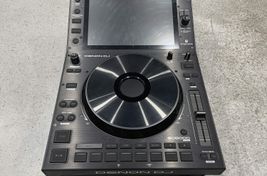
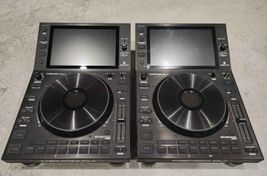
Denon SC6000 currently available
See all ->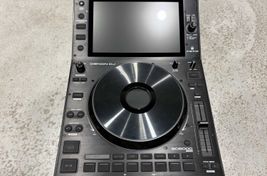
Frequently asked questions
Is the Denon SC6000 better than the Pioneer CDJ-3000?
It depends on what you mean by better. The SC6000 offers more features in several areas and clearly better value for money. The CDJ-3000 stands out for construction, its professional ecosystem, spare parts availability and presence in DJ booths.
Why is the Denon SC6000 much cheaper than the CDJ-3000?
Used prices depend on more than specifications. Demand, professional adoption, ecosystem and resale value all have a considerable influence. Pioneer remains particularly sought after in the professional DJ market.
Can a Denon SC6000 play two tracks at once?
Yes. Dual Layer lets one SC6000 play two tracks simultaneously, with independent outputs for each layer.
Do I need two Denon SC6000s to DJ with two channels?
Not necessarily. One SC6000 can control two playback layers. However, two units provide independent physical controls and a more traditional experience.
Does the Denon SC6000 have Wi-Fi?
Yes. It has built-in Wi-Fi and can access supported streaming and cloud services directly.
Can I store music inside the Denon SC6000?
Yes. The SC6000 has an internal SATA bay for a compatible storage drive, allowing you to keep a library inside the player.
Can the SC6000 analyse tracks without a computer?
Yes. Engine OS can analyse files directly on the player, so you do not have to process every track in Engine DJ beforehand.
Which is more reliable?
Our experience is positive with both. We give the CDJ-3000 the advantage for build quality, parts availability and ease of long-term maintenance. On some SC6000 units, we have encountered jog wheel touch detection issues.
Which is better for practising before playing in clubs?
If your aim is to become familiar with the setup commonly found in professional booths, we recommend the CDJ-3000 and rekordbox.
Which would we buy for value for money?
The Denon SC6000. At the August 2026 reference price of around €1,250 per unit, it offers exceptional features and a balance of functionality and price that is hard to match among professional players.
Thinking of upgrading your equipment?
If you own a Pioneer CDJ-3000, Denon SC6000 or other DJ equipment, you can sell it directly to Sounds Market or trade it in towards your next purchase.
Conclusion: Pioneer CDJ-3000 or Denon SC6000?
There is no outright winner because each player excels in different areas.
Looking solely at features and value for money, our choice is the Denon SC6000. At the August 2026 reference price of approximately €1,250 per unit, it offers a 10.1-inch screen, Dual Layer, performance pads, Wi-Fi, streaming, optional internal storage and onboard track analysis.
The Pioneer CDJ-3000 reference price is approximately €2,400 per unit, almost twice as much. What justifies the extra cost?
The CDJ-3000's value goes beyond its specifications. It offers excellent build quality, better spare parts availability and, above all, the ecosystem commonly used in professional booths.
If you already use Engine DJ, are comfortable with Denon and want the most features for your money, we would clearly choose the SC6000.
If you want to practise with the type of setup you will commonly use when working in clubs, prioritise build quality and long-term support, or simply want to stay with rekordbox, we would choose the CDJ-3000.
Best for features: Denon SC6000
Best value for money: Denon SC6000
Best build quality: Pioneer CDJ-3000
Best spare parts availability: Pioneer CDJ-3000
Best for getting familiar with professional booths: Pioneer CDJ-3000
Our choice if you already use Engine DJ: Denon SC6000
Our choice for professional and club use: Pioneer CDJ-3000