Pioneer XDJ-1000MK2 vs AlphaTheta CDJ-1500X: is the extra cost worth it?
Last updated: September 16, 2026
The Pioneer XDJ-1000MK2 and AlphaTheta CDJ-1500X are not direct predecessor and successor models, but they represent two quite different approaches to a DJ player.
The XDJ-1000MK2 belongs to the classic Pioneer DJ generation: rekordbox, Pro DJ Link, a full-size jog wheel and a workflow relatively close to the professional club players of its era.
The CDJ-1500X represents AlphaTheta's new direction. It adds a 10.1-inch capacitive screen, eight physical Hot Cue buttons, Wi-Fi, USB-C, streaming, cloud libraries, NFC and CoBeat compatibility.
It is clearly more modern and technologically capable, but we do not think that automatically makes it a better player.
Using September 2026 reference prices, approximately €1,000 to €1,100 for a used XDJ-1000MK2 and €1,600 to €1,700 for the CDJ-1500X, the difference is around €600 per unit.
For home use, mainly with USB libraries prepared in rekordbox and without needing the new connectivity, the XDJ-1000MK2 still looks like an excellent buy.
If you want a much larger screen, physical Hot Cues, streaming, cloud access and AlphaTheta's new connectivity, the CDJ-1500X clearly offers more possibilities.
Sounds Market Score
Pioneer XDJ-1000MK2: 8.3/10
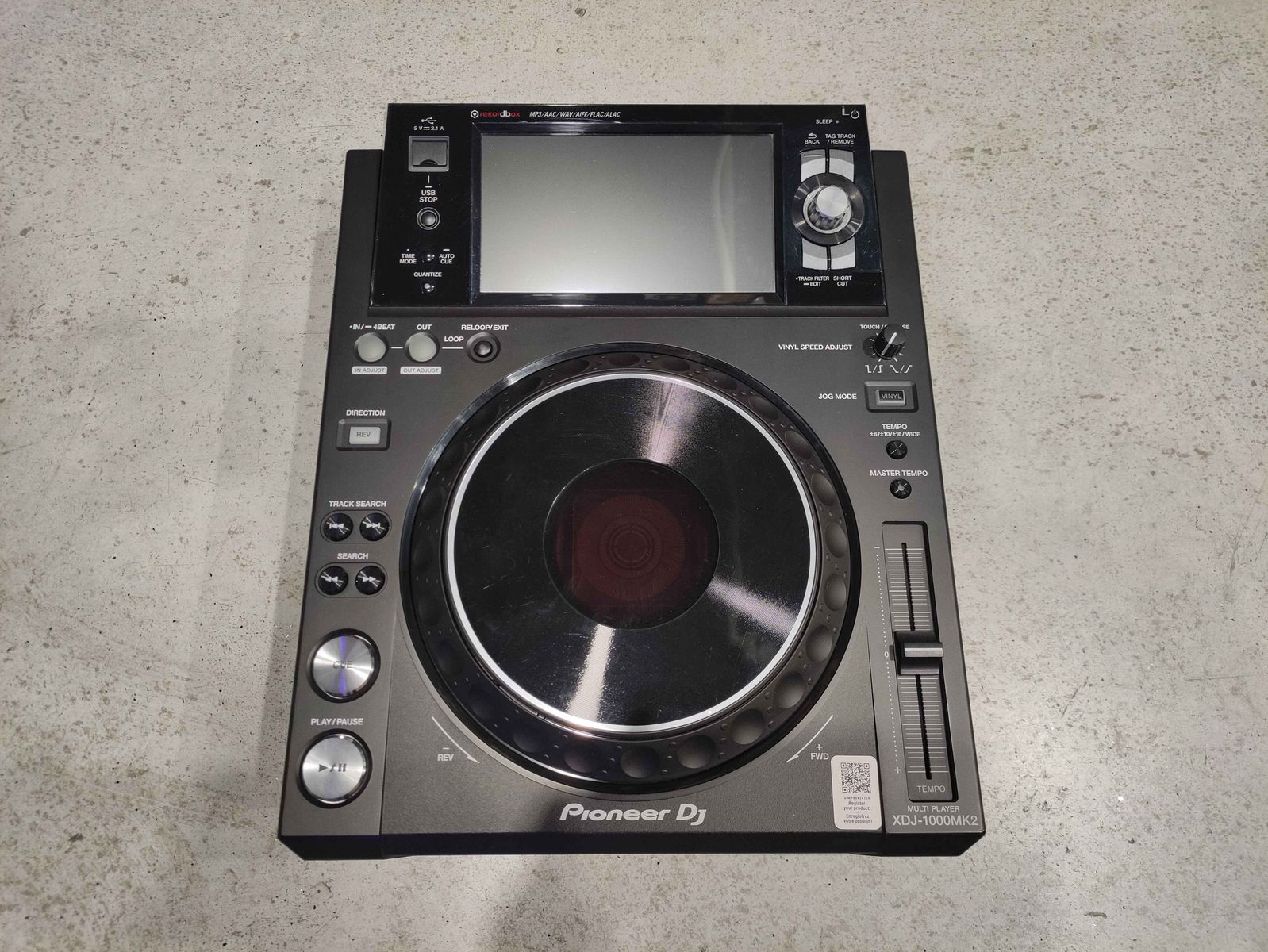
A player that continues to offer a very solid DJ experience. Its full-size jog wheel, Pro DJ Link, rekordbox integration and well-established workflow keep it appealing on the used market. Its main limitations are reliance on the touchscreen for certain functions and connectivity that is beginning to show its age.
AlphaTheta CDJ-1500X: 8.3/10
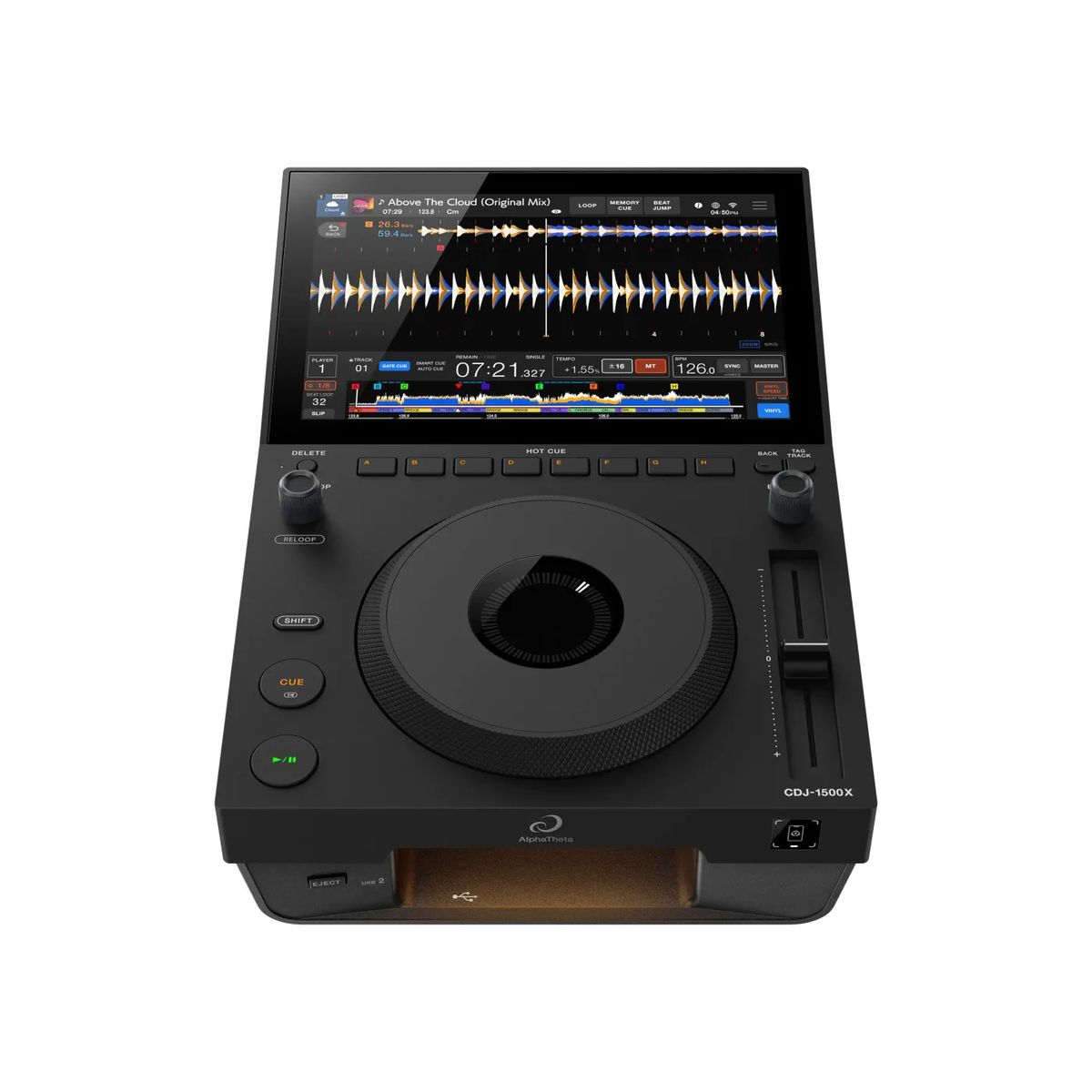
A considerably more modern player, with a large screen, eight physical Hot Cue buttons, greater processing power and major connectivity improvements. However, we do not see every design decision as an improvement to the DJ experience. We prefer the XDJ-1000MK2's full-size jog and some aspects of its workflow, while Song Request does not particularly suit our approach to a set. The CDJ-1500X also still needs to prove its long-term reliability and durability.
Pros and cons
Pioneer XDJ-1000MK2
Pros
- Full-size jog wheel.
- Classic Pioneer DJ workflow.
- Pro DJ Link.
- Excellent rekordbox integration.
- Well-established platform.
- Good value on the used market.
- Around €600 less per unit.
Cons
- Many functions rely on the touchscreen.
- No dedicated physical Hot Cue buttons.
- Only a 7-inch screen.
- No built-in Wi-Fi, streaming or cloud playback.
- Previous-generation USB connectivity.
AlphaTheta CDJ-1500X
Pros
- 10.1-inch capacitive screen.
- Eight physical Hot Cue buttons.
- Much more modern processing.
- Built-in Wi-Fi.
- Streaming and cloud access.
- USB-C.
- NFC login.
- CoBeat.
- Much more modern connectivity.
Cons
- Smaller jog wheel.
- Around €600 more per unit.
- Some new functions may be unnecessary for a traditional DJ.
- We find the protected USB position less convenient for quick DJ changeovers.
- Too recent to assess long-term reliability.
- Greater electronic complexity may make some repairs more expensive.
XDJ-1000MK2 vs CDJ-1500X: key differences
| Feature | XDJ-1000MK2 | CDJ-1500X |
|---|---|---|
| Screen | 7-inch touchscreen | 10.1-inch capacitive screen |
| Jog wheel | Full-size | Medium-size |
| Hot Cues | Eight via touchscreen | Eight physical buttons |
| Pro DJ Link | Yes | Yes |
| Wi-Fi | No | Yes |
| Streaming | No | Apple Music / Beatport / TIDAL |
| Cloud | No | Dropbox / Google Drive |
| NFC | No | Yes |
| CoBeat | No | Yes |
| USB storage | USB-A | USB-A + USB-C |
| Computer connection | USB-B | Dedicated USB-C |
| Reference price, September 2026 | €1,000 to €1,100 used | €1,600 to €1,700 |
| Best suited to | Traditional workflow / price | Connectivity / new functions |
Two generations, two different approaches
Although they are not a direct predecessor and successor, these players make an interesting comparison because they represent different stages of Pioneer DJ and AlphaTheta.
The XDJ-1000MK2 belongs to a generation built mainly around preparing music in rekordbox, connecting a USB device and using Pro DJ Link.
It already relied more heavily on the screen than players such as the CDJ-2000NXS2, but retained key elements of that approach: a full-size jog and a recognisable experience for DJs used to Pioneer booths.
The CDJ-1500X takes a different direction. Larger screens, Wi-Fi, streaming, cloud, NFC and new ways to access music turn it into a much more connected platform.
Library management also changes. The CDJ-1500X uses rekordbox's OneLibrary architecture. USB devices prepared only in the old Device Library format must be converted to OneLibrary using an up-to-date version of rekordbox before use with this player.
For some DJs, this is an obvious step forward. For others, each additional layer of assistance and connectivity moves the experience away from the traditional process of preparing and performing a set.
At Sounds Market, we do not think more technology necessarily creates a better DJ experience.
Screen and physical controls
This is one of the clearest improvements on the CDJ-1500X.
The XDJ-1000MK2 has a 7-inch touchscreen and moves many functions that traditionally had physical controls into that interface.
The CDJ-1500X increases the size to 10.1 inches, allowing much more information during browsing and playback. It also brings back important physical controls.
Both players provide eight Hot Cues. On the XDJ-1000MK2 you access them through the screen; the CDJ-1500X has eight dedicated physical buttons.
We consider that a meaningful improvement. Physical Hot Cue controls support muscle memory and reduce the need to keep interacting with the screen.
Jog wheel: we prefer the XDJ-1000MK2
Jog size can be easy to overlook in a specifications comparison.
The XDJ-1000MK2 has a full-size jog, close to the professional CDJs of its generation. The CDJ-1500X uses a medium-size jog to create a more compact player.
That does not mean the CDJ-1500X's jog works badly. We simply prefer the size and physical feel of the XDJ-1000MK2.
It also illustrates the changing priorities: the newer model has a much larger screen and many more digital functions, but reduces the size of a central physical control.
Connectivity, streaming and cloud
The generational jump is substantial here.
The CDJ-1500X has Wi-Fi and StreamingDirectPlay for direct access to services including Apple Music, Beatport Streaming and TIDAL. CloudDirectPlay provides access to libraries stored using Dropbox and Google Drive.
It also adds USB-C and NFC login using a compatible smartphone. Separate USB-C connections for storage and computer use modernise this area considerably compared with the XDJ-1000MK2's USB-B connection.
The XDJ-1000MK2 follows a more traditional approach: prepare your library in advance and work mainly with USB and rekordbox.
Some DJs see access to a vast amount of music from almost anywhere as a major advantage. Others prefer to prepare and limit the collection they will use during a set.
There is no universal answer. It depends on how you approach music selection.
The new USB position: protected, but less accessible
AlphaTheta has moved the USB storage connection to a protected area beneath the CDJ-1500X's jog.
We understand the reasoning. A device is less exposed than when it sticks out of the top of a player, reducing the chance of an accidental knock during a set.
Having used this type of layout, however, we are not fully convinced. The port is more concealed, harder to see when inserting a device and less convenient to access quickly.
That matters especially during DJ changeovers or back-to-back sets, when someone else may be working around the player while you need to connect or remove a USB device.
We see the protection benefit, but prefer the more direct access of earlier generations.
CoBeat and Song Request: a divisive choice
CoBeat compatibility is one of the CDJ-1500X's most striking additions.
Its Song Request function lets audience members send track requests to the DJ from a smartphone. It is a feature that has prompted debate.
For years, “No song requests, please” has been a familiar phrase around DJ booths. Anyone who has played in clubs, bars or at events will probably recognise the experience of someone repeatedly approaching to ask for a track.
It is curious to see AlphaTheta turn that interaction into a function within the player's ecosystem.
Technologically it is interesting, and it can make sense at weddings, private events or certain bars. It also shows an aspect of AlphaTheta's new direction that will not appeal to everyone.
For many DJs, music selection is central to the identity and narrative of a set. Integrating requests into the ecosystem represents a different view of the relationship between DJ and audience.
At Sounds Market, we would not buy a CDJ-1500X for this feature. For our style of DJing, we would probably leave Song Request disabled most of the time.
What actually changes when you are DJing?
If you prepare music in rekordbox and mainly use USB playback, Play/Cue, pitch, jog, loops and browsing, the XDJ-1000MK2 still covers much of what you need.
The CDJ-1500X starts to justify its price when you use its additions: physical Hot Cues improve interaction, the screen shows more information, and streaming and cloud change access to music. Wi-Fi, NFC and USB-C modernise the workflow, supported by a much newer processing platform.
If you will continue with prepared USB music, converting the library to OneLibrary where needed for the CDJ-1500X, and do not need those extras, the additional €600 is harder to justify.
Reliability and the Sounds Market workshop's view
The XDJ-1000MK2 has been on the market for years. We know how it ages, understand its construction and have experience repairing this generation. Our overall experience is positive, and it is mechanically relatively simple.
We cannot yet give the same assessment of the CDJ-1500X. It is too new to identify recurring faults or know how its components will behave after years of professional use.
That does not mean we expect it to be unreliable. It still needs to prove itself.
As with newer generations of electronic equipment generally, greater integration of screens, connectivity and processing may make certain repairs more complex and expensive.
We will need more time to see how the CDJ-1500X ages in practice.
Reference prices
Approximate reference prices for September 2026:
XDJ-1000MK2: €1,000 to €1,100 used
CDJ-1500X: €1,600 to €1,700
The CDJ-1500X has very little used-market presence yet because it is so recent.
The gap is approximately €600 per player, or €1,200 for a two-player setup.
Is the CDJ-1500X worth the extra money?
Yes, if you will actually use what it offers.
The 10.1-inch screen, physical Hot Cue buttons, USB-C, Wi-Fi, streaming and cloud are significant improvements. Its hardware and processing also belong to a much newer generation.
We would not spend an extra €600 simply because it is newer.
For home use, mainly with USB libraries prepared in rekordbox, the XDJ-1000MK2 still offers excellent value. If you want AlphaTheta's new ecosystem and will use streaming, cloud and the additional connectivity, the CDJ-1500X makes a stronger case for the difference.
Which should you choose?
Buy the XDJ-1000MK2 if...
- You mainly use USB libraries prepared in rekordbox.
- You do not need streaming or cloud.
- You prefer a full-size jog wheel.
- You like the Pioneer DJ workflow of that generation.
- You want a well-established platform.
- You want to spend around €600 less per unit.
Buy the CDJ-1500X if...
- You want a considerably larger screen.
- You want eight physical Hot Cue buttons.
- You want Wi-Fi and USB-C.
- You use streaming services.
- You want access to cloud libraries.
- You value NFC and the new connection options.
- You want to move into AlphaTheta's new generation.
Comparison ratings
Category ratings are relative to the models in this guide. The Sounds Market Score represents our overall product assessment and remains independent of the comparison.
| Category | XDJ-1000MK2 | CDJ-1500X |
|---|---|---|
| Features | 8/10 | 9.5/10 |
| Screen / browsing | 8/10 | 10/10 |
| Physical controls | 7.5/10 | 9/10 |
| Jog / physical experience | 9.5/10 | 8/10 |
| Connectivity | 7.5/10 | 10/10 |
| Traditional DJ workflow | 9/10 | 8/10 |
| Proven reliability | 9/10 | 7.5/10* |
| Value for money | 9/10 | 8/10 |
| Sounds Market Score | 8.3/10 | 8.3/10 |
*The CDJ-1500X rating mainly reflects insufficient long-term history, rather than known reliability problems.
The Sounds Market Score is an overall editorial rating and does not necessarily equal the arithmetic mean of these categories.
An 8.3/10 for both does not mean they are technologically equivalent. The CDJ-1500X is clearly more advanced. The XDJ-1000MK2 earns its score through a different balance of physical experience, workflow, value and proven reliability.
What other comparisons often miss
Both players have eight Hot Cues. The significant difference is the CDJ-1500X's dedicated physical controls.
The XDJ-1000MK2 has the larger jog and a proven history. We prefer its physical feel, and years of real use tell us how it ages and can be repaired.
A protected USB port is not necessarily easier to use. We find the CDJ-1500X's position less accessible during quick changeovers and back-to-back sets.
The CDJ-1500X does much more, but whether you want those functions is a separate question. Streaming and cloud offer huge possibilities without necessarily replacing everyone's preference for preparing and carrying music traditionally. Song Request can suit certain events, although it does not particularly match our approach to DJing.
Pioneer XDJ 1000MK2 currently available
See all ->
Frequently asked questions
Is the CDJ-1500X better than the XDJ-1000MK2?
It is much more advanced technologically, with considerably more modern connectivity. For a DJ who mainly uses USB libraries prepared in rekordbox, values a full-size jog and wants good value, the XDJ-1000MK2 can still be the more sensible buy.
Does the CDJ-1500X replace the XDJ-1000MK2?
They are not officially direct predecessor and successor models. We compare them because they are interesting alternatives for someone seeking a standalone player below flagship level.
Which has the larger jog wheel?
The XDJ-1000MK2 has a full-size jog wheel. The CDJ-1500X uses a medium-size jog.
Does the XDJ-1000MK2 have Hot Cues?
Yes. It provides eight Hot Cues through the touchscreen. The CDJ-1500X has eight dedicated physical buttons.
Does the CDJ-1500X work with Spotify?
As of the September 2026 review, no. The services announced for StreamingDirectPlay are Apple Music, Beatport Streaming and TIDAL.
What is CoBeat?
It is a platform offering new ways for DJs and audiences to interact. One function is Song Request, which lets listeners send track requests to the DJ from a smartphone.
Which is more reliable?
We have a much longer track record with the XDJ-1000MK2, and we’d particularly highlight its excellent durability and reliability. The CDJ-1500X is too recent for a responsible assessment of its long-term reliability.
Which would we buy?
For home use, mainly from USB, with value as a priority and no need for the new functions, we would choose the XDJ-1000MK2.
If we wanted the 10.1-inch screen, physical Hot Cue buttons, streaming, cloud and AlphaTheta's new connectivity, we would choose the CDJ-1500X.
Thinking of upgrading your equipment?
If you own an XDJ-1000MK2, a CDJ or other DJ equipment, you can sell it directly to Sounds Market or trade it in towards your next purchase.
Conclusion: XDJ-1000MK2 or CDJ-1500X?
The CDJ-1500X is clearly more advanced. It has a much larger screen, physical Hot Cue buttons, greater processing power, Wi-Fi, USB-C, streaming and cloud connectivity beyond what the XDJ-1000MK2 offers.
We would still base the decision on more than the number of features.
At the September 2026 reference price of approximately €1,000 to €1,100 used, the XDJ-1000MK2 remains excellent for playing from USB. It retains a full-size jog wheel and belongs to a Pioneer DJ generation whose workflow we still enjoy.
At approximately €1,600 to €1,700, the CDJ-1500X offers much more technologically, while representing an AlphaTheta approach centred more on the screen, connectivity and online services.
We do not consider every part of that approach an improvement. We still prefer the XDJ-1000MK2's full-size jog, and neither the new USB position nor Song Request particularly appeals to us.
For some DJs, the CDJ-1500X will be exactly what they wanted. For others, the XDJ-1000MK2 may remain the simpler experience, closer to classic Pioneer DJ.
That is why our overall score is the same, although for very different reasons.
More modern: CDJ-1500X
Better screen: CDJ-1500X
Better connectivity: CDJ-1500X
Better Hot Cue controls: CDJ-1500X
Better for streaming and cloud: CDJ-1500X
Our preferred jog wheel: XDJ-1000MK2
Closer to classic Pioneer DJ: XDJ-1000MK2
More established reliability: XDJ-1000MK2
Better value for mainly USB use: XDJ-1000MK2
Better for exploring AlphaTheta's new possibilities: CDJ-1500X
Sounds Market Score: XDJ-1000MK2: 8.3/10 | CDJ-1500X: 8.3/10
Our choice for home use when we do not need the new functions: XDJ-1000MK2.