Pioneer XDJ-700 vs XDJ-1000MK2: is it worth paying almost twice as much?
Last updated: September 17, 2026
The Pioneer DJ XDJ-700 and XDJ-1000MK2 have more in common than you might expect. Both have a 7-inch touchscreen, work with rekordbox, feature Pro DJ Link and give you touchscreen access to functions such as Hot Cues, loops, Quantize, Beat Sync and Slip Mode.
The main difference is how they feel to use.
The XDJ-700 is considerably smaller and lighter, with a compact jog wheel. It brings many professional player functions into a small footprint at a much lower price.
The XDJ-1000MK2 feels much closer to a professional CDJ, especially thanks to its full-size jog wheel. It also adds functions, better waveform displays, FLAC and ALAC support and a digital audio output.
Using August 2026 reference prices on the used market, the gap is substantial:
XDJ-700: around €600 per unit
XDJ-1000MK2: around €1,100 to €1,200 per unit
That is why we do not automatically recommend the XDJ-1000MK2.
If you want a home setup, mostly use core mixing functions and want the most from your budget, the XDJ-700 remains one of our favourites.
If you want a physical experience much closer to a professional CDJ and budget is less of a constraint, we would choose the XDJ-1000MK2.
Sounds Market Score
Pioneer DJ XDJ-700: 7.5/10
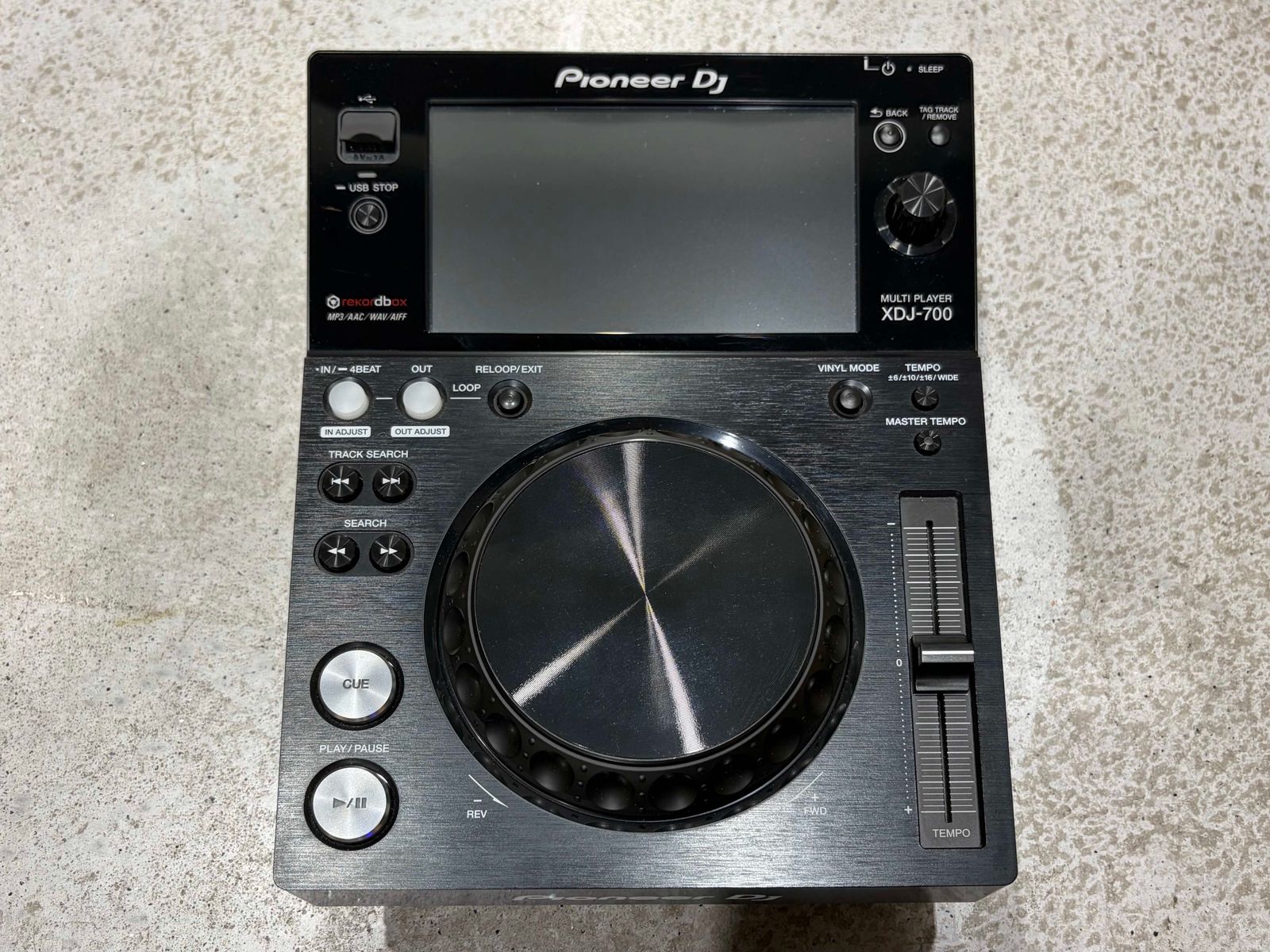
A compact, reliable player with an excellent balance of features and price on the used market. Its main limitations are the small jog wheel and a workflow that relies more heavily on the touchscreen.
Pioneer DJ XDJ-1000MK2: 8.3/10
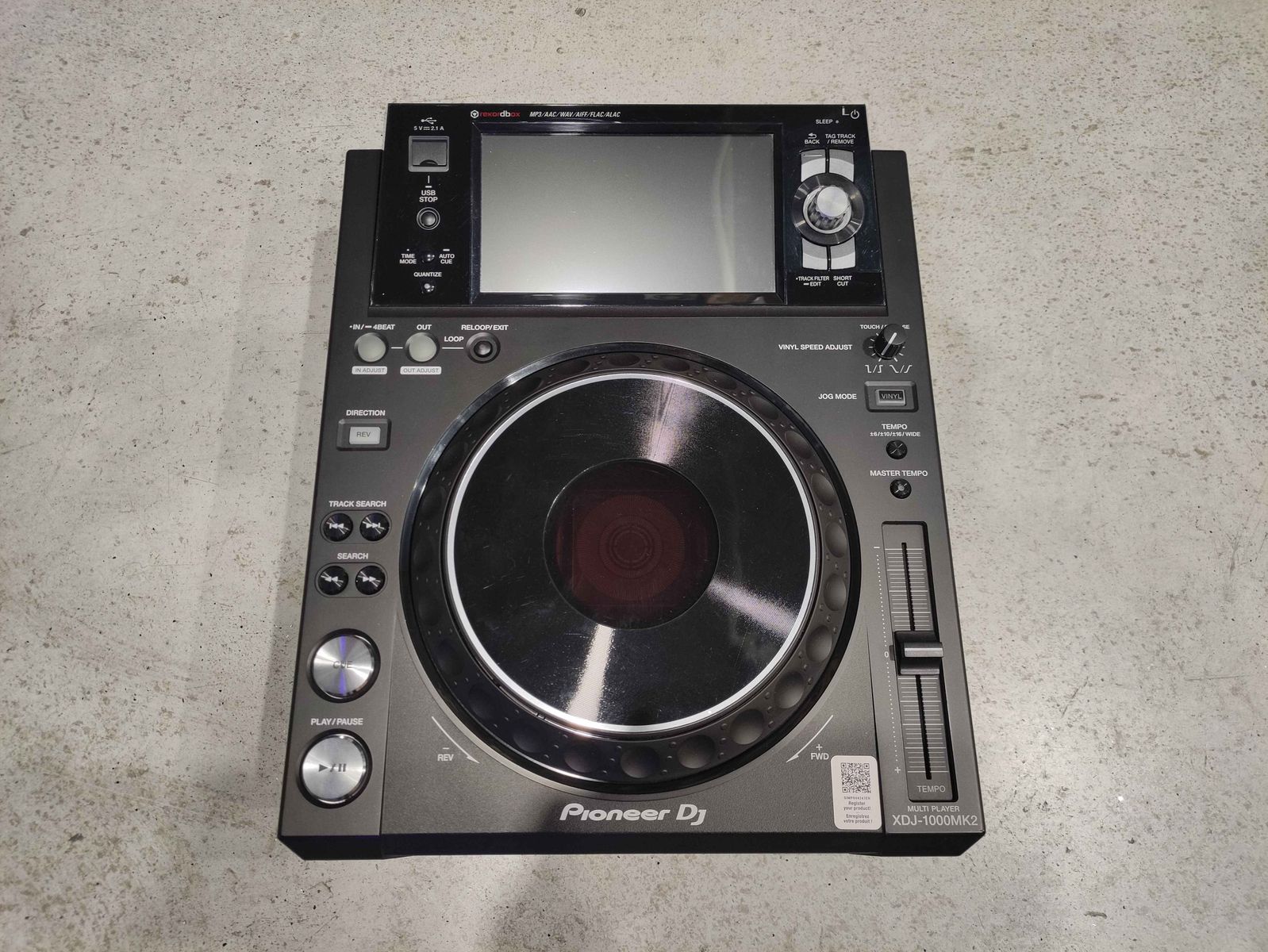
A very appealing alternative to traditional professional CDJs. Its full-size jog wheel, better displays and additional functions make the experience considerably closer to a CDJ-2000NXS2, although its used price is almost twice that of the XDJ-700.
Ratings breakdown
Category ratings are relative to the models in this comparison. The Sounds Market Score is our independent overall assessment of each product.
| Category | XDJ-700 | XDJ-1000MK2 |
|---|---|---|
| Features | 7.5/10 | 8.5/10 |
| Reliability | 9/10 | 9/10 |
| Value for money | 9/10 | 8/10 |
| Present-day professional use | 6.5/10 | 8/10 |
| Sounds Market Score | 7.5/10 | 8.3/10 |
The Sounds Market Score is an overall editorial rating based on our experience with each model. It does not necessarily equal the arithmetic mean of the categories above.
Pros and cons
XDJ-700
Pros
- Very competitive used price.
- Compact and lightweight.
- 7-inch touchscreen.
- Pro DJ Link.
- Hot Cues, loops, Quantize, Beat Sync and Slip Mode.
- Very good reliability in our experience.
- Ideal for home setups with limited space.
- Makes three- or four-player setups possible without a huge investment.
Cons
- Considerably smaller jog wheel.
- Only three Hot Cues.
- No direct FLAC or ALAC playback from USB.
- No digital output.
- Many functions rely on the touchscreen.
- No external jog tension adjustment.
- Feels less like a full-size professional CDJ.
XDJ-1000MK2
Pros
- Full-size 206 mm jog wheel.
- Feels much closer to a professional CDJ.
- 7-inch touchscreen.
- Eight Hot Cues.
- RGB waveform.
- FLAC and ALAC playback up to 24-bit/48 kHz.
- Coaxial digital output.
- Pro DJ Link.
- Very reliable in our workshop experience.
- More convenient for DJs who make extensive use of Hot Cues, loops and performance functions.
Cons
- Costs almost twice as much as a used XDJ-700.
- Still relies heavily on the touchscreen for functions that have dedicated physical controls on other CDJs.
- No external jog tension adjustment.
- Considerably larger and heavier.
Key differences: XDJ-700 vs XDJ-1000MK2
| Feature | XDJ-700 | XDJ-1000MK2 |
|---|---|---|
| Sounds Market Score | 7.5/10 | 8.3/10 |
| Approximate used price, August 2026 | €600 | €1,100 to €1,200 |
| Screen | 7-inch touchscreen | 7-inch touchscreen |
| Jog wheel | Compact | 206 mm / full-size |
| Jog Adjust | No | No |
| Hot Cues | Three | Eight |
| Waveform | Yes | More detailed RGB waveform |
| MP3 / AAC / WAV / AIFF | Yes | Yes |
| FLAC / ALAC from USB | No | Yes |
| Pro DJ Link | Yes | Yes |
| Beat Sync | Yes | Yes |
| Quantize | Yes | Yes |
| Slip Mode | Yes | Yes |
| RCA output | Yes | Yes |
| Coaxial digital output | No | Yes |
| USB-A | Yes | Yes |
| USB-B | Yes | Yes |
| LAN | Yes | Yes |
| Weight | 2.0 kg with stand | 3.7 kg |
| Dimensions | 238 × 307.8 × 106.3 mm | 305 × 382.5 × 110 mm |
The XDJ approach: fewer physical controls, more touchscreen functions
One of the fundamental differences between these players and a traditional professional CDJ is their design approach.
Both the XDJ-700 and XDJ-1000MK2 move a substantial share of their controls onto the touchscreen. Hot Cues, loops, Quantize and other performance tools are accessed through the interface, without requiring a dedicated physical button for every function.
This reduces the number of physical controls and, especially on the XDJ-700, the size of the player. It keeps much of the rekordbox ecosystem and workflow in a simpler, more affordable device.
There is a trade-off. If you constantly trigger Hot Cues, change loops during a mix or access performance functions, a 7-inch touchscreen can feel less immediate than dedicated physical controls.
For a more traditional mixing style, that difference may hardly matter.
The biggest difference: the jog wheel
For us, this is probably the most important practical difference between the two.
The XDJ-1000MK2 has a 206 mm jog wheel, the same size as the CDJ-2000NXS2's. The XDJ-700's jog wheel is considerably smaller, and you notice it.
If you only use the jog for small adjustments while manually beatmatching two tracks, the XDJ-700 does the job perfectly well.
If you are used to full-size professional players, the XDJ-1000MK2 feels much more familiar. There is more surface area to work with, and the overall feel is closer to a CDJ-equipped booth.
Neither has an external Jog Adjust control, so you cannot change jog resistance with a physical control as you can on certain professional CDJs.
In our experience, jog size is one of the main reasons to pay more for the XDJ-1000MK2.
Same screen size, different experience
Both players have a 7-inch colour touchscreen. Buying the XDJ-1000MK2 does not get you a physically larger screen.
The difference lies in the information and functions available.
The XDJ-1000MK2 inherited elements from the CDJ-2000NXS2, including a more detailed RGB waveform and additional browsing and search tools such as Track Filter and Matching.
It also supports up to eight Hot Cues, compared with three on the XDJ-700.
Despite the similar screen dimensions, the XDJ-1000MK2 is therefore more complete for DJs who work extensively with rekordbox and prepare their tracks in detail.
Audio formats: a difference that may matter
The XDJ-700 directly plays MP3, AAC, WAV and AIFF files.
The XDJ-1000MK2 adds FLAC and ALAC, with support up to 24-bit/48 kHz.
For DJs who work exclusively with MP3, WAV or AIFF, this may make no practical difference. If your library uses FLAC or Apple Lossless, however, the XDJ-1000MK2 is clearly the better choice.
It also has a coaxial digital output, which the XDJ-700 lacks. This allows a digital connection to compatible mixers, particularly useful in professional setups.
Size: a clear advantage for the XDJ-700
The XDJ-700's small size is one of its main strengths.
With its stand, it measures approximately 238 × 307.8 × 106.3 mm and weighs just 2 kg. The bottom stand is removable, reducing its height further.
The XDJ-1000MK2 measures 305 × 382.5 × 110 mm and weighs approximately 3.7 kg.
A setup with two, three or even four XDJ-700s therefore takes up considerably less space. For a bedroom, small studio or home booth where every centimetre counts, it may be more practical than the higher-end model.
Reliability and the Sounds Market workshop's experience
Both players perform particularly well here.
After inspecting numerous units of both models, we have not identified a serious, widespread fault that would make us wary of either one. In fact, we think both have aged well.
Their design also removes some of the parts found on other professional players that can add points of wear or failure. Neither has an optical CD drive or an external Jog Adjust mechanism.
On units that come through Sounds Market, we occasionally find wear on Play/Cue and other frequently used physical components, but nothing we consider particularly concerning.
The touchscreens have also held up well over the years. Although they are central to these players' operation, we are not seeing a significant volume of touchscreen failures.
Every used unit still needs to be inspected individually. Based on our workshop experience, however, reliability is a strong argument for buying either model refurbished.
Which feels closer to a professional CDJ?
The XDJ-1000MK2 has the clear advantage in ergonomics.
Its larger body and especially its 206 mm jog wheel make moving to or from a professional CDJ feel more natural. Its design drew on elements of the CDJ-2000NXS2.
The XDJ-700 prioritises compact dimensions. That does not make it worse for mixing, but it gives a different physical experience.
If you plan to practise at home before regularly playing in booths with full-size CDJs, the XDJ-1000MK2 has an important advantage.
Used prices change the comparison
If both cost about the same, our recommendation would be straightforward: the XDJ-1000MK2. But they do not.
The August 2026 used-market reference prices are:
XDJ-700: approximately €600 per unit
XDJ-1000MK2: approximately €1,100 to €1,200 per unit
A pair of XDJ-700s can therefore cost around €1,200, while two XDJ-1000MK2s can reach €2,200 to €2,400. The difference can exceed €1,000 per pair.
What you will actually do with the players matters here. For approximately the cost of two XDJ-1000MK2s, you are close to the budget for a four-player XDJ-700 setup.
For some DJs, having four decks can be more valuable than having two players with a larger jog wheel.
Who should choose the XDJ-700?
We would particularly recommend it if:
- Your budget is limited.
- You want two, three or four players.
- Space is limited.
- You mainly select tracks, beatmatch, make small jog adjustments and use loops.
- You do not need FLAC/ALAC.
- You do not need a digital output.
- You are happy to use the touchscreen for many functions.
- You want one of the most affordable ways into the standalone rekordbox workflow.
At the reference price of around €600 per unit, it is hard to ask for much more.
Who should choose the XDJ-1000MK2?
We would choose it if:
- You have more budget available.
- You want an experience closer to a professional CDJ.
- Jog wheel size matters to you.
- You use a lot of Hot Cues.
- You work with FLAC or ALAC.
- You want a digital output.
- You prepare your tracks extensively in rekordbox.
- You practise at home but regularly play on professional CDJs.
The price increase is substantial, but so is the improvement in ergonomics and feel.
Is the XDJ-1000MK2 worth the extra money?
That depends more on the DJ than on the specifications.
The XDJ-1000MK2 is objectively the more capable of the two, but it costs almost twice as much.
If your workflow mainly consists of loading tracks, beatmatching, making small jog adjustments and occasionally using loops, we would keep the XDJ-700 and save the difference. It is reliable, compact and offers many of the functions DJs actually use in conventional mixing.
If you use more performance tools, place a high value on jog size or want your home setup to feel physically closer to a professional booth, the XDJ-1000MK2 starts to justify its price.
We would pay the extra for the experience it offers, rather than simply because it is the higher model in the range.
What other comparisons often miss
Jog size changes the experience more than many specifications. The XDJ-700 mixes perfectly well, while the XDJ-1000MK2 feels more familiar to someone used to a professional booth.
The touchscreen has not proved a major weak point in our experience. Despite its central role, we are not seeing a significant number of failures across the units we inspect.
Simplicity also helps reliability. Neither player has an optical CD drive, and their design removes some mechanical parts and controls found on more complex professional players.
Even if you can afford the XDJ-1000MK2, the XDJ-700 may make more sense if you mainly load tracks, beatmatch and use basic loops. Paying almost twice as much may add little to your particular mixing style. The more capable player and the better buy for you are not always the same.
Pioneer XDJ 1000MK2 currently available
See all ->
Frequently asked questions
Do the XDJ-700 and XDJ-1000MK2 have the same screen?
Both have a 7-inch colour touchscreen. The XDJ-1000MK2 offers more advanced visualisation, including a more detailed RGB waveform and additional browsing functions.
Does the XDJ-1000MK2 have the same jog wheel as the CDJ-2000NXS2?
It has a 206 mm jog wheel, the same size as the CDJ-2000NXS2's. This helps it feel much closer to a professional CDJ.
Can you adjust the jog wheel tension?
No. Neither model has an external Jog Adjust control.
Does the XDJ-700 play FLAC files?
Not directly from USB. The XDJ-700 plays MP3, AAC, WAV and AIFF. The XDJ-1000MK2 adds FLAC and ALAC support.
Which is better for home use?
For most home setups on a limited budget, the XDJ-700 offers excellent value for money.
If you want to practise with a physical feel closer to the professional CDJs you will later encounter in DJ booths, we would choose the XDJ-1000MK2.
Are they reliable when bought used?
Based on our experience inspecting both models at Sounds Market, yes. We have not identified serious widespread problems, and the touchscreens have aged particularly well. The condition of the individual unit matters more than the model alone.
Which would we buy?
On a tight budget, the XDJ-700.
With sufficient budget and a preference for an experience closer to a professional CDJ, the XDJ-1000MK2.
Thinking of upgrading your equipment?
If you own an XDJ-700, XDJ-1000MK2 or other DJ equipment, you can sell it directly to Sounds Market or trade it in towards your next purchase.
Conclusion: XDJ-700 or XDJ-1000MK2?
The XDJ-1000MK2 is the more capable player in this comparison, but the XDJ-700 may be the better buy.
At the August 2026 reference price of around €600 per unit, the XDJ-700 offers a 7-inch touchscreen, Pro DJ Link, rekordbox, Hot Cues, Quantize, Beat Sync, Slip Mode and a very good reliability record in our workshop experience.
The XDJ-1000MK2 raises the bar with a full-size jog wheel, eight Hot Cues, better waveform displays, FLAC/ALAC, digital output and ergonomics much closer to a professional CDJ.
At a reference price of around €1,100 to €1,200 per unit, it remains an excellent player, but costs almost twice as much.
Our picks
Best value for money: XDJ-700
Best user experience: XDJ-1000MK2
Compact setup or three to four decks: XDJ-700
Preparation for a booth with professional CDJs: XDJ-1000MK2
Sounds Market Score: XDJ-700: 7.5/10 | XDJ-1000MK2: 8.3/10
The final decision should come down to which functions and physical differences you will actually use, rather than the number of features on the specifications sheet.