Which Technics SL-1200/1210 Is Best? MK2 vs M3D vs MK5 vs M5G vs MK7
Last updated: October 1, 2026
From the MK2 to the MK7, each generation has its strengths. We compare build, pitch, features, repairability and prices to help you choose a balanced classic, the premium M5G or the modern alternative.
For more than four decades, the Technics SL-1200/1210 family has been a benchmark in the DJ world. But buying a Technics today raises a question that is not always easy to answer: which version is actually worth buying?
The MK2, M3D, MK5 and M5G share much of Technics' legendary classic platform, while the MK7 introduces a much more modern generation, with a coreless motor and digital control.
After working on these generations in our workshop and spending years buying, selling and refurbishing Technics turntables, these are our recommendations.
Quick answer
If you just want to know which Technics to choose:
| What you want | Our choice |
|---|---|
| Best classic Technics | M5G |
| Best value classic | MK5 |
| Most iconic Technics | MK2 |
| An improved MK2 without paying MK5 prices | M3D |
| Best classic pitch control | M5G |
| Best Technics for home | MK7 |
| Best technology | MK7 |
| Best for certain club booths | MK2 / MK5 / M5G |
| Our classic choice | M5G |
| Most sensible purchase today | MK7 |
There is no single winner for every DJ.
For us, the M5G is the ultimate expression of the classic generation. The MK7 is the most technologically advanced option and probably the most sensible purchase today for home use.
Sounds Market Score
| Model | Sounds Market Score | Our assessment |
|---|---|---|
| SL-1200/1210MK2 | 9.4/10 | The original icon |
| SL-1200/1210M3D | 9.5/10 | The MK2 better adapted for DJs |
| SL-1200/1210MK5 | 9.6/10 | The best-balanced classic |
| SL-1200M5G | 9.7/10 | The most complete classic Technics |
| SL-1200/1210MK7 | 9.5/10 | The modern alternative |
The Sounds Market Score is our independent overall assessment of a product, based on its quality, construction, features, reliability, user experience, repairability and value within its category.
It is neither a ranking against the newest model nor an arithmetic average of its specifications. New releases do not automatically change existing scores.
So the fact that the M3D and MK7 both score 9.5 does not mean they are equivalent products or occupy the same generational position. They reach a similar overall assessment for different reasons.
The key differences at a glance
| Feature | MK2 | M3D | MK5 | M5G | MK7 |
|---|---|---|---|---|---|
| Generation | Classic | Classic | Classic | Premium classic | Modern |
| Direct Drive | ✓ | ✓ | ✓ | ✓ | ✓ |
| Coreless motor | - | - | - | - | ✓ |
| Pitch | ±8% | ±8% | ±8% | ±8 / ±16% | ±8 / ±16% |
| Centre pitch click | Yes | No | No | No | No |
| Pitch Reset | - | ✓ | ✓ | ✓ | ✓ |
| Anti-skating | 0-3 | 0-3 | 0-6 | 0-6 | 0-3 |
| Adjustable brake | - | - | ✓ | ✓ | ✓ |
| Reverse | - | - | - | - | ✓ |
| 78 rpm | - | - | - | - | ✓ |
| Detachable RCA cables | - | - | - | - | ✓ |
| Digital pitch control | - | - | - | - | ✓ |
| Approx. weight | 12.5 kg | ~12 kg | ~12 kg | ~12 kg | 9.6 kg |
MK2: the Technics that started it all
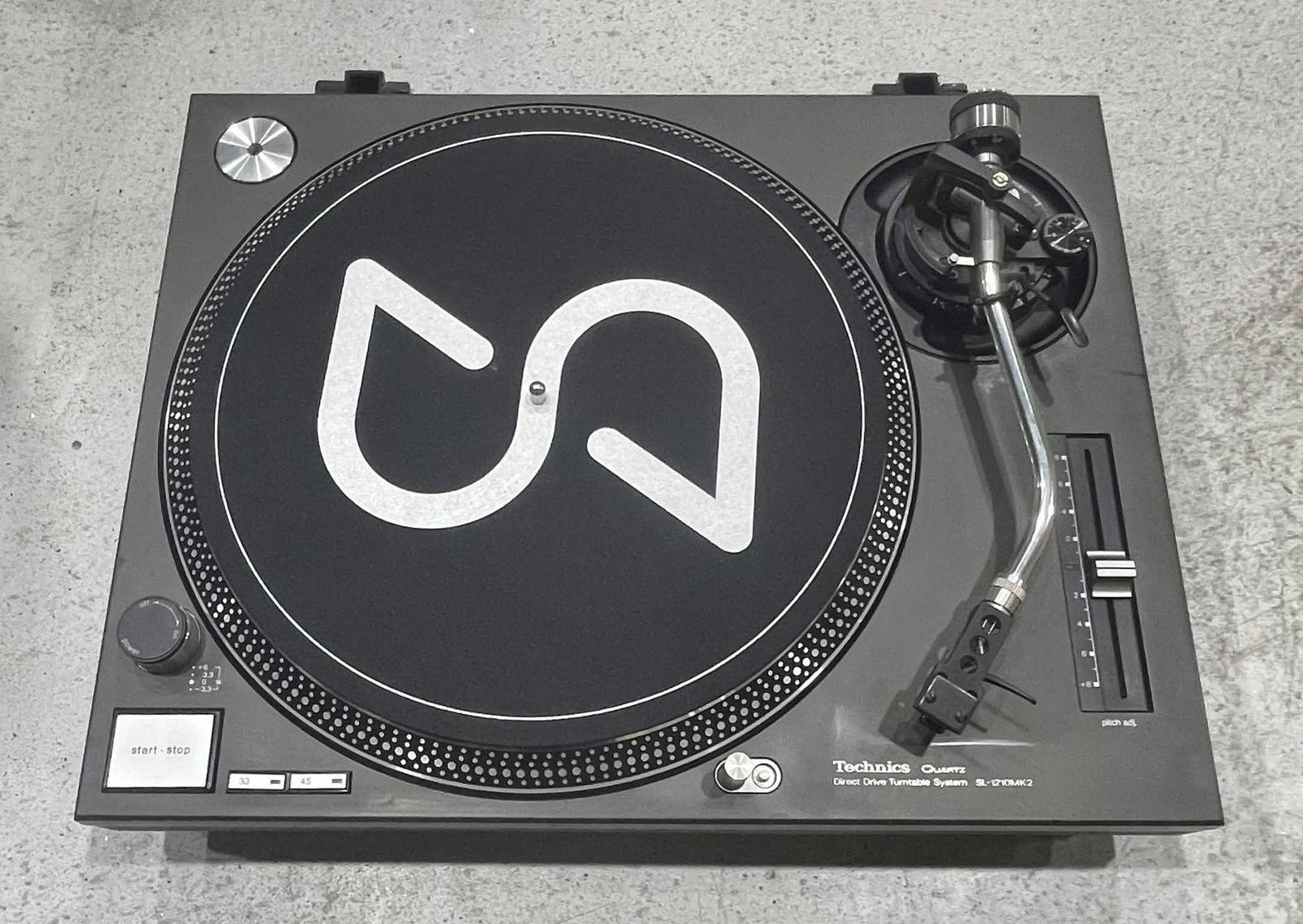
The MK2 is the benchmark.
Its direct drive motor, construction, stability and repairability established a formula so good that Technics could retain much of it for several generations.
From a modern DJ's perspective, its main limitation is the pitch control.
It retains a ±8% range and the distinctive mechanical centre click, with no separate Pitch Reset.
And it is not just about the physical click. The behaviour of the pitch system and the locking point around zero can make extremely small adjustments close to 0% less comfortable.
None of this stopped it becoming a worldwide standard.
And its strongest argument is probably still something else: we know it can last for decades.
At Sounds Market, we still work on MK2s that are more than 30 or even 40 years old and continue to perform perfectly after proper maintenance.
Sounds Market Score: 9.4/10
M3D: the MK2 refined for DJs
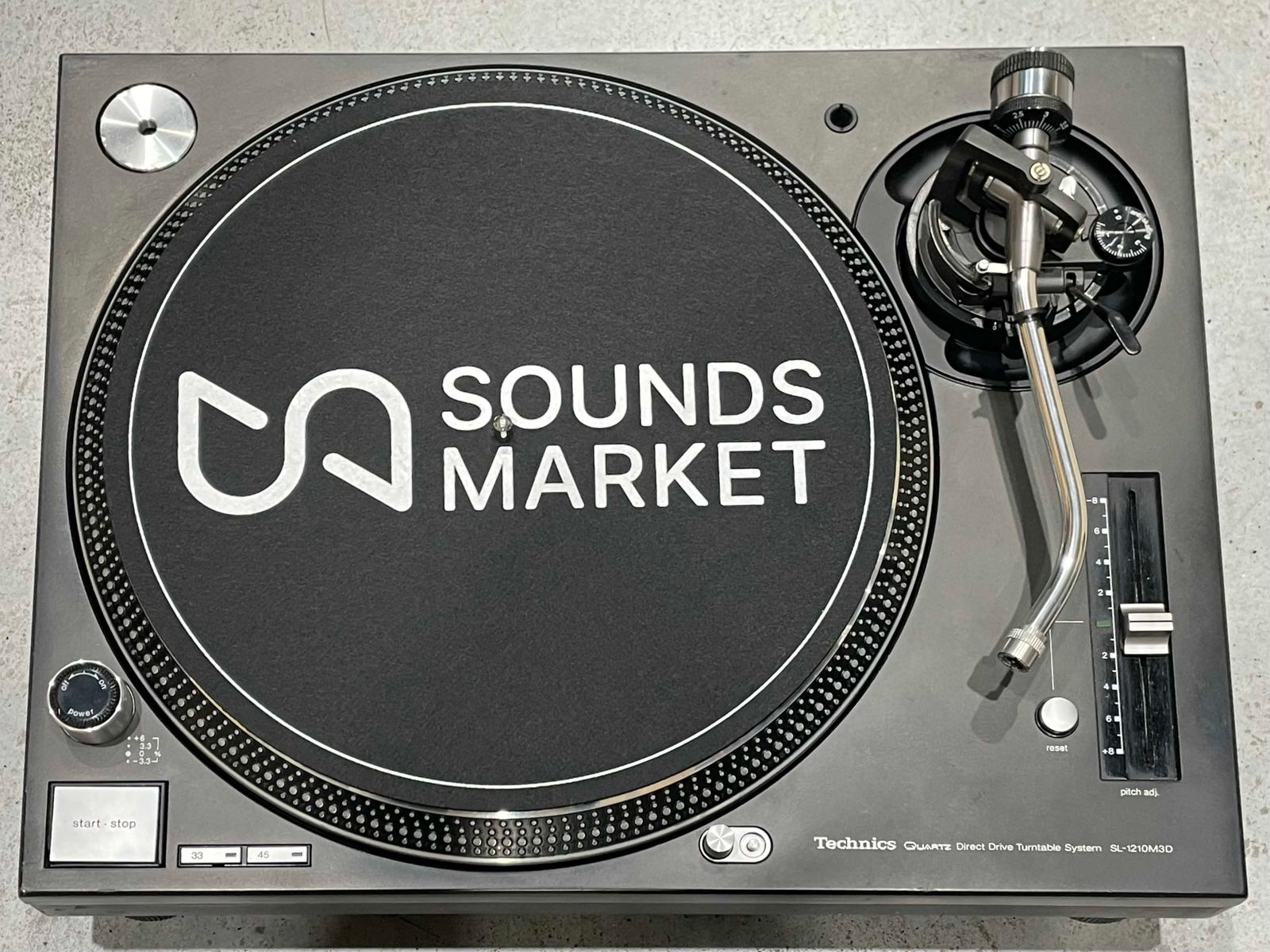
The M3D is probably the easiest generation to explain.
Technics did not radically change the MK2. It addressed details DJs had identified after years of using it.
The centre pitch click disappears and Pitch Reset arrives.
The pitch fader now moves continuously through zero, while Pitch Reset locks the turntable to its nominal speed regardless of the pitch fader's physical position.
There are also small changes aimed at DJ use, such as a power switch design better protected against accidental operation.
They are small changes, but they directly affect how the turntable is used.
That is why we would sum it up like this:
The M3D modernised the MK2 for DJs.
Sounds Market Score: 9.5/10
MK5: the classic formula, almost perfected
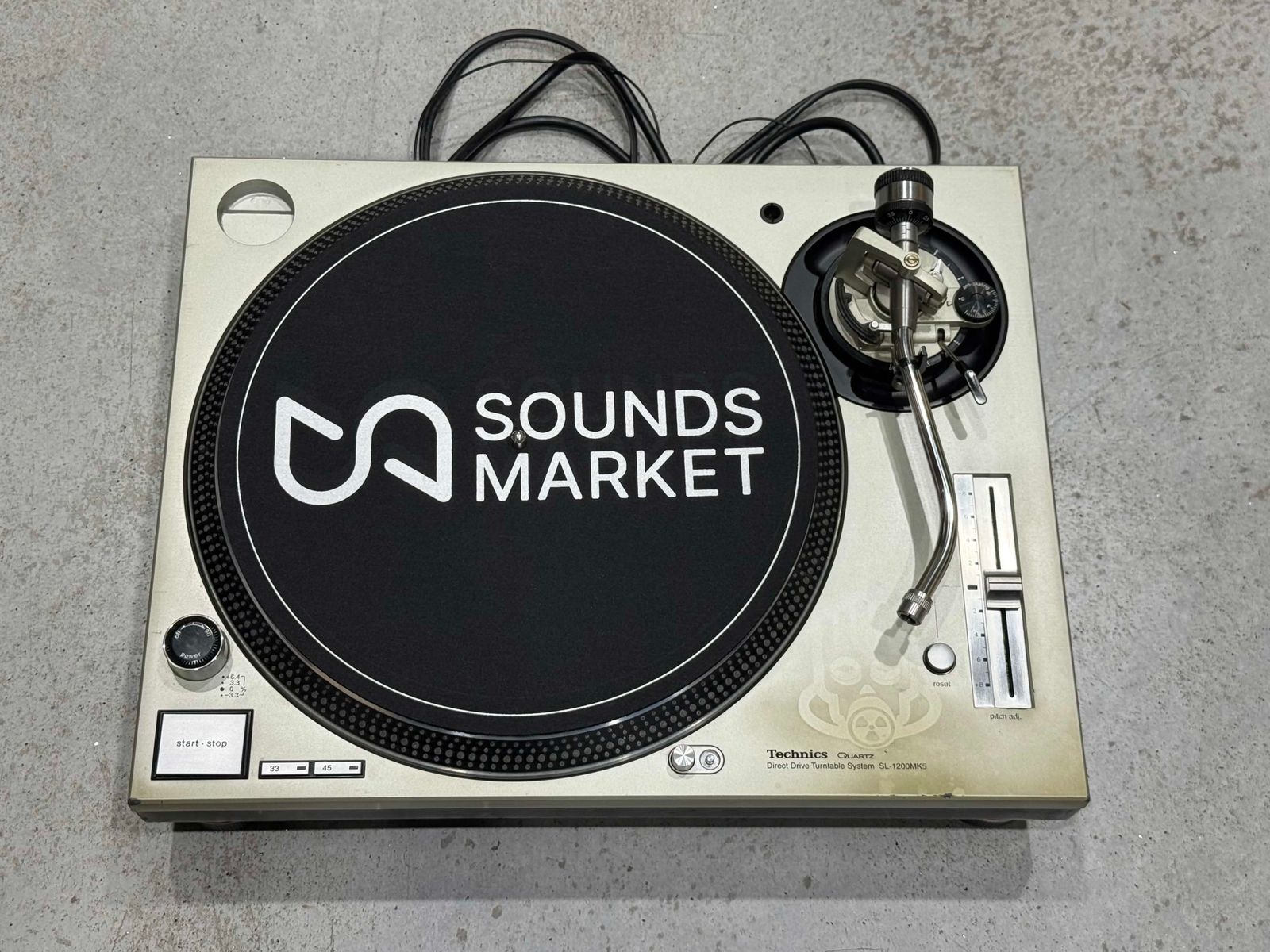
The MK5 continues that same evolution.
It retains the M3D's improvements and adds refinements such as an expanded 0-6 anti-skating range, braking speed adjustment, a white LED stylus light and various detail improvements.
There is no huge leap between the M3D and MK5.
That, in itself, shows just how mature the platform already was.
For us, the MK5 is probably the sweet spot among classic Technics turntables: exceptionally robust, very well equipped and usually easier to find at reasonable prices than an M5G.
It is also the model we would choose if we wanted one of the most refined classic Technics versions without paying for the M5G's premium positioning and exclusivity.
Sounds Market Score: 9.6/10
M5G: the ultimate classic Technics
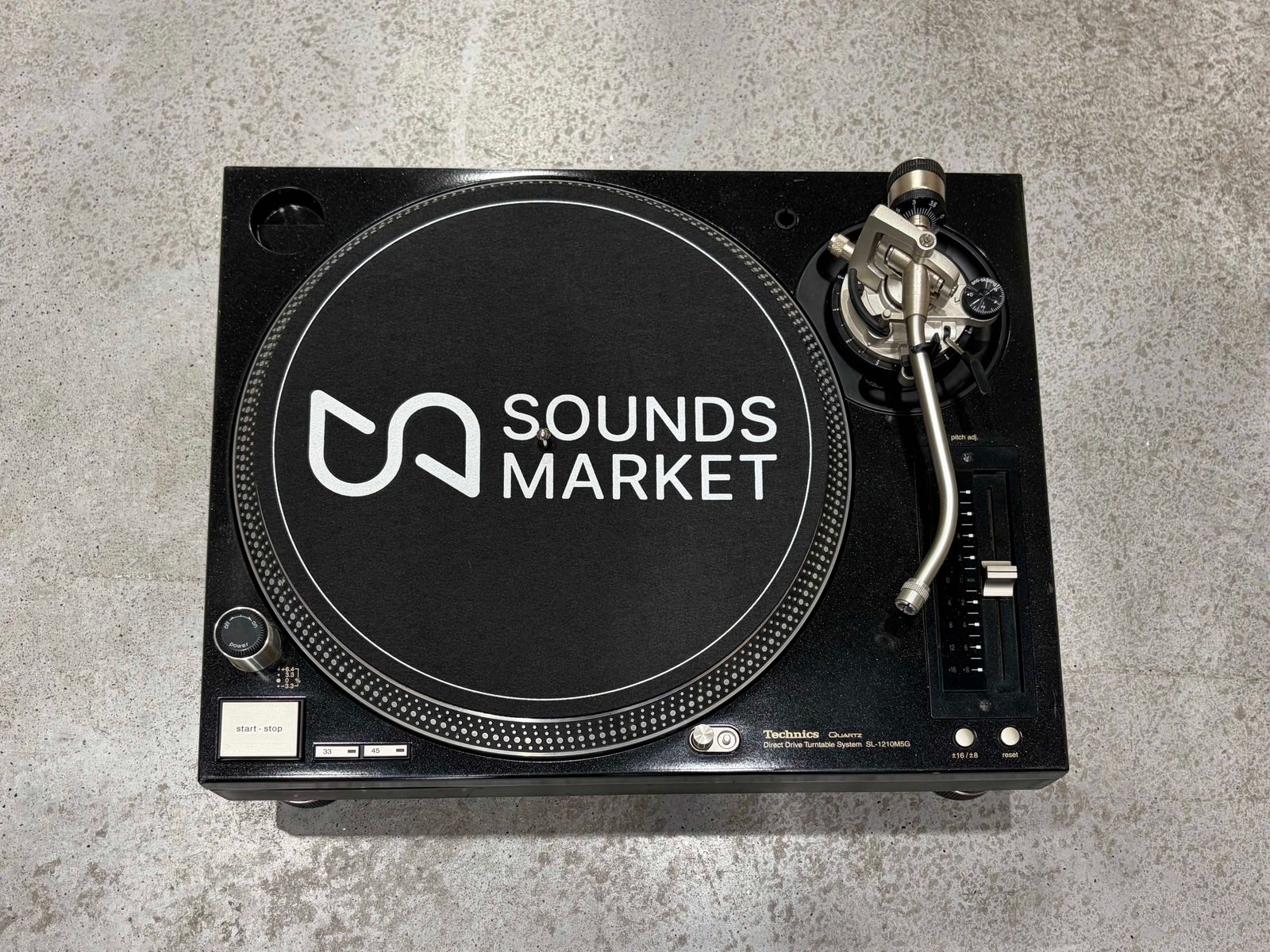
If we want the most complete classic Technics, we choose the M5G.
It arrived in 2002 as the SL-1200 series' 30th-anniversary model, positioned by Technics above the MK5.
It retains the outstanding foundations of previous generations but adds a particularly important difference for some DJs: a selectable ±8% / ±16% pitch range.
This lets you mix tracks with much greater BPM differences without modifying the turntable.
You can also keep the ±8% range when you want greater precision within a conventional range, switching to ±16% only when you need larger tempo changes.
It also features a horizontal tonearm load adjustment mechanism, OFC wiring and various premium details.
For us, it is one of the most robust, reliable and complete classic Technics models.
The problem is the price: a good example can currently cost around €1,400-€1,500.
Sounds Market Score: 9.7/10
MK7: Technics enters the modern era
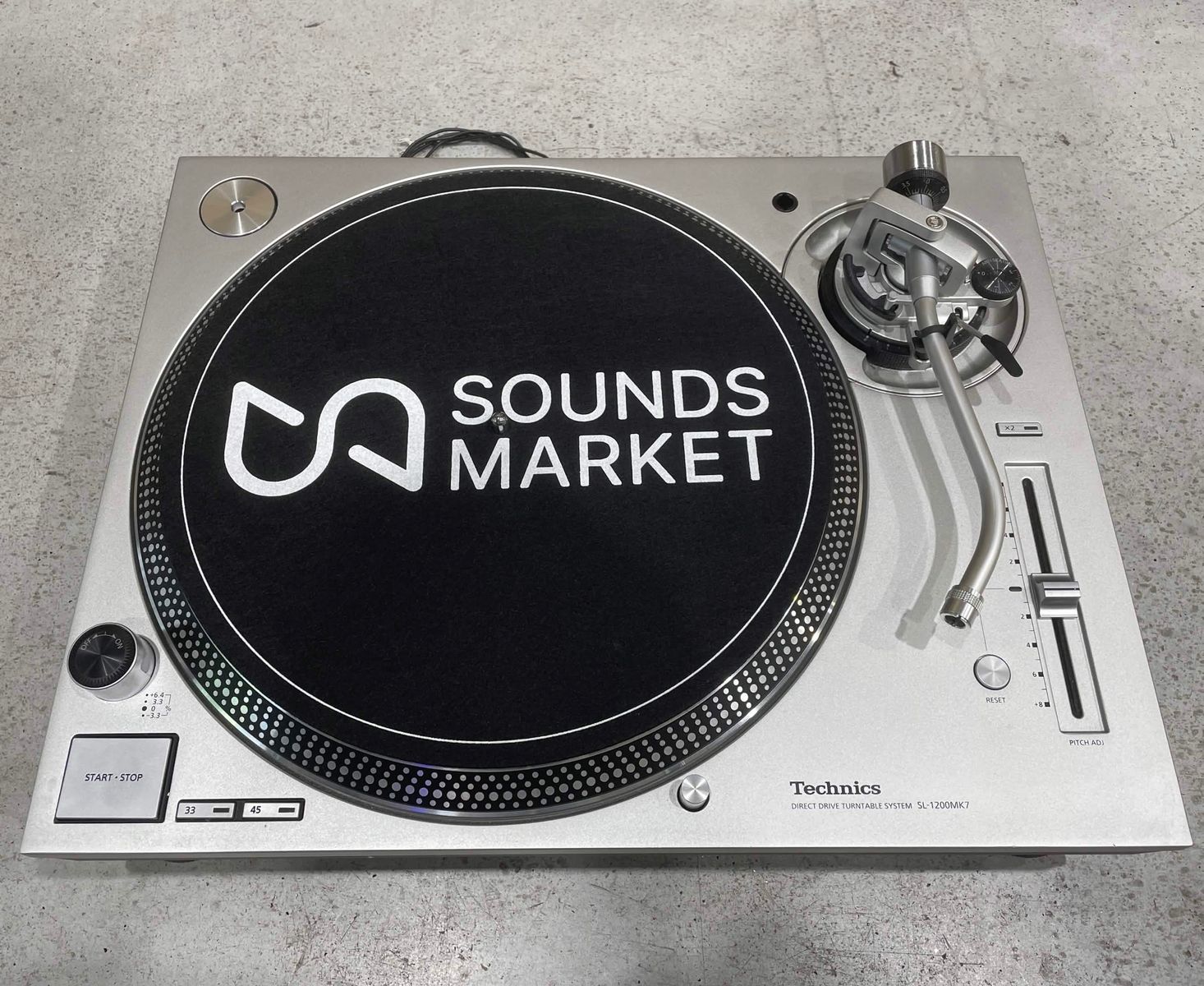
The MK7 marks a partial break with the previous evolution.
The philosophy is still Technics, but underneath is a much more modern architecture: a coreless motor, digitally controlled pitch, ±8/±16%, Reverse, 78 rpm, and internal settings to configure motor and braking behaviour.
It also uses detachable RCA and power cables.
Its pitch fader has a continuous travel, and Pitch Reset locks the turntable to its nominal speed regardless of the fader's physical position.
It is also considerably lighter: 9.6 kg versus around 12 kg or more for the classic generations.
That does not automatically mean the MK7 has poor vibration isolation. Technics designed its chassis and isolators specifically to work in these environments.
However, in our experience, the greater mass of the classic models remains a feature we value in certain professional booths exposed to high levels of vibration.
For home use, this is not a particular concern for us.
In fact, given a choice between roughly €850-€900 for a used MK2 and around €950 for a new MK7, we would choose the MK7.
Sounds Market Score: 9.5/10
How the Technics SL-1200/1210 really evolved
The evolution of these generations is fairly straightforward to summarise.
MK2 → M3D
Technics adapts the MK2 more closely to DJs' needs.
M3D → MK5
Technics refines a formula that already worked extraordinarily well.
MK5 → M5G
Technics creates the premium, most complete version of the classic generation.
Classic generations → MK7
Technics retains the SL-1200's fundamental concept while modernising the motor, pitch control, connections and functions.
These are not five completely different concepts.
They represent decades of evolution around one of the most important platforms in the history of DJ equipment.
The Sounds Market workshop's view
The MK2, M3D, MK5 and M5G share one of their strongest selling points: outstanding construction.
Our experience with all four generations has been excellent.
We have not identified a recurring structural fault that would make us avoid any of these models.
The work we usually carry out relates to age and use: RCA cables, ground connections, pitch calibration and general maintenance.
We also encounter modified units, particularly those altered to extend the pitch range.
For years, some DJs modified their classic Technics turntables because they needed to work with tempo differences beyond the original ±8% range.
When refurbishing these turntables for sale, we normally try to restore their original factory specifications.
The M5G is particularly interesting here because it provides a range of up to ±16% straight from the factory.
Spare parts availability for the classic generations remains surprisingly good thanks to the platform's enormous popularity, although certain original or model-specific parts can be expensive.
The MK7 uses a much more modern, digital architecture. It is still repairable, but there is one difference no specification sheet can resolve:
classic Technics turntables have spent decades proving how long they can last; the MK7 has not yet had time to build a comparable track record.
That does not mean we consider the MK7 unreliable.
It simply means the classic generations' exceptional longevity record can only be built over time.
Does your Technics need repair or maintenance?
At Sounds Market, we have our own workshop specialising in DJ equipment repair, maintenance and calibration.
Repair my DJ equipment →
Which Technics would we buy for each type of DJ?
I want to spend as little as possible
We would not automatically choose a particular generation.
We would look for the MK2, M3D or MK5 in the best condition at the best price.
With turntables of this age, condition can matter more than generation.
A perfectly maintained MK2 can be a much better buy than an MK5 that has been abused for years.
I want the best-balanced classic Technics
MK5.
It has virtually everything we expect from the classic evolution without reaching M5G prices.
Its combination of construction, pitch control, Pitch Reset, extended anti-skating, adjustable braking, repairability and price makes it our most balanced choice among the classics.
I want the best classic Technics
M5G.
It is the most complete classic model in this guide and offers a factory-selectable ±8% / ±16% pitch range.
It also includes further tonearm improvements, OFC wiring and other refinements that reflect its premium positioning.
I want a Technics for home
MK7.
At around €950 new, it is hard to justify a used MK2 at the same price unless you specifically want the classic model's construction, history or experience.
The MK7 offers a coreless motor, digital pitch, ±16%, Reverse, 78 rpm, additional settings and detachable connections.
I want to equip a club booth
Here, we would give particular consideration to the MK2, MK5 or M5G.
The classic generations' greater mass remains something we value in certain installations exposed to significant vibration.
That does not make the MK7 a bad club turntable. Installation, booth isolation, support and sound pressure also matter enormously.
I already own an MK2. Should I replace it?
Probably not.
An MK2 in excellent condition is still an outstanding turntable.
The M3D and MK5 bring improvements, but none radically transforms the experience.
Moving to the M5G makes more sense if you genuinely need the ±16% range, or to the MK7 if you specifically want the advantages of a modern platform.
If your MK2 works perfectly and meets your needs, replacing it simply because later generations exist makes little sense.
Prices: where is the best value today?
Prices can vary considerably depending on condition, finish, provenance, modifications and maintenance history.
As a guide to the market we currently work with at Sounds Market:
| Model | Approximate current market price |
|---|---|
| MK2 | €850-€900 used |
| M3D | Varies significantly with condition and the individual unit |
| MK5 | Similar to or slightly above the MK2 |
| M5G | €1,400-€1,500 used |
| MK7 | ~€850 used / ~€950 new |
This leads to an interesting conclusion.
The MK7 probably offers the best balance of technology, condition and price today.
The MK5 would be our choice if we specifically wanted a well-balanced classic Technics.
And the M5G is the premium choice when price is less of a priority.
Which Technics wins in each category?
| Category | Winner |
|---|---|
| Most iconic | MK2 |
| Best evolution of the MK2 | M3D |
| Best value classic | MK5 |
| Best classic Technics | M5G |
| Best classic pitch control | M5G |
| Best technology | MK7 |
| Best for home | MK7 |
| Best for certain booths | MK2 / MK5 / M5G |
| Longest longevity track record | MK2 |
| Most sensible purchase today | MK7 |
We do not present this table as an absolute ranking.
An M5G does not stop an MK2 being outstanding, just as the MK7's more modern technology does not automatically make the classic generations obsolete.
Each model stands out for different reasons.
Thinking of upgrading your Technics?
If you already own a Technics SL-1200, SL-1210 or other DJ equipment, you can sell it directly to Sounds Market or trade it in towards your next purchase.
Technics SL 1200 & 1210MK5 currently available
See all ->
Frequently asked questions
Which is the best Technics SL-1200 for DJing?
If we want the best classic-generation model, our choice is the M5G.
Including modern generations, the MK7 offers more advanced technology and excellent value for money.
The best choice depends on how you will use it.
Which Technics offers the best value for money?
The MK7 is particularly competitive today because it can be bought new for around €950.
Among the classics, we would choose the MK5.
What is the difference between the MK2, M3D and MK5?
They share much of the same platform.
The M3D removes the centre pitch click and adds Pitch Reset, while the MK5 refines that formula with extended anti-skating, adjustable braking and other improvements.
Which is better, the MK5 or M5G?
The M5G.
It retains the MK5's excellent platform but adds selectable ±8% / ±16% pitch, additional horizontal tonearm load adjustment, OFC wiring and various premium details.
The MK5 offers better value for money.
Which is better, the MK2 or MK7?
For home use at similar prices, we would choose the MK7.
For certain professional booths, we may still prefer the MK2's greater mass and classic construction.
Is it still worth buying an MK2 today?
Yes, especially if you find one in excellent condition.
But if it costs almost as much as a new MK7, there should be a specific reason for preferring the classic Technics.
Which Technics is the most reliable?
The MK2, M3D, MK5 and M5G have demonstrated exceptional longevity, and we would not choose between them on reliability alone.
The MK2 has the longest longevity track record simply because it has been on the market the longest.
Which has the best pitch control?
Among the classic models in this guide, the M5G, thanks to its selectable ±8% / ±16% range.
The MK7 uses digital control and also offers ±8% / ±16%, so its pitch system is technologically more modern.
Which Technics is the most complete?
Within the classic generation, the M5G.
In terms of technology and modern features, the MK7.
Conclusion: which Technics SL-1200/1210 is best?
There is no single Technics that is the best buy for everyone.
The MK2 remains the icon and historical benchmark.
The M3D addressed some of its main drawbacks for DJs.
The MK5 brought that formula to one of its most balanced points.
For us, the M5G is the ultimate expression of the classic generation, particularly thanks to its selectable ±8% / ±16% pitch and additional refinements.
And the MK7 represents a different philosophy: a coreless motor, digital pitch, more features and modern technology at a very competitive current price.
For the best classic Technics, we choose the M5G.
For the best value among the classics, the MK5.
And if we were buying new Technics turntables today, mainly for home use, we would choose the MK7.
That is the key point: after more than four decades of evolution, none of these SL-1200/1210 generations is a bad one.
There is a Technics better suited to each type of DJ.