Technics SL-1210MKX vs SL-1200MK7: every difference and improvement in the new turntable
Last updated: October 26, 2026
The Technics SL-1210MKX adds weight, new isolation feet and ±4% and ±50% pitch ranges over the MK7. We examine the announced upgrades, their potential benefits in the booth and what independent tests still need to establish.
Technics has just unveiled the SL-1210MKX, its new higher-end professional turntable, announced on 21 October 2026 during the Amsterdam Dance Event. This is neither a special-edition MK7 nor simply a cosmetic update. The new model makes substantial changes to construction, vibration isolation and pitch control, precisely the three areas that have prompted debate since the MK7 arrived in 2019.
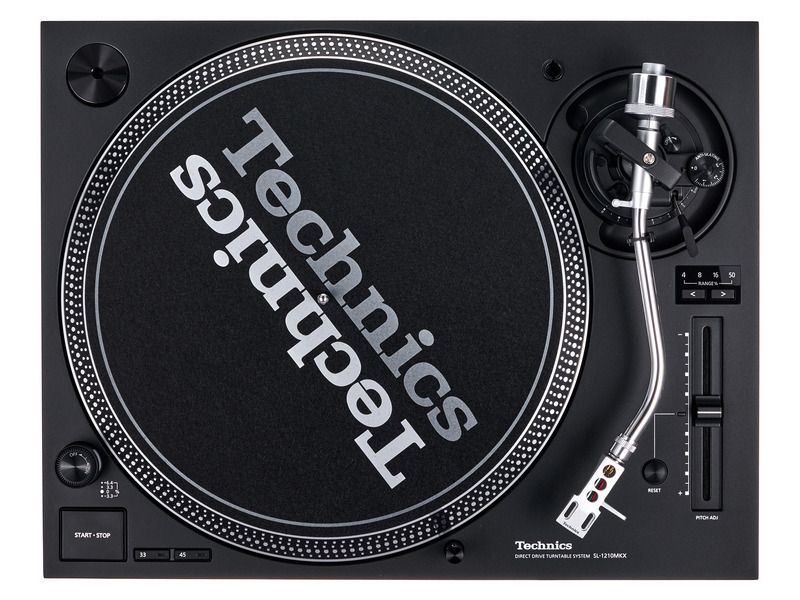
The most obvious change is weight. The Technics SL-1210MKX weighs 11.9 kg, compared with the MK7's 9.6 kg, a 2.3 kg increase that brings it considerably closer to the classic SL-1200MK2's 12.5 kg. It also introduces new isolation feet and expands pitch control with a ±4% range for finer adjustments and a ±50% range for creative techniques.
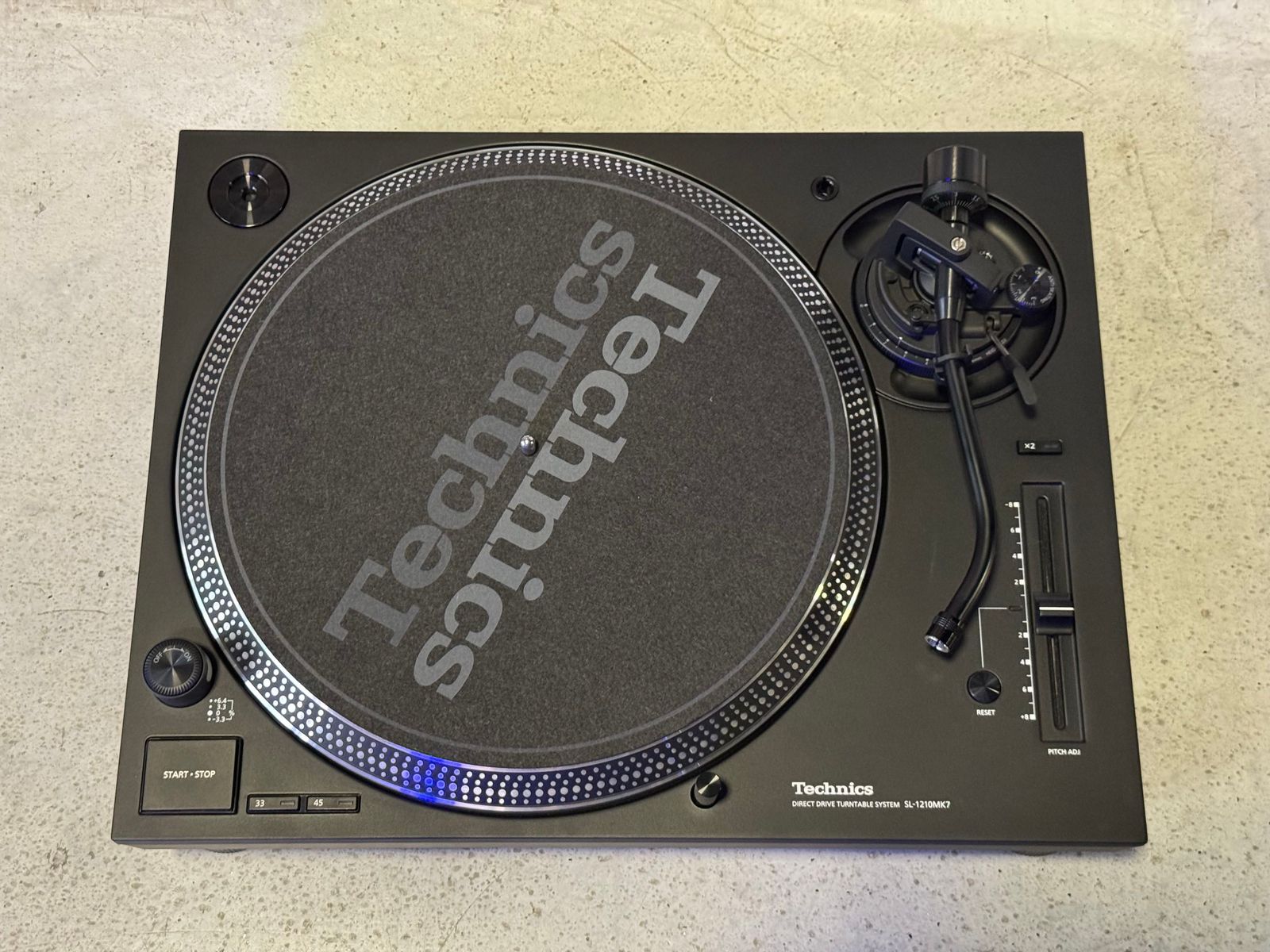
Technics developed the MKX with professional DJs and sound engineers, paying particular attention to working conditions in clubs, at festivals and in booths exposed to intense vibration. But how far does it address the MK7's weaknesses? Which differences will actually be noticeable when mixing vinyl? And, above all, is the new model worth paying more for?
Technics SL-1210MKX vs MK7: comparison table
| Feature | Technics SL-1200/1210MK7 | Technics SL-1210MKX |
|---|---|---|
| Launch | 2019 | October 2026 |
| Positioning | Professional DJ turntable | Higher-end professional model |
| Motor | Coreless Direct Drive | Coreless Direct Drive |
| Weight | 9.6 kg | 11.9 kg |
| Construction | Aluminium and reinforced composite chassis | Heavier, more balanced chassis |
| Isolation | MK7 damping feet | New isolation feet |
| Pitch | ±8% and ±16% | Adds ±4% and ±50% |
| Starting torque | Adjustable | Adjustable |
| Braking speed | Adjustable | Adjustable |
| Reverse Play | Yes | Yes |
| 78 rpm playback | Yes | Yes |
| Tonearm | S-shaped tonearm | S-shaped tonearm with polished silver finish |
| Pitch Reset | Dedicated control | New, quieter switch |
| Price | Varies by market | €1,499 recommended retail price |
| Availability | Available | January 2027 |
Technics positions the MKX above the MK7 in its professional range. Although both share a Direct Drive motor architecture without an iron core, the main differences concern mechanical stability, isolation and speed control options.
An 11.9 kg chassis: Technics returns to part of its classic philosophy
One of the MK7's most debated decisions was its weight reduction compared with previous generations. While an SL-1200MK2 weighs approximately 12.5 kg, the MK7 came in at 9.6 kg. The difference was obvious to any DJ accustomed to carrying or installing the classic models.
With the MKX, Technics moves back towards that heavier construction. Its 11.9 kg represents an increase of approximately 24% over the MK7 and puts it just 600 grams below the MK2.
Weight alone, however, does not determine turntable quality. Stability also depends on chassis rigidity, mass distribution, materials and the system's ability to damp external vibration. Two decks of similar weight can behave differently if their internal construction differs.
This matters particularly in a professional booth. When a turntable sits near powerful speakers or on a structure that transmits vibration, some of that energy can reach the stylus. Under certain conditions, resonance can cause acoustic feedback, particularly at low frequencies.
Technics says the MKX's new chassis is designed to resist these conditions better. The brand has not simply added weight: it describes a more balanced construction adapted to the demands of clubs and festivals.
For a DJ playing at home, this difference may matter relatively little. In a club where turntables are exposed to powerful sub-bass, a real improvement in isolation could be far more valuable than any additional function.
The unknown is how much it has actually improved. Although the new weight is confirmed, independent tests are still needed to compare the MKX's behaviour with the MK7 and classic generations such as the MK2 or MK5.
New isolation feet: a response to MK7 feedback
Extra weight is not the only stability-related change. Technics has also redesigned the MKX's feet to reduce the transmission of external vibration without compromising the control needed for scratching.
A professional turntable's isolation system has to perform two tasks that are not always easy to combine. It must prevent booth vibration from reaching the platter and stylus, while remaining firm enough when the DJ handles the record, slows it by hand or makes quick movements.
Overly compliant isolation can cause unwanted movement during a performance. An excessively rigid setup can transmit more vibration to the chassis. Technics says it has worked on this balance with new feet developed around the needs of professional DJs and sound engineers.
This change directly addresses one of the most common criticisms of the MK7, particularly among people who have used it in booths with high-powered sound systems.
That does not mean the MKX will eliminate every feedback problem. Speaker placement, booth construction, cartridge choice, stylus tracking force and the room's acoustics remain decisive factors.
What we can say is that Technics has made isolation a priority for the new model. If the improvements work as the manufacturer promises, this could be one of the strongest reasons to choose the MKX for professional installations.
New ±4% pitch range: finer control when mixing vinyl
The second major addition to the Technics SL-1210MKX is a ±4% pitch range, introduced by Technics for the first time in the SL-1200 series.
The MK7 offers ±8% and ±16% ranges, sufficient for most everyday situations. However, the wider the speed range controlled by the fader, the larger the percentage change produced by the same physical movement.
With its new ±4% setting, the MKX allows smaller changes over the same pitch-fader travel. This is particularly useful when mixing two records with very similar BPMs and trying to maintain precise synchronisation through long transitions.
Consider a techno or house mix where both tracks are close to 128 BPM. Here, the DJ does not need major speed changes, but the exact point at which both rhythms stay in sync. A narrower range makes that fine adjustment easier and reduces the control's sensitivity to small movements.
It is important to distinguish this improvement from motor accuracy. A narrower pitch range gives finer control over speed, but does not in itself prove that the MKX's motor is more stable or accurate than the MK7's.
For DJs who beatmatch vinyl by ear and regularly use pitch to keep tracks in sync, this could be one of the new model's most useful additions.
±50% pitch: new possibilities for scratching and turntablism
At the other extreme, Technics has added a ±50% pitch range, a substantial expansion over the MK7's maximum of ±16%.
This setting allows much more extreme speed changes, opening up possibilities for creative techniques, turntablism and performances where the turntable is used as an instrument.
For a DJ mixing house or techno conventionally, this is unlikely to be a function used in every set. But for those working with scratching, sample manipulation or radical tempo changes, such a wide range could be useful.
The fader's response in this mode and the motor's behaviour during speed changes still need testing. The expanded range is confirmed, but the control's feel and real-world behaviour must still be assessed on the equipment.
Motor, torque and braking: what actually changes?
Both the MK7 and the new MKX use Technics' coreless Direct Drive motor technology.
Introducing this type of motor was one of the MK7's most significant technical changes. By removing the stator's iron core, Technics sought to avoid cogging, a phenomenon associated with small irregularities in motion in certain motor designs.
The MKX retains this architecture, along with adjustable starting torque and braking speed. It also includes Reverse Play and 78 rpm playback, both already available on the MK7.
It would therefore be wrong to present all these features as exclusive MKX innovations.
So far, Technics has not published enough comparative data to establish that the new model has a completely redesigned motor or better rotational stability. That would require examining and comparing parameters such as wow and flutter, torque behaviour and speed-control system response.
The new MKX brings significant changes, but its motor does not appear to be the main differentiator from the MK7.
New Pitch Reset and design changes
Technics has also redesigned the Pitch Reset switch, describing it as quieter and inspired by earlier SL-1200 generations.
Although it might seem a minor change, the feel of the controls is part of using a professional turntable. Many DJs have spent decades working with virtually the same button layout and develop highly precise muscle memory.
The MKX retains that familiar layout but combines a black finish with a polished silver tonearm, visually recalling the classic models, particularly the SL-1200MK2.
There is not yet enough information to confirm major changes to the tonearm bearings, internal wiring or adjustment mechanisms. A different finish does not necessarily mean a mechanical improvement, so these components will be worth examining when the model reaches the market.
Has Technics solved the MK7's problems?
This is probably the most important question in the comparison.
The MK7 brought meaningful advances over earlier generations, particularly in its motor, connections and configuration options. However, its lighter construction and behaviour in certain professional booths have prompted debate since launch.
With the MKX, Technics has chosen to address precisely some of those areas. The new 11.9 kg chassis recovers much of the classic models' weight, while redesigned feet aim to improve isolation from vibration and feedback. The new ±4% pitch range also responds to DJs seeking finer control when mixing vinyl.
These are significant changes, but we need to distinguish an announced improvement from a proven one.
There are not yet enough independent tests to establish how much vibration transmission has been reduced, whether the MKX outperforms the MK7 in real club conditions or how it compares with generations such as the MK2 and MK5.
Technics has redesigned several of the MK7's most criticised aspects, but it is still too early to say that all those issues are completely resolved.
Technics MKX vs MK7: which is better value?
The choice mainly depends on where the turntable will be used and what the DJ needs.
For DJing at home
The MK7 remains a perfectly capable turntable for a home setup. Its motor, pitch control, adjustable torque and construction provide the vinyl-mixing capabilities most DJs need.
If the deck sits on a stable surface and vibration is not a problem, the MKX's improvements may be less relevant. The new ±4% range could appeal to those seeking finer adjustments, but it will not necessarily justify an upgrade for everyone.
For clubs and professional booths
The MKX makes a stronger case here.
Technics developed it specifically for environments where vibration, sub-bass and intensive use are normal working conditions.
The extra weight and new isolation feet directly address these needs. If independent tests confirm their effectiveness, the MKX could become a particularly interesting option for clubs, hire companies and DJs who regularly perform with vinyl.
For scratching and turntablism
The new ±50% range, reinforced construction and isolation system make the MKX an appealing proposition for performance DJs.
However, properly assessing its scratching performance will require testing platter response, motor feel, stability when handling vinyl and the operation of its controls.
For existing MK7 owners
There is no automatic reason to upgrade.
If the MK7 works correctly, holds a stable speed and has no feedback problems, it can remain an excellent tool for many years.
For DJs who have encountered isolation limitations or want finer pitch control, however, the MKX could represent a worthwhile evolution.
How does the MKX compare with the Technics MK2, MK5 and M5G?
The MKX's launch also reopens a comparison that has occupied vinyl DJs for years: modern models versus classic generations.
The SL-1200MK2, M3D, MK5 and M5G remain highly regarded for their construction, mechanical behaviour and long history in professional booths.
At Sounds Market, we regularly work with different Technics generations, and one of our most important observations is that a turntable's condition can matter as much as its model.
A properly maintained MK2 can still perform exceptionally well decades after manufacture. But it is also common to find examples needing pitch calibration, tonearm adjustments, RCA connection checks or maintenance on other components.
The MKX combines a modern motor architecture with reinforced construction that, according to Technics, is designed to meet professional demands more effectively.
That does not mean earlier models are obsolete. The used market still offers interesting alternatives for DJs who prefer how particular generations feel and perform.
For all the differences, read our Technics MK2, M3D, MK5, M5G and MK7 comparison.
You can also browse the Technics SL-1200 and SL-1210 MK7 and Technics MK2 turntables available at Sounds Market.
Technics SL-1210MKX price and release date
The Technics SL-1210MKX was officially unveiled on 21 October 2026, coinciding with the Amsterdam Dance Event.
It is scheduled to reach shops in January 2027, with a recommended retail price of €1,499 in Europe and £1,299 in the UK.
Technics positions it above the MK7, particularly targeting clubs, professional DJs, hire companies and scratching and turntablism specialists.
The price difference will be a key factor in deciding whether the improvements justify the investment, especially once the first independent reviews appear.
Frequently asked questions
Does the Technics MKX replace the MK7?
No. Technics has introduced the MKX as a higher-end model positioned above the MK7, not as its direct replacement.
What are the differences between the Technics MKX and MK7?
The main additions are a heavier 11.9 kg chassis, new isolation feet, a ±4% pitch range for finer adjustments and a ±50% range for creative techniques. It also has a redesigned Pitch Reset switch.
How much does the Technics SL-1210MKX weigh?
The new Technics SL-1210MKX weighs 11.9 kg, compared with the MK7's 9.6 kg. That is a 2.3 kg increase, approximately 24% more.
Does the Technics MKX have a different motor?
Both use coreless Direct Drive technology. A fundamental motor redesign has not yet been confirmed, and no comparative measurements demonstrating better rotational stability have been published.
Does the MKX have better pitch control than the MK7?
It offers an additional ±4% range for smaller, finer adjustments, plus a ±50% range for extreme speed changes. This expands its capabilities but does not in itself demonstrate greater motor accuracy.
Does the Technics MKX solve the MK7's feedback problems?
Technics has redesigned the chassis and isolation feet specifically to improve resistance to vibration and feedback. Independent tests are still needed to measure the actual difference.
When will the Technics SL-1210MKX be available?
Availability is scheduled for January 2027.
How much does the Technics SL-1210MKX cost?
Its recommended retail price in Europe is €1,499, although the final price may vary by retailer.
Conclusion: is the Technics MKX the evolution DJs have been waiting for?
The Technics SL-1210MKX is an interesting development because its main changes focus on improving aspects directly related to professional vinyl use, rather than adding unnecessary functions.
An 11.9 kg chassis, new isolation systems and finer pitch control are changes that could make a real difference to a DJ's experience, particularly in clubs and booths with powerful sound systems.
It is also significant that Technics developed the model with DJs and sound engineers. After years of debate over the MK7's construction, the MKX appears to answer some of the community's most common requests.
It is still too early to consider it superior in every respect, however. The MK7 remains perfectly capable for many users, while classic generations such as the MK2 and MK5 still have an important place in professional booths.
The real test will come when the MKX enters regular use and we can compare its isolation, pitch behaviour and reliability with previous models.
If the construction improvements deliver what Technics promises, the SL-1210MKX could become one of the most significant developments in the SL-1200 series in recent years.
Article updated on 21 October 2026. Technical developments are based on Technics' official presentation and published launch information. The announced performance improvements still await verification through independent testing.