Technics SL-1200/1210MK2 vs SL-1200/1210MK7: classic or new generation?
Last updated: October 1, 2026
For home use at similar prices, we choose the Technics MK7. Its coreless motor, digital ±8/±16% pitch, Pitch Reset and adjustable settings make it the more advanced design.
The MK2 stands out for its classic construction, greater mass and more than 40 years of proven reliability and repairability. It remains our preference in certain club installations, depending on the unit's condition and the booth setup.
The Technics SL-1200/1210MK2 is one of the most iconic DJ turntables ever made. More than four decades after launch, it is still used in clubs, studios and home setups worldwide.
The MK7 retains the SL-1200 concept with a coreless motor, digital pitch control, ±16% range, Reverse, 78 rpm and configurable settings. The comparison is particularly relevant when a well-preserved used MK2 costs almost as much as a new MK7.
Sounds Market Score
Technics SL-1200/1210MK2: 9.4/10
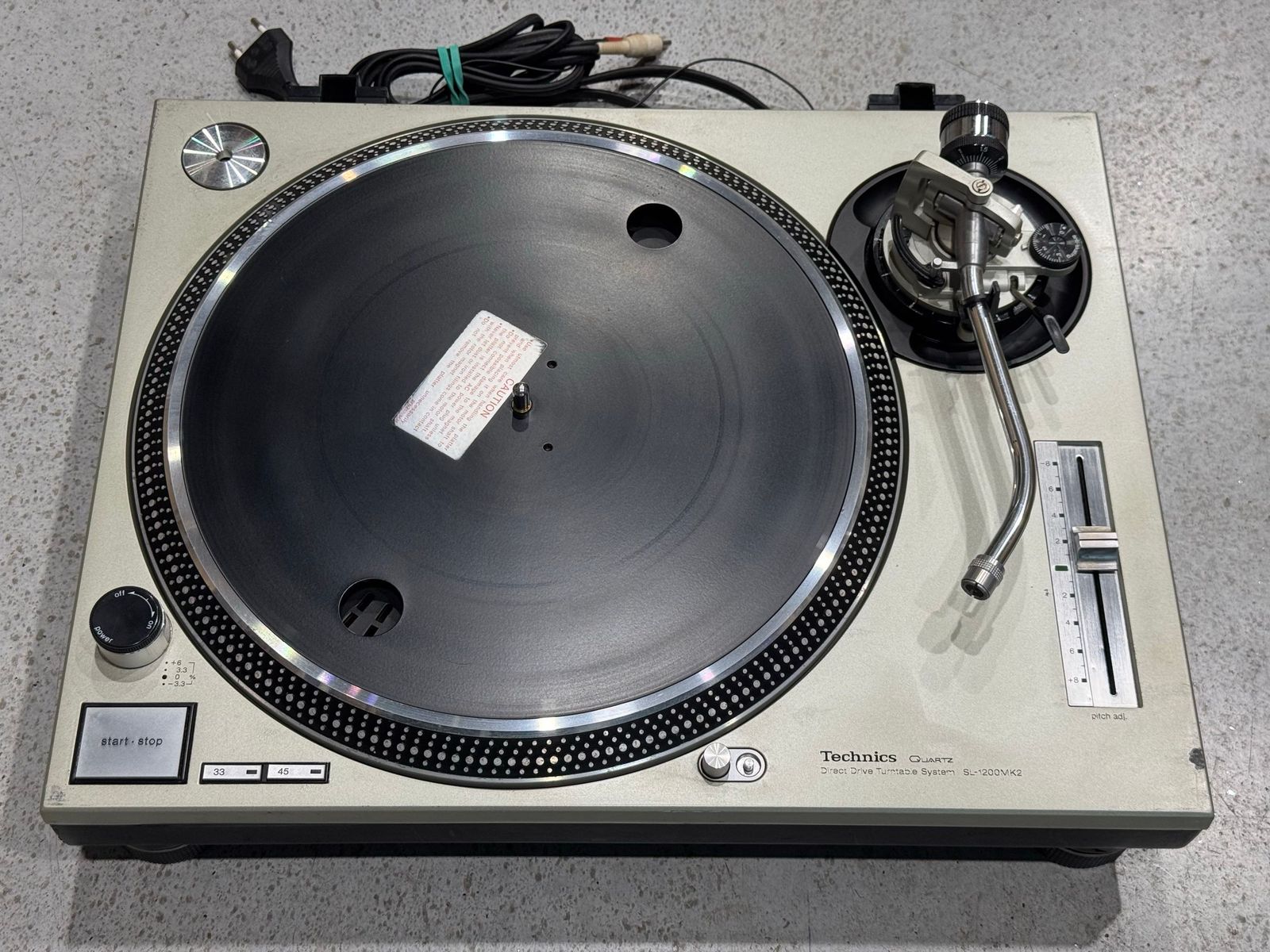
An influential and exceptionally reliable DJ turntable. Its construction, stability and repairability remain outstanding decades after launch.
Technics SL-1200/1210MK7: 9.5/10
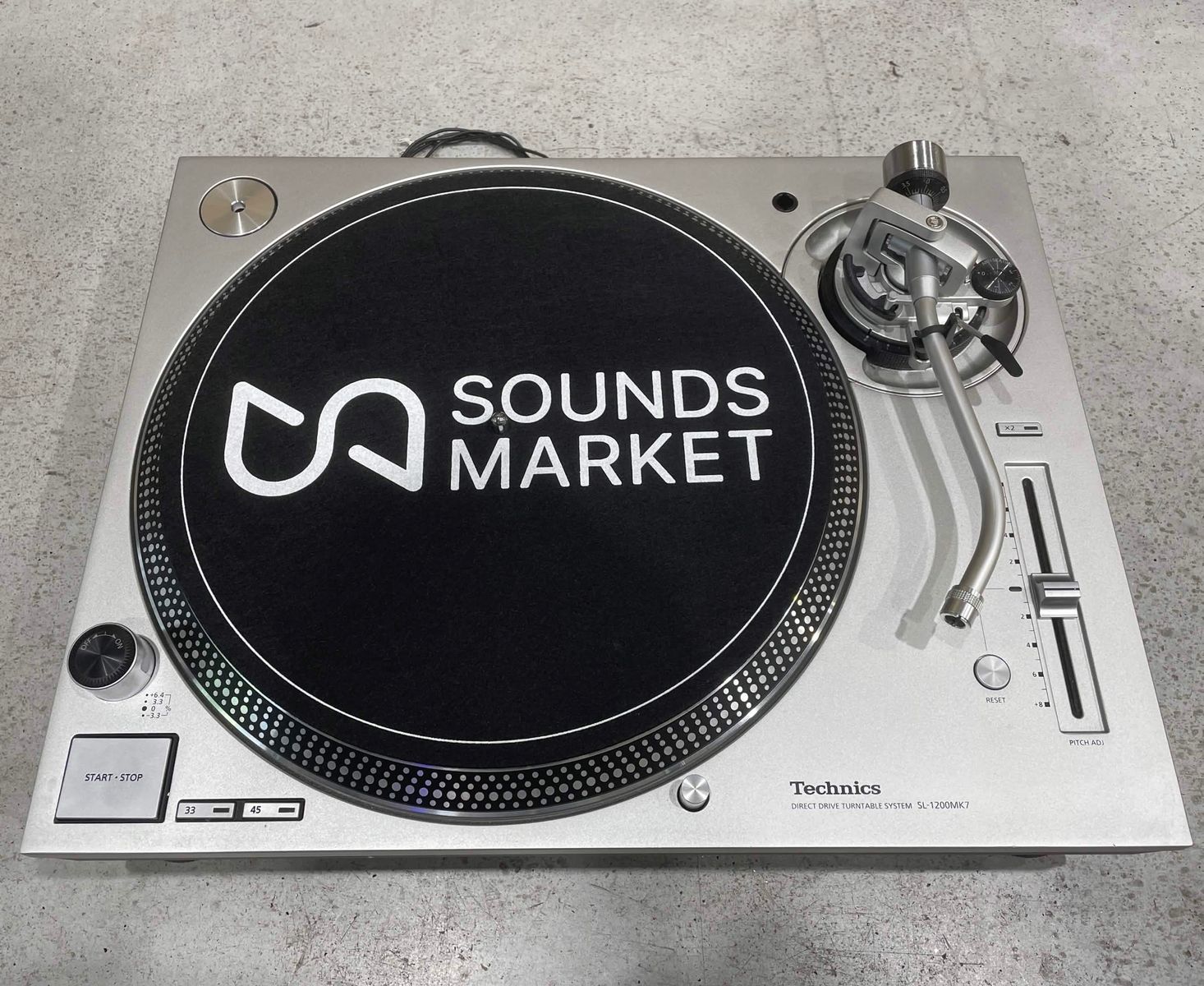
The modern evolution of the Technics formula, with a more advanced motor and pitch system, greater flexibility and practical features for today's DJ.
The Sounds Market Score is our independent overall assessment of quality, construction, features, reliability and position within the product category. It is not a ranking against the newest model or necessarily the arithmetic average of the comparison categories.
Pros and cons
Technics SL-1200/1210MK2
Pros
- Exceptional construction.
- More than 40 years of proven reliability.
- Very stable feel in the booth.
- Excellent repairability and broad spare-parts availability.
- Holds its value well.
Cons
- Pitch limited to ±8%.
- Mechanical centre click and less convenient behaviour near zero.
- Pitch may need calibration as it ages.
- Fixed RCA and power cables.
- Many units have decades of use behind them.
Technics SL-1200/1210MK7
Pros
- Coreless direct-drive motor.
- Digital ±8/±16% pitch.
- Continuous pitch travel around 0%.
- Pitch Reset.
- Torque and braking configurable through internal settings.
- Reverse and 78 rpm.
- Detachable RCA and power cables.
- Available to buy new.
Cons
- Considerably lighter.
- Does not yet have a comparable decades-long reliability record.
- Some DJs still prefer the mass of classic Technics models in clubs.
Main differences
| Feature | MK2 | MK7 |
|---|---|---|
| Motor | Classic direct drive | Coreless direct drive |
| Pitch | ±8% | ±8% / ±16% |
| Pitch control | Classic system | Digital |
| Centre click | Yes | No |
| Pitch Reset | No | Yes |
| Starting torque | 1.5 kg·cm | 1.8 kg·cm |
| User torque/brake configuration | No equivalent MK7 options | Yes, through internal settings |
| Reverse | No | Yes |
| 78 rpm | No | Yes |
| Detachable RCA cables | No | Yes |
| Detachable power cable | No | Yes |
| Weight | Approx. 12.5 kg | 9.6 kg |
| Sounds Market Score | 9.4 | 9.5 |
What actually changes when you DJ?
Coreless motor and digital pitch
The MK7's coreless direct-drive motor provides 1.8 kg·cm starting torque, compared with approximately 1.5 kg·cm on the MK2.
The MK2's pitch system works very well, but an older unit may need calibration. The mechanical click and locking behaviour around 0% can also make tiny adjustments awkward. This is more than a tactile issue.
The MK7 offers precise, stable digital control, continuous travel near zero and ±8% or ±16% ranges. The wider range helps when mixing tracks with substantial BPM differences, a requirement that led owners to modify many classic Technics turntables.
Pitch Reset
Pitch Reset locks the deck to its nominal speed, equivalent to 0% pitch, regardless of the fader's position. It does not move the control physically. This separates speed adjustment from nominal-speed locking.
Settings, Reverse and connections
Internal settings beneath the platter let you configure torque and braking on the MK7. Reverse and 78 rpm are also available once their respective settings have been enabled. Not every DJ needs them, but they broaden the possibilities.
Detachable RCA and power cables make transport and cable replacement easier. On the MK2, replacing fixed RCA cables is a common workshop job after many years of use.
MK2 vs MK7 in clubs: how much does weight matter?
The MK2 weighs approximately 12.5 kg, compared with 9.6 kg for the MK7. This helps explain why some DJs prefer the classic model.
The MK7's chassis and isolators were designed to resist vibration. Being lighter does not automatically mean poor isolation. In our experience, and for many DJs familiar with classic Technics decks, the MK2's greater mass nevertheless gives a reassuringly stable feel in booths with substantial vibration.
Weight alone does not establish which deck is better isolated. The support, isolation, installation and sound pressure all influence the result. In certain professional installations, we still prefer the construction and mass of the classic models.
At home, vibration is usually less demanding and the MK7's technological advantages become more persuasive.
The Sounds Market workshop view
The MK2 is one of the machines we know best. We do not identify a particularly worrying recurring structural fault. Most issues are ordinary wear after decades of use.
Typical work includes replacing RCA cables, repairing or modifying the earth connection and recalibrating pitch. On older units we inspect worn faders, calibration and previous modifications. Some owners also request changes to make fine adjustment near 0% more comfortable.
The model's popularity still supports a remarkably broad spare-parts supply.
The MK7 uses a more modern architecture with digital motor and pitch control. This avoids some traditional calibration adjustments associated with classic models and offers configurable parameters beneath the platter. It does not make the deck immune to faults or maintenance needs.
A shorter history is not proof of lower reliability. The MK2 has demonstrated that it can last for decades over more than 40 years. The MK7 has simply not existed long enough to build an equivalent record. We do not regard that as evidence that it is unreliable.
Prices: which offers better value?
As a September 2026 reference from Sounds Market, per unit:
- Used MK2: approximately €850 to €900.
- Used MK7: approximately €850.
- New MK7: approximately €950.
At these prices, the MK7 makes a strong case for home use. Paying nearly the same for a decades-old MK2 as for a new MK7 is difficult to justify on technical features alone.
The MK2 still makes sense if you specifically want its classic construction, greater mass, heritage or feel in certain professional booths. For a practical home purchase at these reference prices, we prefer the MK7.
Which should you choose?
Choose the MK2 if...
You want the classic Technics experience, value its construction and mass, or prioritise longevity demonstrated over more than four decades. It also remains our choice for certain professional booths with high vibration levels, provided the individual unit is in excellent condition.
Choose the MK7 if...
You want a more modern, fully featured Technics around this price. Digital pitch, ±16%, the coreless motor, adjustable settings and the option of buying new make it our choice for home use.
Comparison scores
Scores are out of 10. Category scores compare the two models; the Sounds Market Score is an independent overall assessment, not their arithmetic average.
| Category | MK2 | MK7 |
|---|---|---|
| Construction | 10 | 9.5 |
| Reliability track record | 10 | 9.5 |
| Motor and precision | 9.5 | 9.8 |
| Pitch and control | 9.2 | 10 |
| Functions | 8.5 | 9.8 |
| Repairability | 10 | 9.3 |
| Home use | 9.5 | 10 |
| Club use | 10 | 9.5 |
| Value for money | 9.2 | 9.8 |
| Sounds Market Score | 9.4 | 9.5 |
The reliability-track-record difference mainly reflects the MK2's more than four decades of real-world evidence. It does not mean we have identified clearly inferior reliability in the MK7.
What other comparisons often miss
Classic status is not an automatic technical advantage. The MK2 deserves its reputation, while the MK7 has more advanced motor, pitch and configuration technology.
Individual condition matters. Two MK2s from the same year may have entirely different histories: one immaculate, another with decades of club use, modifications and repairs. That history can matter more than generation.
Context changes the choice. We prefer the MK7 for home use, while still valuing the MK2's mass and construction in certain club booths. The right recommendation depends on where and how the deck will be used.
Frequently asked questions
Which is better, the Technics MK2 or MK7?
The MK7 is technologically more advanced and our choice for home use at similar prices. The MK2 retains important strengths in classic construction, mass and proven longevity.
Is the MK7's pitch better?
Yes. It uses digital control, offers continuous travel around zero, includes Pitch Reset and allows ±8% or ±16% adjustment.
What does Pitch Reset do on the MK7?
It locks the turntable to its nominal speed, equivalent to 0% pitch, regardless of the pitch fader's physical position. It does not move the fader.
Can the MK7's pitch go out of calibration?
Its digital control does not require the same traditional calibration adjustments that can arise with an ageing MK2. That does not mean an MK7 cannot develop a fault or require diagnosis and maintenance.
Why do some DJs prefer the MK2?
For its construction, greater mass, feel and exceptional reliability record. Decades as a booth standard have also made it deeply familiar to many DJs.
How much do they weigh?
The MK2 weighs approximately 12.5 kg and the MK7 9.6 kg.
Does the MK7 have more torque?
Yes. The MK7 specifies 1.8 kg·cm, compared with approximately 1.5 kg·cm for the MK2.
Which would we buy for home use?
At similar prices, the MK7. It offers more advanced pitch control, additional functions and the option of buying new.
Which would we choose for a club?
It depends on the installation. In a booth with strong vibration, we may prefer an MK2 in excellent condition for its construction and greater mass. This does not mean the MK7 is a poor club turntable.
Thinking of upgrading your Technics?
If you own a Technics SL-1200, SL-1210 or other DJ equipment, you can sell it directly to Sounds Market or trade it in towards your next purchase.
Conclusion: Technics MK2 vs MK7
The MK7 wins narrowly. Its coreless motor, digital pitch with ±16%, continuous travel around zero and Pitch Reset bring practical advantages alongside extra functions and adjustment options. At the September 2026 reference prices, buying it new for close to the cost of a used MK2 strengthens our recommendation for home use.
The MK2 remains outstanding for construction, repairability and longevity demonstrated over more than four decades. In certain booths with strong vibration, we still value its greater mass and feel, while recognising that weight alone does not determine isolation.
- Best classic construction: MK2.
- Longest reliability record: MK2.
- Best for certain club booths: MK2.
- Best motor and pitch: MK7.
- Most functions: MK7.
- Best for home use: MK7.
- Best value at the reference prices: MK7.
- Best overall turntable: MK7.
- Sounds Market Score: MK2 9.4 / MK7 9.5.