Technics SL-1200/1210MK2 vs SL-1200/1210MK5: which is better?
Last updated: October 1, 2026
The Technics SL-1200/1210MK5 is our choice when both units are in comparable condition and the price difference is reasonable. Its continuous pitch fader, Pitch Reset and wider anti-skating adjustment refine an already excellent platform.
Both offer outstanding build quality, stability and repairability. We would choose a serviced, correctly calibrated MK2 over a poorly maintained MK5.
The Technics SL-1200MK2 and SL-1210MK2 are among the most recognisable DJ turntables ever made. Decades after launch, they are still used in clubs, studios and DJ booths worldwide.
The SL-1200MK5 and SL-1210MK5 developed the same formula with small improvements for professional use. How much should those changes influence your choice?
Sounds Market Score
Technics SL-1200/1210MK2: 9.4/10
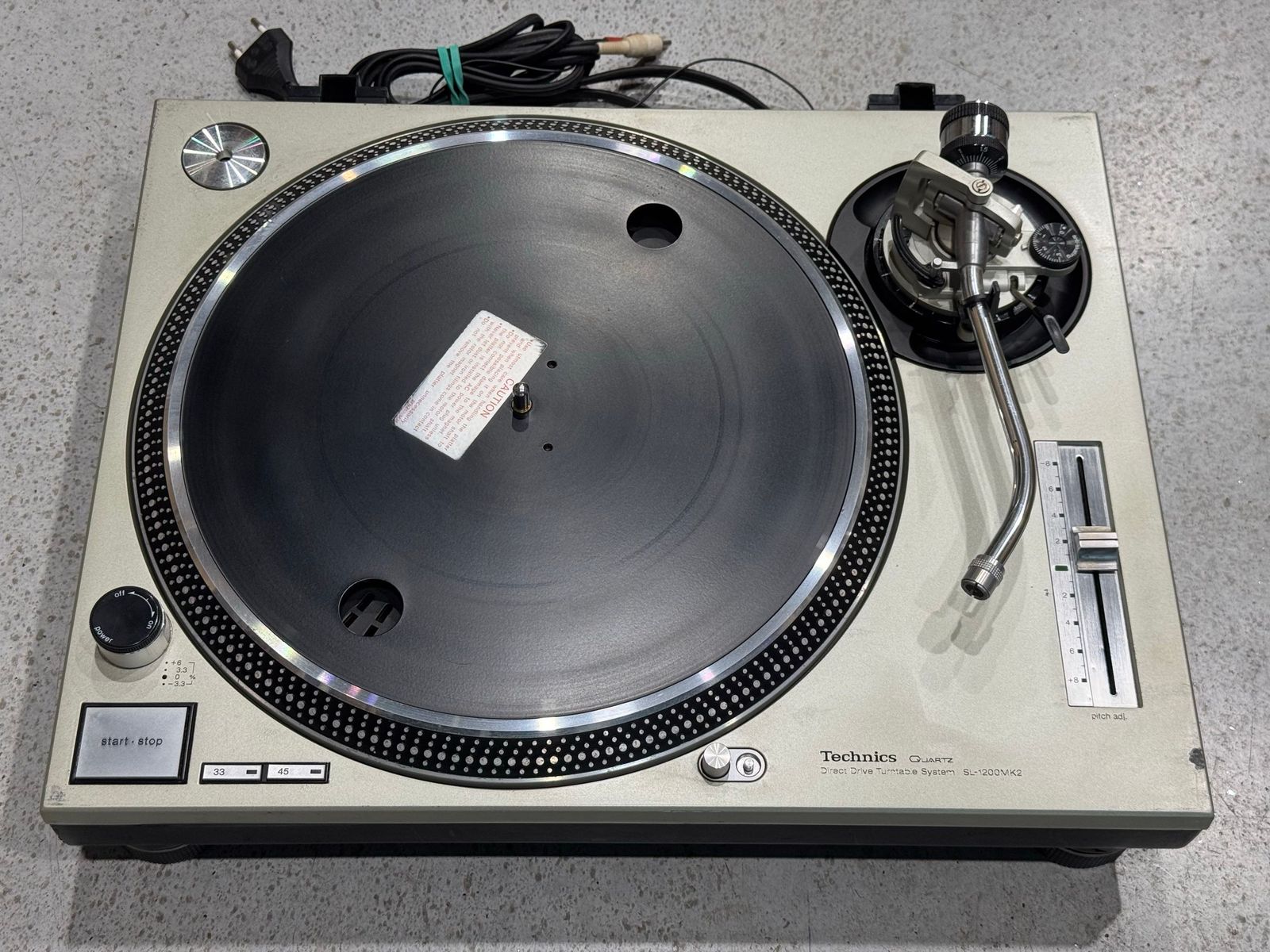
An exceptionally important and durable piece of DJ equipment. Its construction, stability, repairability and longevity mean that examples built decades ago can still perform brilliantly after proper servicing.
Technics SL-1200/1210MK5: 9.6/10
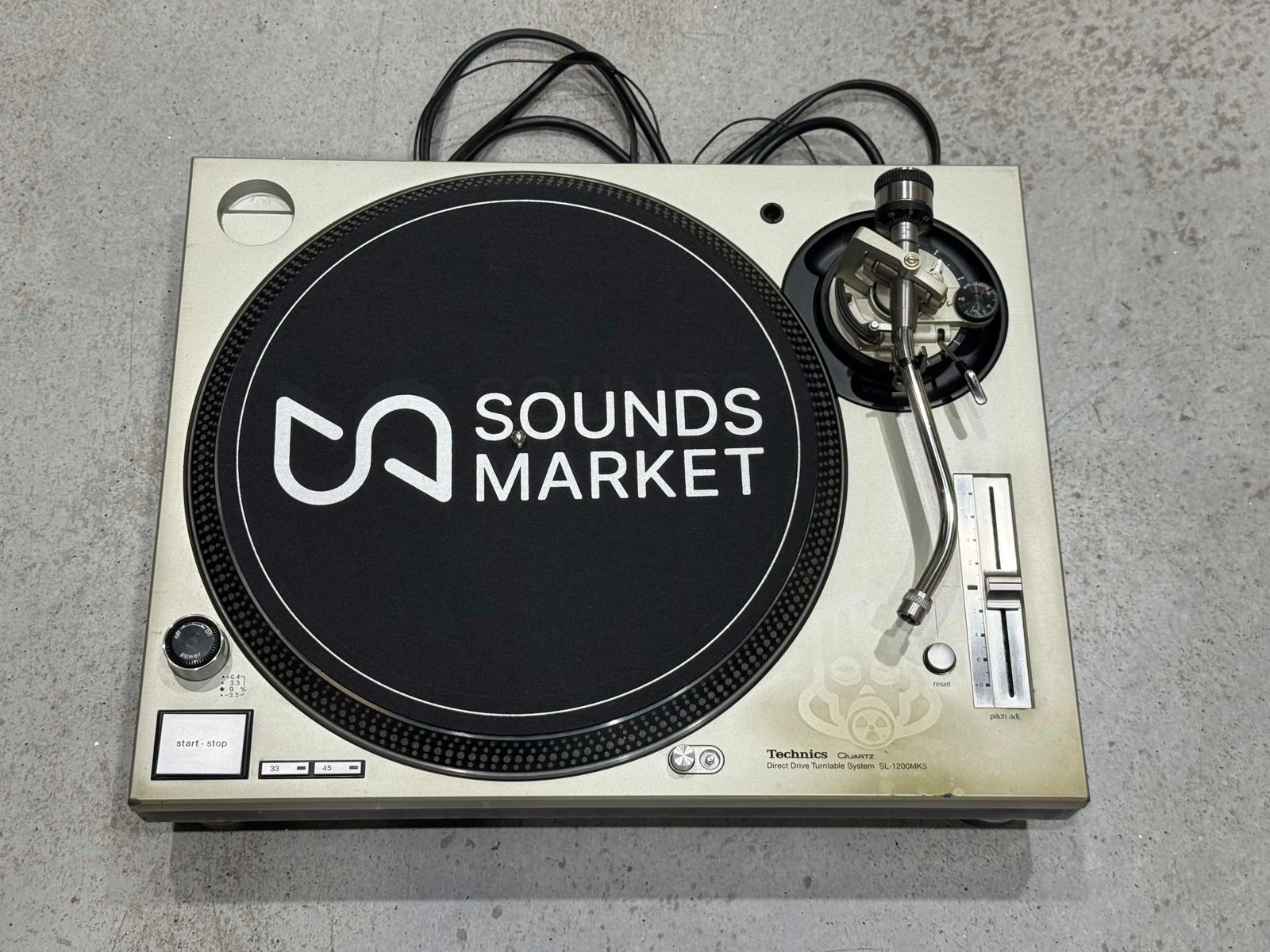
It retains almost everything that makes the MK2 outstanding and adds thoughtful refinements for DJs. Those improvements give it a slight overall advantage.
The Sounds Market Score is our independent overall assessment of a product's quality, construction, features, reliability and position within its category. It is not a ranking against the newest model or necessarily the arithmetic average of the categories below.
Pros and cons
Technics SL-1200/1210MK2
Pros
- Exceptional, robust construction.
- Excellent isolation from vibration.
- Very stable direct-drive motor.
- Classic Technics pitch feel.
- Highly repairable, with an extensive spare-parts ecosystem.
- Decades of proven reliability.
- A historic standard in club booths.
Cons
- The centre click and behaviour around zero can make very fine pitch adjustments awkward.
- No independent Pitch Reset button.
- Narrower anti-skating adjustment range.
- Many used examples have decades of service behind them.
- Modified or poorly calibrated units are common.
Technics SL-1200/1210MK5
Pros
- Retains the excellent construction of the classic generation.
- Pitch fader without a centre click.
- Independent Pitch Reset.
- Wider anti-skating adjustment.
- Improved stylus light.
- Small refinements to the tonearm and its adjustments.
- Excellent repairability and reliability.
Cons
- The differences from the MK2 are relatively modest.
- Usually more expensive used.
- These units are also getting old.
- Some spare parts can be expensive.
Main differences between the Technics MK2 and MK5
| Feature | SL-1200/1210MK2 | SL-1200/1210MK5 |
|---|---|---|
| Drive | Direct drive | Direct drive |
| Motor | Brushless DC | Brushless DC |
| Starting torque | 1.5 kg·cm | 1.5 kg·cm |
| Start-up to 33⅓ rpm | 0.7 s | 0.7 s |
| Pitch range | ±8% | ±8% |
| Pitch centre click | Yes | No |
| Pitch Reset | No | Yes |
| Anti-skating | 0 to 3 | 0 to 6 |
| Stylus light | Original design | Improved |
| Speeds | 33⅓ / 45 rpm | 33⅓ / 45 rpm |
| Approximate weight | 12.5 kg | 12 kg |
| Launch year | 1979 | 2000* |
| Sounds Market Score | 9.4 | 9.6 |
*The MK5 dates from 2000 in the series timeline; some variants and market introductions followed later.
What actually changes when you DJ?
Continuous pitch control and Pitch Reset
The MK2 has a mechanical click as the fader passes through 0%. Its locking behaviour around zero can also make very small speed changes less convenient. This is more than a tactile issue. At Sounds Market, we have received MK2s whose owners asked us to modify this behaviour.
The MK5 keeps the continuous fader travel, without a centre click, already introduced in the M3D/MK3D generation. It is more comfortable for fine adjustments close to 0%.
Pitch Reset engages quartz lock at the nominal speed, equivalent to 0% pitch, regardless of the fader's position. It does not physically move the fader or require it to be centred. The MK2 has no separate button for this function. It is a useful workflow detail that the M3D already offered before the MK5.
Anti-skating and smaller refinements
The anti-skating scale expands from 0 to 3 on the MK2 to 0 to 6 on the MK5. Anti-skating compensates for the force pulling the arm towards the centre of the record. The MK2's range is sufficient for many conventional setups; the MK5 offers extra adjustment where needed.
The MK5 also improves the stylus light and includes refinements to the tonearm and its adjustments for professional use. Together, these details make a difference without turning it into an entirely new platform.
Motor, torque and feel
Both offer direct drive, 1.5 kg·cm starting torque, approximately 0.7 seconds to reach 33⅓ rpm and ±8% pitch. DJs familiar with an MK2 quickly feel at home on an MK5.
Predictable response, steady speed and intuitive platter behaviour remain major strengths. For manual beatmatching, that consistency matters more than a huge torque figure. There is little reason to favour either model here.
Build quality: two exceptionally tough turntables
We would call this a draw. Having repaired many generations of Technics in our workshop, we consider both the MK2 and MK5 exceptionally well built.
The MK2 combines an upper die-cast aluminium structure with a vibration-absorbing lower base. An example more than 40 years old can still work beautifully, depending on how it has been used and maintained.
Decades of club use, transport and knocks can leave a unit needing substantial work. A carefully maintained example can remain surprisingly close to its original performance. The condition of the individual turntable matters more than the generation.
The Sounds Market workshop view
We have worked on MK2, M3D, MK5, M5G and other SL-1200/1210 generations. Our experience with the classic models has been exceptionally positive.
We do not identify one particular component on the MK2 or MK5 as an inherent fault destined to fail. What we usually see is wear from decades of use.
RCA cables
Replacing RCA cables is a common job. Original cables can deteriorate or develop intermittent connections over time. Proper replacement helps keep the turntable working for many more years.
Earth connection
We also replace or modify earth connections. Some owners ask us to integrate the earth into the RCA connection so they no longer need a separate Technics earth lead. This is a workshop modification we encounter, not an automatic improvement for every unit.
Pitch calibration
Older pitch controls can fall out of calibration. That does not necessarily indicate a poor design in equipment that has been working for decades. Correct servicing and calibration can restore the appropriate parameters.
Modified Technics turntables
We find units whose owners have altered pitch calibration or range to achieve greater speed variation, often to mix tracks with larger tempo differences.
When refurbishing Technics turntables for sale, our approach is to restore factory specifications unless there is a specific reason to retain a modification. Technics later addressed the demand for a wider pitch range more neatly with the M5G, which offered it from the factory.
Spare parts
The popularity of the SL-1200/1210 has created a large ecosystem of original, used and compatible parts. Some are expensive, especially certain original components, but maintaining and repairing these turntables remains viable despite their age.
Workshop verdict
A draw. We would not buy an MK5 expecting a substantial reliability advantage over an MK2. We would buy the better-preserved unit.
SL-1200 vs SL-1210: what is the difference?
These models are closely related, and finish is one of the most visible differences. However, reducing their entire history to “silver versus black” overlooks regional variants and power-supply configurations across a long production run.
Especially with an imported unit, check the full model reference, region and voltage. Do not infer the power configuration solely from the 1200 or 1210 designation.
For this comparison, we group the SL-1200MK2 with the SL-1210MK2, and the SL-1200MK5 with the SL-1210MK5, based on their behaviour as DJ tools.
Which handles booth vibration better?
Both are excellent. Performance in environments with high sound pressure helped establish the SL-1200 as a club standard.
The MK2 weighs approximately 12.5 kg and the MK5 around 12 kg, depending on the version. The difference is too small to drive our buying decision. Weight becomes a more significant comparison point against modern generations such as the MK7.
How much do they cost used?
Condition, finish, origin, modifications and service history all affect prices. As a September 2026 reference from Sounds Market:
- SL-1200/1210MK2: around €900 per unit.
- SL-1200/1210MK5: usually somewhat more, although the gap is generally modest.
We would not pay a large premium just for the MK5 badge. Given an immaculate, serviced and calibrated MK2 or a heavily used, unserviced MK5 with an unknown history, we would choose the MK2.
Is the MK5 worth paying more for?
Yes, when the difference is reasonable. Its smoother pitch operation, Pitch Reset, wider anti-skating adjustment and small refinements make it a slightly more polished DJ tool.
They do not give it a radically superior motor or make the MK2 obsolete. We would not pay several hundred euros extra simply to move from MK2 to MK5 if the MK2 were in better condition.
Who should choose each model?
Choose the Technics SL-1200/1210MK2 if...
You want the quintessential classic Technics and find an excellent example. It offers outstanding durability, repairability and a long reliability record, alongside the heritage of the model that made the SL-1200 a worldwide DJ-booth standard.
Choose the Technics SL-1200/1210MK5 if...
You want essentially the same classic Technics experience with useful DJ refinements. With similar condition and a reasonable price gap, it is our preferred choice.
Comparison scores
Scores are out of 10. Category scores compare these two models; the Sounds Market Score is an independent overall assessment, not their arithmetic average.
| Category | MK2 | MK5 |
|---|---|---|
| Build quality | 10 | 10 |
| Reliability | 10 | 10 |
| Motor and stability | 9.5 | 9.5 |
| Pitch and control | 9.2 | 9.7 |
| Tonearm and adjustments | 9.3 | 9.6 |
| Repairability | 10 | 10 |
| Professional use | 9.7 | 9.8 |
| Used value for money | 9.5 | 9.3 |
| Sounds Market Score | 9.4 | 9.6 |
The MK5 wins through refinement. The MK2 remains an exceptionally capable turntable.
What other comparisons often miss
History matters more than generation. Two MK2s from the same year can differ enormously after club use, transport, humidity, previous repairs and modifications.
Being 30 or 40 years old does not mean being worn out. In our workshop, we have seen carefully maintained older units that still perform exceptionally well.
A modification is not automatically an upgrade. Extended pitch, altered grounding, replacement RCA cables or LEDs may be well executed or hide questionable work. When refurbishing, we inspect both what was changed and how it was done.
Technics SL 1200 & 1210MK5 currently available
See all ->
Frequently asked questions
Which is better, the Technics MK2 or MK5?
The MK5 has a slight advantage. It retains the MK2's foundations while refining pitch control, adding Pitch Reset, widening anti-skating adjustment and introducing smaller improvements.
Which is more reliable?
Both are exceptionally reliable. In our workshop experience, the difference is not significant enough to choose one solely on reliability. The individual unit's condition matters more.
Does the MK5 have a better motor than the MK2?
Their basic performance figures show no significant difference: both specify 1.5 kg·cm starting torque and approximately 0.7 seconds to reach 33⅓ rpm.
What is the difference between the Technics SL-1200 and SL-1210?
In these generations they are closely related, with finish among the most visible differences. Regional and power-supply variants also exist. When buying used, check the full model reference and voltage.
Why do some DJs remove the MK2's zero-point behaviour?
The mechanical click and locking behaviour around zero can make very fine pitch adjustments awkward. Later generations, including the M3D and MK5, removed the centre detent and offered independent nominal-speed locking through Pitch Reset.
What does Pitch Reset do on the MK5?
It activates quartz lock at the nominal speed, equivalent to 0% pitch, regardless of the pitch fader's physical position. It does not move the fader.
Can the Technics MK2's pitch range be extended?
Modifications can alter its adjustment to obtain a wider range, and we encounter units modified this way. At Sounds Market, we generally restore refurbished turntables to their original factory parameters.
Are spare parts still available for the Technics MK2 and MK5?
Yes. The popularity of the SL-1200/1210 family supports a broad supply of original, used and compatible parts, although some components can be expensive.
Is a Technics MK2 still worth buying?
Yes, provided it is in good condition or properly refurbished. Age alone should not decide the purchase.
Thinking of upgrading your Technics?
If you own a Technics SL-1200, SL-1210, MK2, M3D, MK5, M5G or other DJ equipment, you can sell it directly to Sounds Market or trade it in towards your next purchase.
Conclusion: Technics MK2 vs MK5
The MK5 wins by a small margin. It retains the build quality, motor, stability and reliability that made the MK2 a classic, continuing improvements already found on the M3D, including the pitch fader without a centre click and Pitch Reset. Wider anti-skating adjustment and further small refinements complete the evolution.
With comparable condition and a reasonable price difference, we choose the MK5. However, a well-preserved, serviced and calibrated MK2 remains a better buy than a neglected MK5. That this is still true more than four decades after its launch says a great deal about the original design.
- Best pitch control: MK5.
- Best adjustments: MK5.
- Build quality: draw.
- Motor and stability: draw.
- Reliability: draw.
- Repairability: draw.
- Best value for money: MK2.
- Best overall turntable: MK5.
- Sounds Market choice: MK5.