The 5 best DJ mixers of 2026
Last updated: October 1, 2026
The best DJ mixer is the one that suits the way you mix.
Our five picks for 2026 draw on our experience buying, selling, repairing and refurbishing equipment, considering sound, construction, features and price.
Choosing a DJ mixer is not simply about finding the most expensive model, the newest one or the one with the most effects. The mixer is arguably at the heart of any setup and directly shapes how we mix, from the EQ and filters to the number of channels, connectivity and options for using external effects.
There are also very different approaches. Some DJs want a relatively straightforward analogue mixer and prioritise sound and build quality, while others need effects, digital interfaces and much more advanced routing options.
That is why this selection is not ranked from best to worst.
We have chosen five mixers that, based on our experience buying, selling, refurbishing and repairing DJ equipment, we consider particularly interesting in 2026. Each suits different needs and budgets. Once again, the important question is not which offers the most features, but which makes the most sense for the way you mix.
Quick answer
| If you want... | Our pick |
|---|---|
| A well-equipped analogue mixer offering excellent value for money | Ecler NUO 4.0F |
| Classic Xone sound and workflow in an updated version | Allen & Heath Xone:92 MK2 |
| A professional analogue mixer with more connectivity and digital options | Allen & Heath Xone:96 |
| A previous-generation professional standard at a more accessible price | Pioneer DJ DJM-900NXS2 |
| Maximum versatility, six channels and creative options | Pioneer DJ DJM-V10 |
How we chose these five DJ mixers
At Sounds Market, we work with used and refurbished DJ mixers from different brands, price ranges and generations every day. As well as using and selling them, our workshop lets us see how they age after years of use, which components tend to fail and how feasible it remains to repair them.
That is why we have not simply selected the five mixers with the best specifications.
We consider sound, workflow, build quality, channel count, EQ, filters, effects, connectivity, reliability, repairability and price, particularly on the used market. We also assess whether additional features really justify the price difference for the DJ who will use them.
For this selection, we have focused on mixers with linear faders. Rotary mixers take a sufficiently different approach to mixing to warrant a separate discussion.
Ecler NUO 4.0F
A lot of mixer for the money
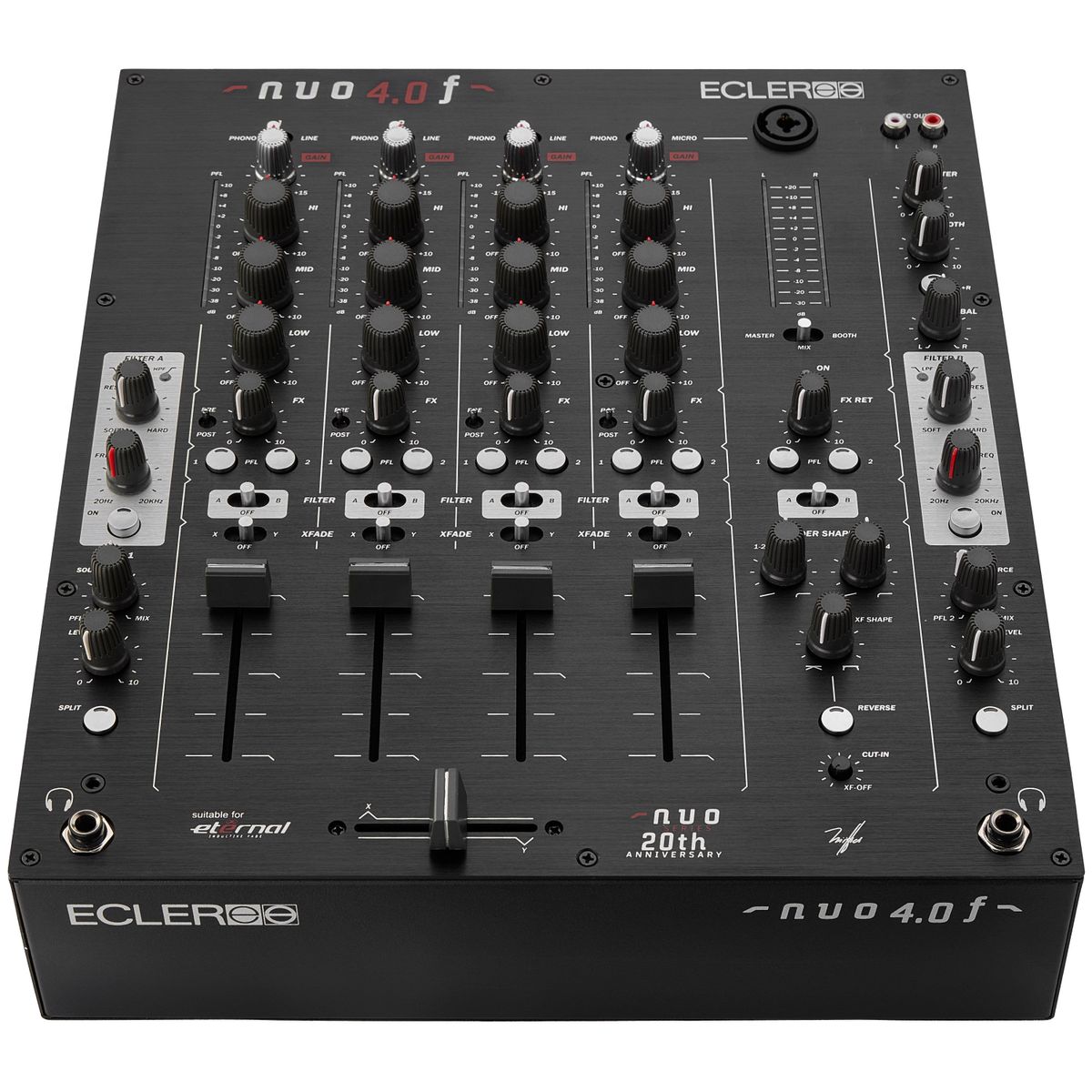
The NUO 4.0F is probably the least obvious choice here if you simply compare prices or product positioning, but that is precisely why we think it deserves its place.
It is a four-channel analogue mixer that can currently be found new for around €875, depending on the market. At that price, its combination of sound, build quality and capabilities is particularly appealing to us.
Ecler also has quite a distinctive sound, and the NUO 4.0F includes two analogue VCF filters with resonance control. It also supports external effects through FX Send, with each channel offering an individual choice of pre-fader or post-fader send.
Another unusual feature in this price range is its two independent headphone PFL systems, which are especially useful for back-to-back sets.
A straightforward, well-built unit
In our experience, it is also a mixer that ages well. We do not often see NUO 4.0Fs in the workshop with major faults, and the construction reflects that philosophy of a relatively simple analogue mixer built to last.
It does not offer the digital connectivity of a Xone:96 or the effects capabilities of a DJM, nor does it aim to. Its appeal lies elsewhere: a good analogue mixer with good filters and enough flexibility to build a serious setup without moving into considerably higher price ranges.
Who would we choose the Ecler NUO 4.0F for?
Someone looking for a four-channel analogue mixer who particularly values sound and filters and wants to get as much as possible from their budget. We also think it is a particularly interesting option for DJs using external effects or playing back-to-back sets who do not need a built-in audio interface or a large digital effects section.
Allen & Heath Xone:92 MK2
More than twenty years of a formula that still works
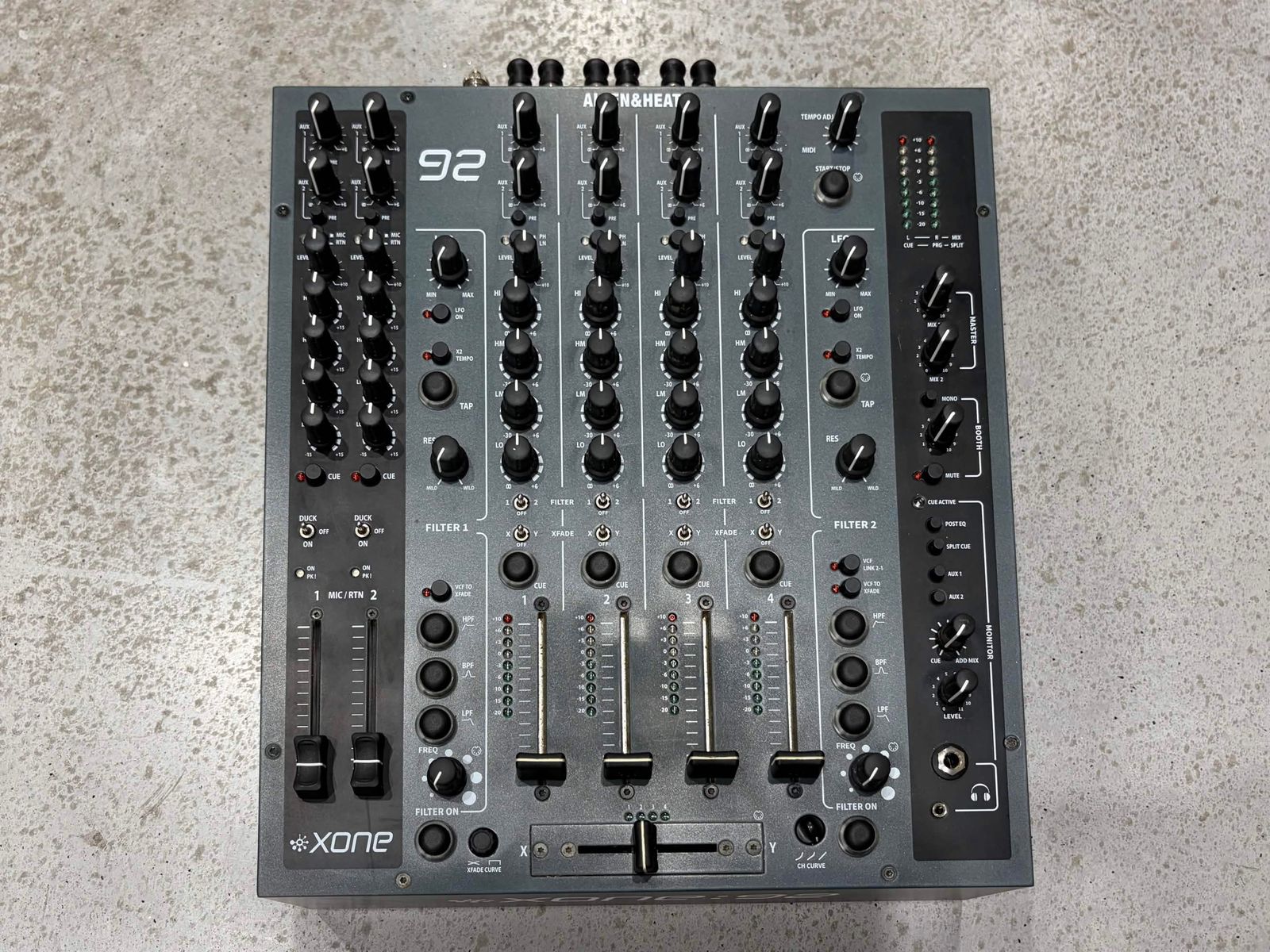
The original Xone:92 has spent more than two decades in club booths around the world. The MK2 does not try to radically change that formula, but updates some areas where the original design had room for improvement.
It remains a fully analogue mixer with Xone's characteristic four-band EQ and two VCF filters. For us, it is still one of the most interesting options for anyone who specifically wants that sound and workflow without needing the Xone:96's digital capabilities.
The MK2's changes include revised phono preamps and silent filter switching, which eliminates the characteristic click that could be heard when switching the filters on or off on the previous generation.
The faders have also been updated, while the construction continues to feel like equipment designed for many years of use.
Do you really need a Xone:96?
Not necessarily.
On the used market, a Xone:92 MK2 can be found for around €1,100 to €1,200, while a Xone:96 generally costs several hundred euros more.
If you will make use of its USB interfaces, extra routing options and connectivity, there are clear reasons to choose the Xone:96. But if you mainly want an analogue mixer for connecting players or turntables and working with Xone EQ and filters, the 92 MK2 can make much more sense.
Who would we choose the Xone:92 MK2 for?
Someone who wants a fully analogue mixer, values the classic Xone sound and workflow and would rather spend less than on a Xone:96 because they do not need its digital capabilities or additional connectivity.
Xone:92 vs Xone:92 MK2: what has changed? →
Allen & Heath Xone:96
One of our favourite analogue mixers
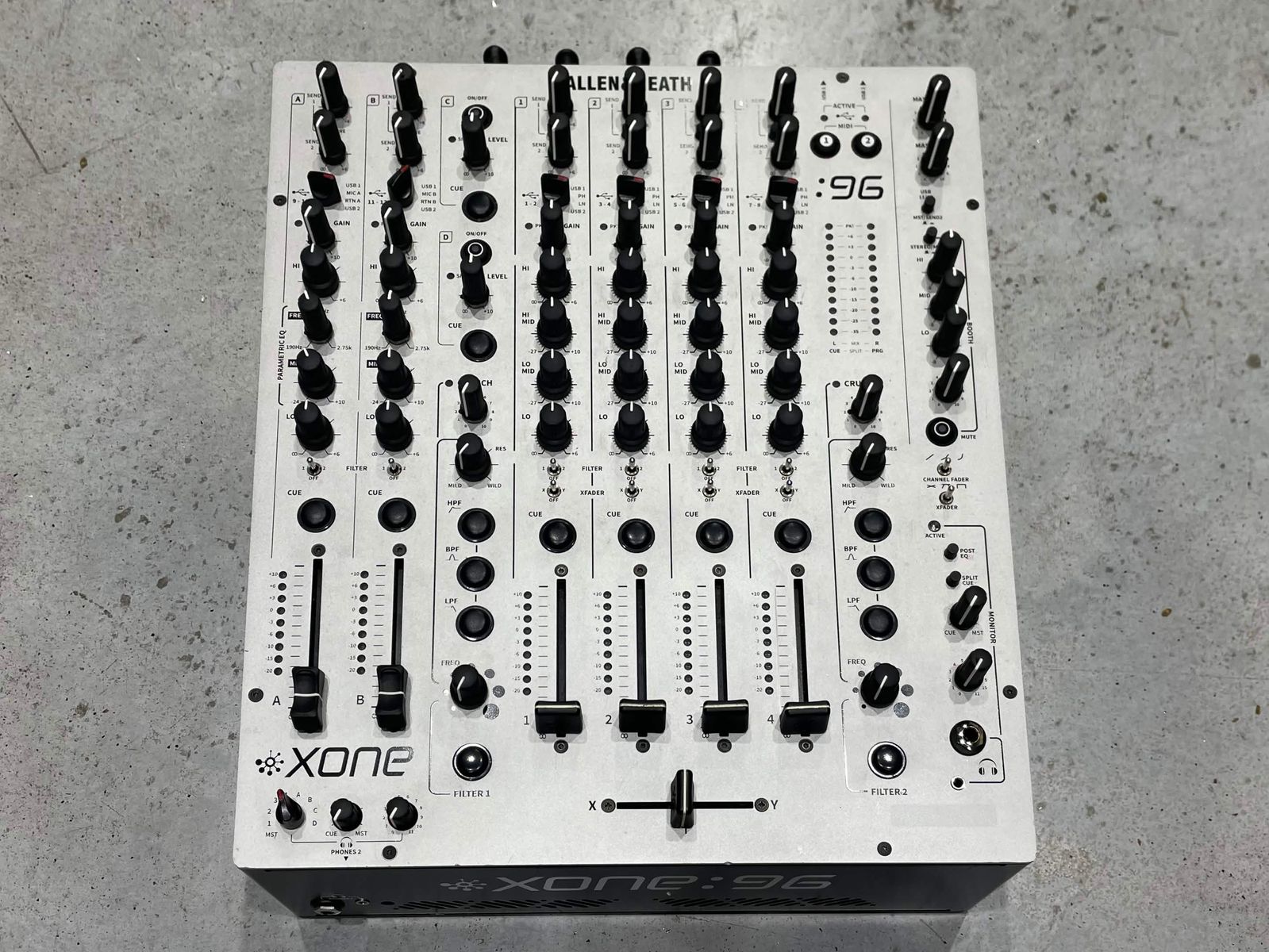
The Xone:96 takes the 92's philosophy considerably further. The heart of the mixer remains analogue, but it adds two independent USB audio interfaces and many more connection and routing options.
This makes it particularly appealing for hybrid setups, DJs working with a computer or configurations involving effects and external hardware. It also has two independent cue systems, which are especially useful for back-to-back sets.
But the main reason it is here is probably much simpler: we really love the way it sounds.
It is one of our favourite analogue fader mixers and retains the four-band EQ and filters that have long defined the Xone workflow.
What we are less keen on
We do not like everything equally. Personally, the Xone:96's fader feel is not among our favourites, particularly compared with other generations and mixers in this selection.
That does not change our overall opinion. It is very well built and, after working with many units, remains one of the professional analogue mixers we recommend most often.
Who would we choose the Xone:96 for?
Someone who wants the approach and sound of a Xone analogue mixer but needs more connectivity, USB interfaces, routing and options for integrating a computer, effects or external hardware.
If you will not use those capabilities, a Xone:92 MK2 may be a more logical purchase and save you several hundred euros.
Xone:92 vs Xone:96: differences and which to choose →
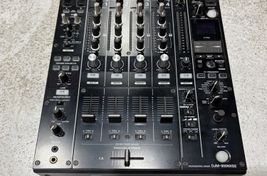
Pioneer DJ DJM-900NXS2
A professional generation that still makes a great deal of sense
For us, the DJM-900NXS2 occupies a very similar position to the CDJ-2000NXS2 among players.
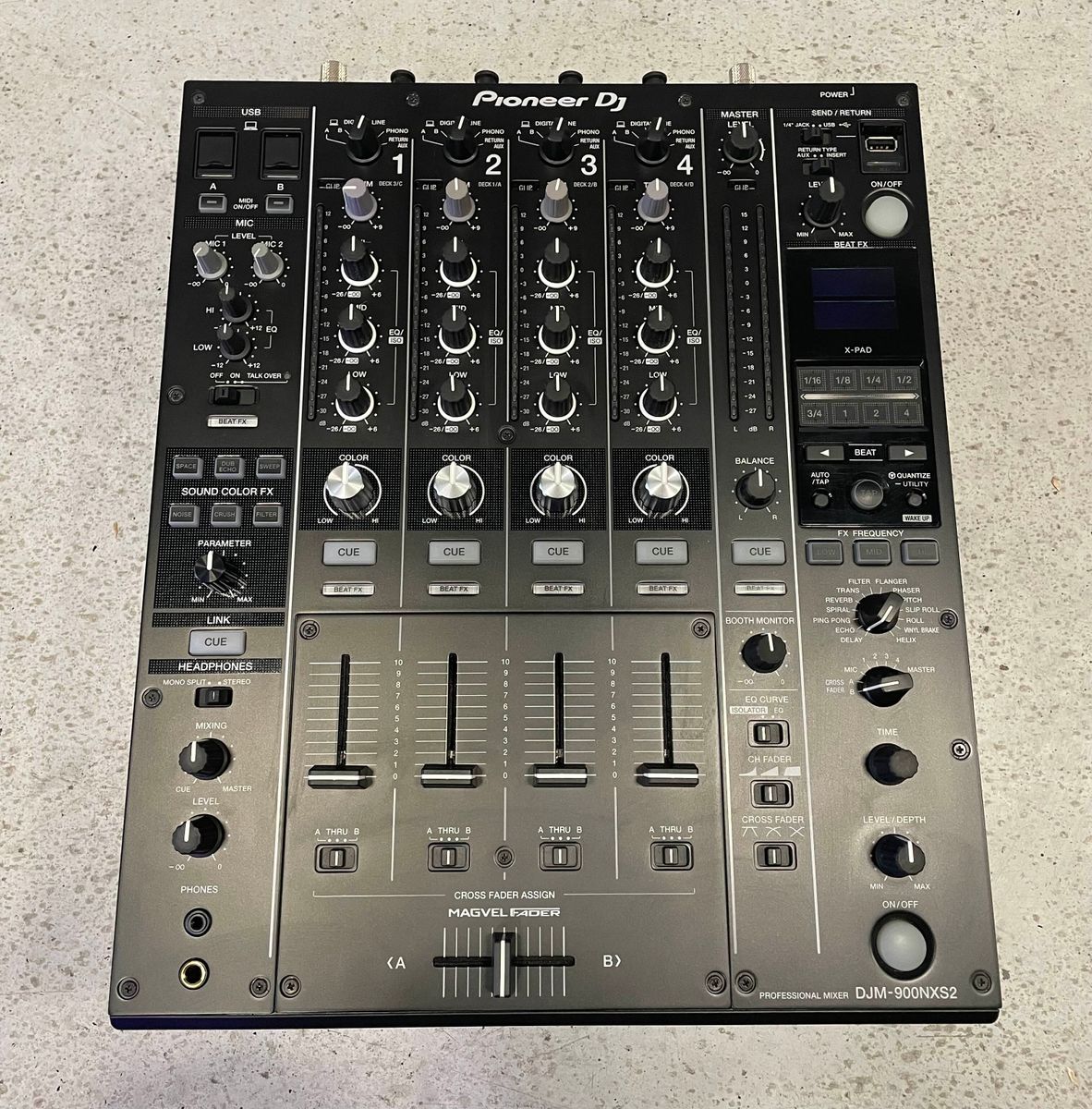
A newer generation already exists, but after years of working with these units, we still rate the whole NXS2 generation very highly for its construction, robustness and ability to withstand sustained professional use.
The DJM-900NXS2 offers four channels, an extensive Sound Color FX and Beat FX section, independent Send/Return and a built-in audio interface. It was a regular fixture in professional booths for years, and its workflow remains extremely familiar to many DJs.
The price makes a big difference to the decision
Refurbished units can currently be found on the used market for around €1,600, depending on condition and the market.
Compared with a DJM-A9, that can mean a difference of roughly €600 to €700. This is where we think the 900NXS2 still makes a lot of sense.
The A9 brings improvements and represents a later generation, but that does not mean every DJ will take advantage of them. If you mainly want a professional four-channel Pioneer mixer with effects, a 900NXS2 in good condition still offers a great deal.
From a workshop perspective, it is also a generation we know very well and consider particularly robust and repairable.
Who would we choose the DJM-900NXS2 for?
Someone who wants the classic workflow of a professional Pioneer mixer, uses built-in effects and wants thoroughly proven equipment without necessarily paying for the current generation.
DJM-900NXS2 vs DJM-A9: differences and which to choose →
Pioneer DJ DJM-V10
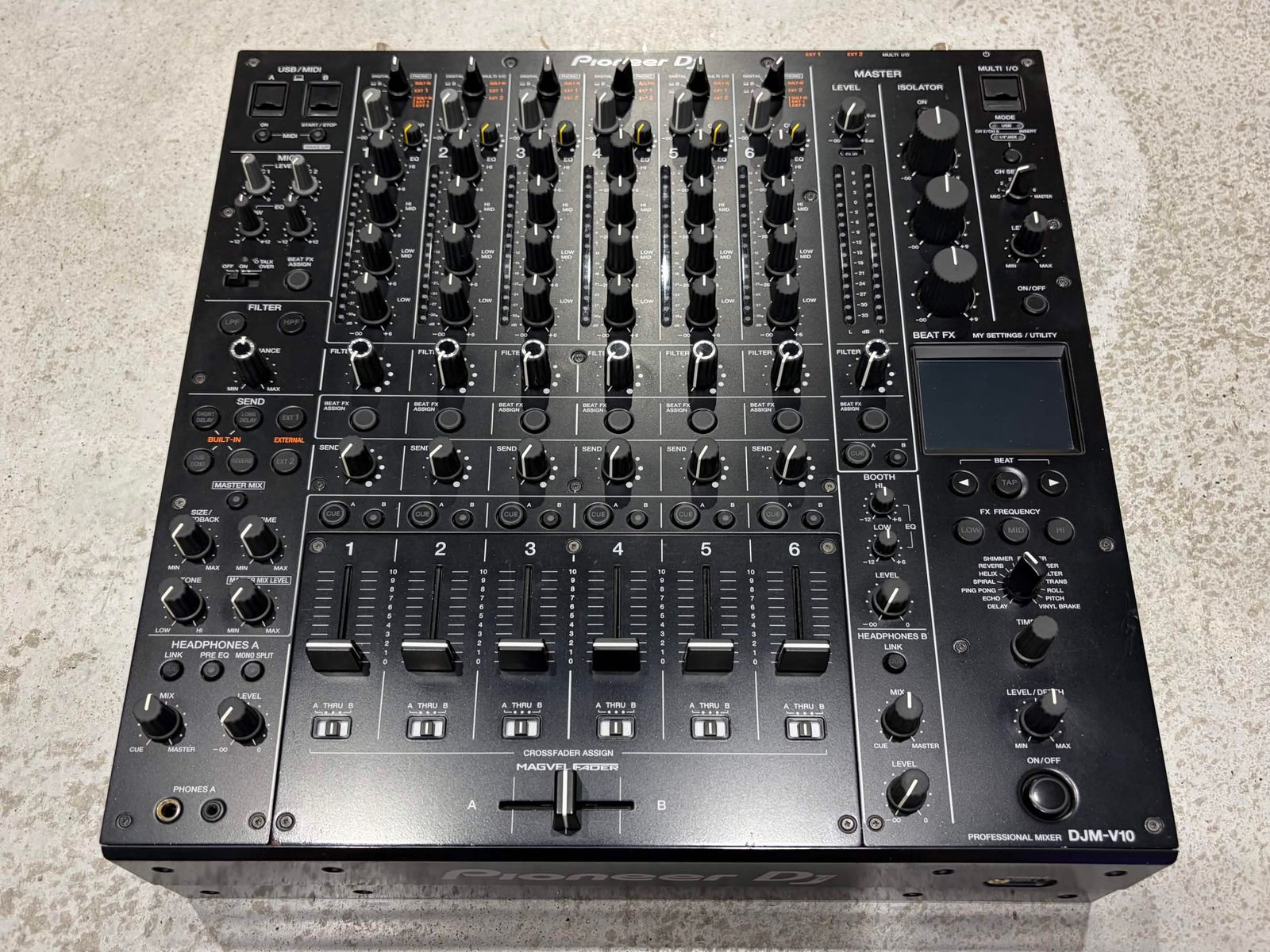
When you really want extensive possibilities
The DJM-V10 sits in a different category within this selection, not just because of its price, but because of the range of possibilities it offers.
It has six channels, four-band EQ, a dedicated filter per channel, an extensive section for working with internal and external effects and a three-band master isolator.
One of our favourite features is the individual compressor on each channel. It is particularly useful when mixing older recordings or vinyl with much more compressed modern productions. By applying it gradually, you can bring presence and punch back to a track that might otherwise get lost in the mix.
The six channels also let you build much more complex setups, combining players, turntables, drum machines, samplers and other sources without immediately running out of inputs.
An incredible mixer, but a much more complex one too
For sound and functionality, we consider it one of the most comprehensive digital mixers currently available.
That does not mean everything is perfect. We have repaired several DJM-V10s in our workshop, and one issue we have found on different units involves the Beat FX section's Level/Depth control, a component that can also suffer wear or damage on other DJM generations.
It is also a much more complex and expensive unit. If your approach to mixing uses four channels, EQ, filters and a few effects, much of what the V10 offers may never really change the way you DJ.
Who would we choose the DJM-V10 for?
DJs who genuinely want to use six channels, advanced routing, internal and external effects, per-channel compression and much broader control over the mix. Also clubs, studios and professional setups where that flexibility justifies the investment.
If you simply want a professional four-channel Pioneer mixer, a DJM-900NXS2 can still make a great deal of sense for considerably less money.
DJM-A9 vs DJM-V10: differences and which to choose →
Quick comparison
| Model | Main strength | Main compromise |
|---|---|---|
| Ecler NUO 4.0F | Value for money, sound and filters | No built-in audio interface or digital effects |
| Xone:92 MK2 | Analogue sound and a thoroughly proven formula | Less connectivity than the Xone:96 |
| Xone:96 | Analogue sound with extensive connectivity | Higher price and faders that are not our favourites |
| DJM-900NXS2 | Robustness, effects and current used price | Belongs to an earlier generation |
| DJM-V10 | Six channels, routing and creative options | Considerably higher price and complexity |
Analogue or digital mixer?
Neither is necessarily better than the other. They are two different approaches to mixer design.
Analogue mixers have a sound character and way of working that many DJs prefer, particularly in scenes where vinyl remains important. Models such as the Xone:92, Xone:96 or NUO 4.0F put much of the focus on EQ, filters and the mix itself.
Digital mixers allow effects, processing, audio interfaces and other functions to be integrated much more directly. If you regularly use Beat FX, Sound Color FX or more complex workflows, a DJM may make much more sense.
We do not consider one approach superior to the other. It depends on how you DJ and which tools you want in front of you.
Analogue vs digital DJ mixer: differences and which to choose →
Do you really need the most expensive mixer?
Not necessarily. This selection is probably a good example.
A NUO 4.0F may be all the mixer someone needs if they want four channels, good analogue sound and filters. A Xone:92 MK2 may make more sense than a 96 if you will not use its digital connectivity. And a DJM-900NXS2 still offers an extremely comprehensive professional workflow for considerably less money than later generations.
The V10 offers capabilities none of those mixers can match, but they only have value if you will actually use them.
Before buying, think about how many channels you need, whether you use effects, whether you will connect turntables or a computer, which type of EQ you prefer and the role the mixer actually plays in the way you DJ.
Is a previous-generation DJ mixer worth buying?
Yes, as long as it still meets your needs and the individual unit is in good condition.
The DJM-900NXS2 is probably the best example in this selection. The existence of a DJM-A9 does not automatically make the previous generation obsolete.
Build quality and repairability also carry a lot of weight with professional mixers. We regularly work with units that have already seen years of use and, after proper inspection and maintenance, can still provide many more years of service.
Buying refurbished DJ mixers
At Sounds Market, we work with used and refurbished DJ mixers from different brands and generations. Our Certified equipment is checked by our workshop before going on sale and comes with a one-year warranty.
This lets you compare not only models currently available new, but also older generations that can offer a particularly appealing balance of price, construction and features.
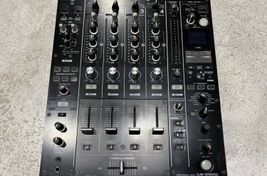
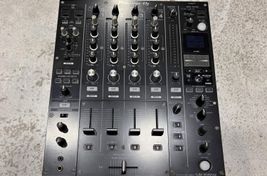
Pioneer DJM-900NXS2 currently available
See all ->
Allen Heath XONE 92 MK2 currently available
See all ->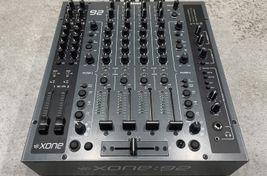
Frequently asked questions
What is the best DJ mixer in 2026?
There is no single best mixer for every DJ. A DJM-V10 offers extensive routing, effects and connectivity, while mixers such as the Xone:92 MK2 or NUO 4.0F may make more sense if you want a simpler analogue experience. The choice depends on the channel count, approach to mixing, effects, connectivity and budget you actually need.
Xone:92 MK2 or Xone:96?
The Xone:92 MK2 makes particular sense if you want a fully analogue mixer and do not need USB interfaces or the Xone:96's additional connectivity. The 96 is more comprehensive for hybrid setups, computers, external effects and more complex configurations.
Is the DJM-900NXS2 still worth buying?
In our experience, yes. It remains one of the professional Pioneer mixers we rate most highly for its construction, robustness and capabilities, especially considering its current price compared with later generations.
Is an analogue mixer better for vinyl?
Not necessarily, although many vinyl DJs prefer analogue mixers for their sound, EQ and approach to mixing. What matters most is the quality of the phono preamps, the EQ and whether the mixer's workflow suits the way you work.
How many channels do I need on a DJ mixer?
For a conventional setup with two players or turntables, two channels may be enough. Four channels offer much more flexibility for expanding the setup, while six-channel mixers such as the DJM-V10 mainly make sense when you actually work with multiple audio sources or more complex configurations.
These five mixers are not ranked from best to worst because they represent different ways of building and using a DJ setup.
The Ecler NUO 4.0F shows how much a good analogue mixer can offer without entering high-end price territory. The Xone:92 MK2 updates a formula that has proved its durability in booths for more than twenty years, while the Xone:96 extends that approach with much more connectivity and digital capability. For us, the DJM-900NXS2 remains one of Pioneer's most interesting professional generations, particularly at its current used price. And the DJM-V10 takes the concept in another direction, offering six channels and tools for much more complex mixes and setups.
The decision should not come down to which mixer has the most features or costs the most. The best mixer for your setup is the one that suits the way you mix and provides the tools you will actually use.