Pioneer XDJ-RR vs XDJ-RX2: is it worth stepping up?
Last updated: September 25, 2026
The Pioneer XDJ-RR and XDJ-RX2 are two-channel standalone systems. Both let you prepare music in rekordbox, export it to USB and play without a computer, but they occupy different levels of the Pioneer DJ range.
The XDJ-RR is the entry-level option: smaller, lighter and simpler, with a seven-inch non-touch screen, four Performance Pads per deck, fewer effects and a more basic feel to its construction.
The XDJ-RX2 is a step up in quality. It keeps the two-channel standalone concept while adding a touchscreen, eight Performance Pads per deck, more effects, stronger construction and better connections for external sources. Our workshop experience with it is excellent.
Using September 2026 used prices as a reference, the RR is around €1,000 and the RX2 around €1,500 per unit. The RR is an excellent first standalone system. If you know you want to stay with this way of DJing and can afford the extra €500, we would choose the RX2.
Sounds Market Score
Pioneer XDJ-RR: 8.0/10
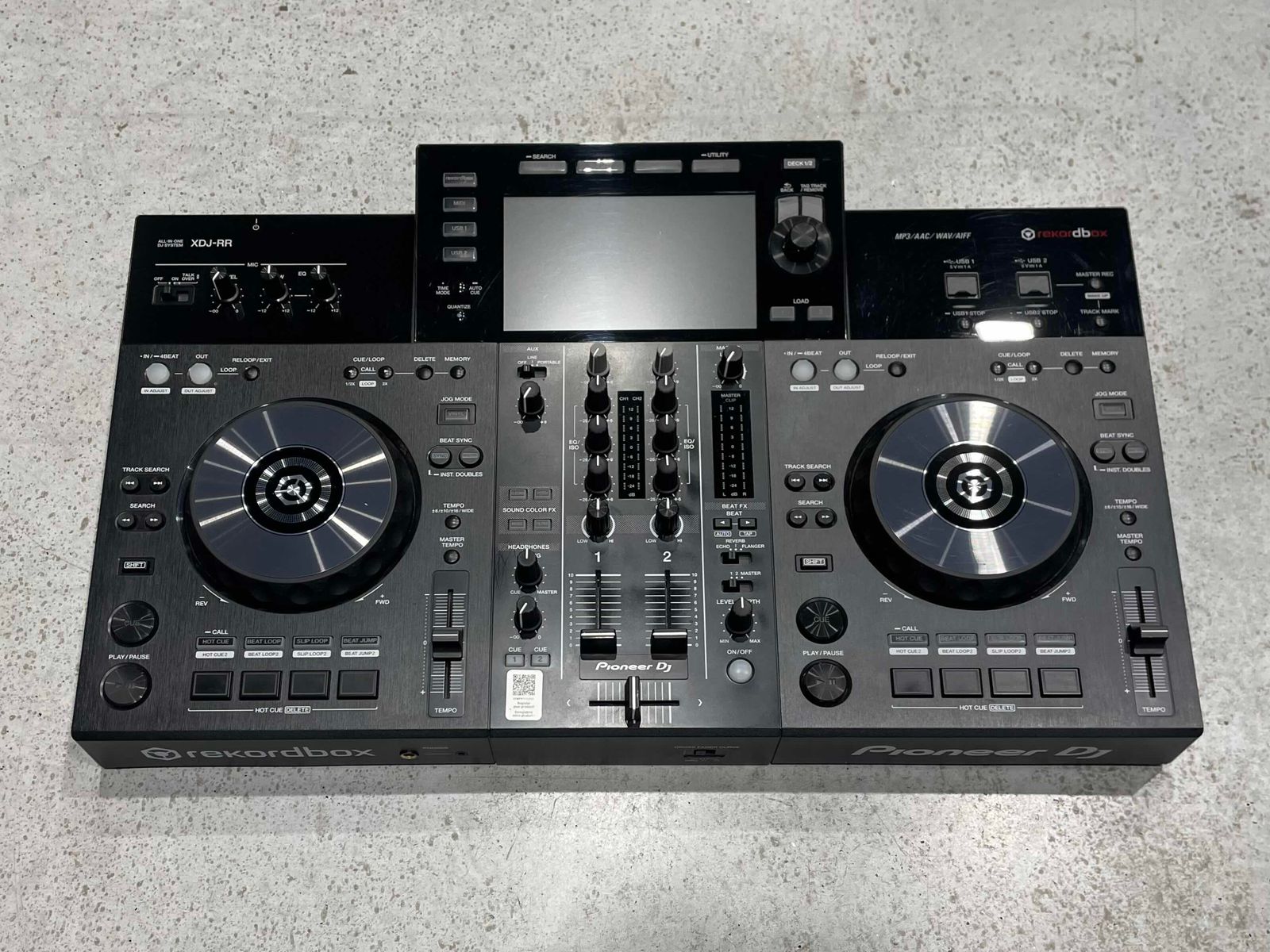
A good entry into Pioneer DJ's standalone ecosystem. Compact, light and straightforward, it plays directly from USB at the reference used price of around €1,000. Its main limitations are construction, jog wheels, effects, screen and controls, but it fulfils its role as an entry-level system well.
Pioneer XDJ-RX2: 8.8/10
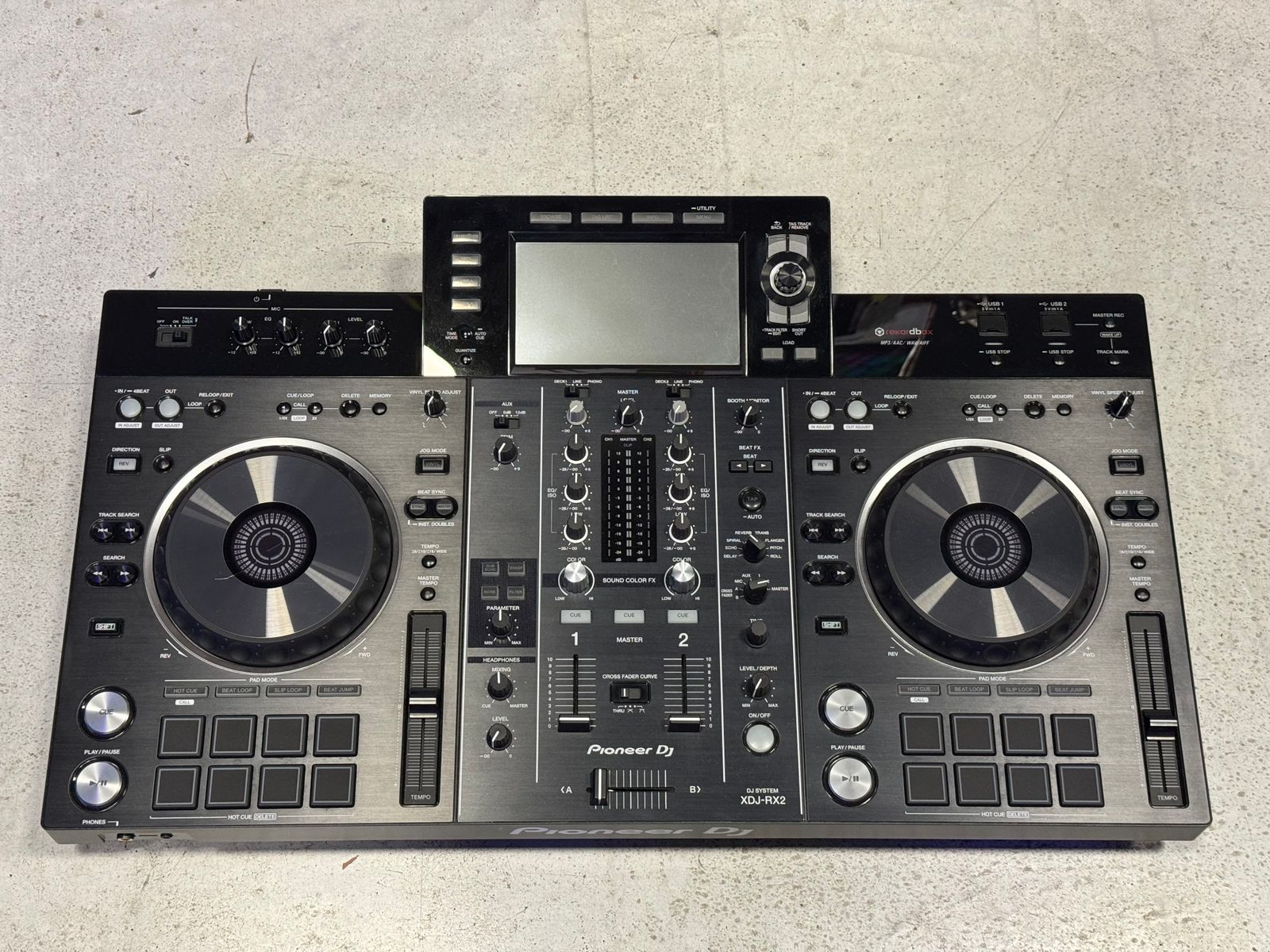
One of our favourite Pioneer DJ all-in-ones. It improves the RR's construction, faders, Performance Pads, screen, effects and connectivity while keeping a simple standalone workflow. Our workshop experience is exceptionally good. At the reference price of around €1,500, it remains one of the strongest buys in its category.
Pros and cons
XDJ-RR
Pros
- Standalone playback with two channels.
- Seven-inch screen.
- Compact, light and easy to transport.
- Four Performance Pads per deck.
- Good overall reliability.
- Affordable entry into Pioneer DJ standalone systems.
- Around €1,000 used at the reference prices.
Cons
- Non-touch screen.
- Lightweight construction and small jog wheels.
- More basic pad feel and simpler faders.
- Only three Beat FX.
- Limited scope for connecting external sources.
- Its entry-level positioning is evident in the controls and materials.
XDJ-RX2
Pros
- Standalone playback.
- Seven-inch touchscreen.
- Eight rubber Performance Pads per deck with a better feel.
- Eight Beat FX and four Sound Color FX.
- Considerably sturdier construction.
- Very good faders and excellent reliability in our experience.
- Two PHONO/LINE channel inputs for external players or turntables.
- Operation closer to higher-end Pioneer DJ equipment.
Cons
- Around €500 more at the reference prices.
- Still limited to two mixer channels.
- Larger and heavier.
- Jog wheels remain smaller than the full-size wheels on professional models such as the CDJ-2000NXS2.
XDJ-RR vs XDJ-RX2: key differences
| Feature | XDJ-RR | XDJ-RX2 |
|---|---|---|
| Standalone operation | Yes | Yes |
| Channels | 2 | 2 |
| Screen | 7 inches, non-touch | 7-inch touchscreen |
| Performance Pads | 4 per deck | 8 per deck |
| Beat FX | 3 | 8 |
| Sound Color FX | 4 | 4 |
| External inputs | AUX | AUX + 2 × PHONO/LINE |
| Construction | Lightweight | Sturdier |
| Weight | 5.2 kg | 9.1 kg |
| Approximate used price, September 2026 | €1,000 | €1,500 |
| Sounds Market Score | 8.0/10 | 8.8/10 |
A step up you can feel
The difference goes beyond a list of touchscreen, pad, effect and connection upgrades. The RR is compact and functional, but its exterior materials and controls feel simpler.
The RX2 feels designed for a more demanding user. When you use the two side by side, the construction and component quality make the higher positioning apparent.
Build quality: a clear advantage for the RX2
The RR uses plenty of plastic and has a light construction. At approximately 5.2 kg, it is easy to carry, although the overall feel is more basic.
The RX2 weighs around 9.1 kg and feels considerably more solid. We also prefer its channel faders. The RR's faders do their job, but they are not top-tier components in our view. Our long-term experience with the RX2's faders is very good.
Performance Pads: more pads and a better feel
The RR has four Performance Pads per deck, while the RX2 doubles that to eight.
The material and response also differ. The RR's pads feel firmer and more plastic-like. The RX2's rubber finish is more comfortable and closer to that of higher-end Pioneer DJ equipment.
If you frequently use Hot Cues and performance functions, the RX2 offers a noticeably better experience.
Screen: the same size with different operation
Both screens measure seven inches, but only the RX2 is touch-sensitive. Direct interaction with supported functions makes some browsing and search operations quicker.
It is still a seven-inch screen, rather than the later RX3's 10.1-inch display. Within this comparison, however, the RX2 provides a more advanced experience.
Effects: a meaningful difference
The RR has three Beat FX:
- Echo.
- Reverb.
- Flanger.
It also provides four Sound Color FX:
- Filter.
- Noise.
- Dub Echo.
- Pitch.
That can be enough if you mainly use Filter, Echo and Reverb. The RX2 offers eight Beat FX and four Sound Color FX, with an effects section closer in approach to professional Pioneer DJ mixers.
For DJs who actively work effects into their sets, the extra choice matters.
Jog wheels and controls
Neither has full-size jog wheels like those on a CDJ-2000NXS2. Both are more compact all-in-one systems, which is reflected in the wheels.
Even so, the RX2's construction and overall control layout feel better to us. Its jog wheels have caused very few problems in our workshop. Even after years of use, we rarely need to intervene for serious bearing or adjustment issues.
This is one reason we rate the RX2 so highly.
More scope to expand your setup
The RR mainly serves as a simple complete system: connect your USB drives and use its two decks and mixer. It has an AUX input, but limited expansion options.
The RX2 has two PHONO/LINE inputs, one for each channel, for connecting players or turntables directly to the mixer. You can start with it as an all-in-one, then add Technics turntables, another player or other external sources later.
These inputs use the existing mixer channels. The RX2 remains a two-channel mixer. Its flexibility nevertheless makes it better suited to becoming the centre of a developing setup.
What changes when you are actually playing?
Both share the same foundation: prepare in rekordbox, export to USB and play without a computer. The RX2 improves the interaction during a set through better fader and pad feel, touchscreen access to supported functions and more effects.
The RR covers learning the standalone workflow. The RX2 offers more comfort and flexibility for someone who already uses it regularly and wants to keep the system for years.
The Sounds Market workshop's view
Our experience with the RX2 is particularly positive. It is one of the Pioneer DJ all-in-ones that gives us the most confidence when working with used units.
The faders are good, the jog wheels age well and we have not identified a major structural weakness that makes it especially troublesome. Play/Cue switches, buttons and other components can naturally wear after years of use, but these are generally the maintenance issues we expect from used DJ equipment.
The RR also has good overall reliability and is not a model we consider problematic. Its simpler faders, pads, controls and materials reflect its entry-level position.
For construction and workshop experience, our preference is clearly the XDJ-RX2.
Second-hand prices
Our September 2026 reference prices per unit are approximately:
- XDJ-RR: €1,000.
- XDJ-RX2: €1,500.
These are indicative used-market figures that can change with condition, accessories and the market. The gap is roughly €500, a significant amount for a first standalone purchase.
Here, we think the difference between the products is substantial enough to consider the upgrade seriously.
Is the RX2 worth an extra €500?
If you simply want to start playing without a computer and your budget is around €1,000, the RR already meets that need.
If you can afford more and know you want to keep using a standalone system, we would pay the difference. The improvement includes construction, faders, pads, controls, effects and external-source flexibility, alongside the touchscreen.
In our opinion, the step from RR to RX2 is more significant than the later step from RX2 to RX3.
Who should choose each model?
Choose the XDJ-RR if...
- It is your first standalone system.
- You want to leave the computer behind.
- Your budget is around €1,000.
- Two channels are enough.
- You do not use many effects.
- Low weight and easy transport are priorities.
- You want to learn the rekordbox + USB workflow.
- You prefer a simple starting point.
Choose the XDJ-RX2 if...
- You already have DJing experience.
- You want a higher-level standalone system.
- You value better materials and controls.
- You use Hot Cues and Performance Pads extensively.
- You want a broader effects section.
- Construction and reliability are priorities.
- You want to connect external players or turntables.
- You want a system with more room for long-term use.
- You can afford roughly €500 more.
Comparison ratings
Category ratings are relative to the models in this guide. The Sounds Market Score is an independent overall assessment of each product and stays consistent across comparisons.
| Category | XDJ-RR | XDJ-RX2 |
|---|---|---|
| Features | 7.5/10 | 9/10 |
| Screen / browsing | 7.5/10 | 9/10 |
| Effects | 7/10 | 9/10 |
| Build quality | 7.5/10 | 9.5/10 |
| Faders and controls | 7.5/10 | 9.5/10 |
| Reliability | 8.5/10 | 9.5/10 |
| Portability | 9.5/10 | 8/10 |
| Value for money | 9/10 | 9/10 |
| Sounds Market Score | 8.0/10 | 8.8/10 |
The Sounds Market Score is an editorial judgement, not an arithmetic average of the categories or a ranking against the other model.
What other comparisons tend to miss
- The higher level is apparent in use. The RX2's construction, controls and components change how the unit feels.
- The €500 difference buys more than specifications. Faders, pads, effects, screen and external connections give it more scope for long-term use.
- Our workshop confidence comes from working on many units. RX2 issues tend to involve ordinary wear rather than a clear structural weakness.
Pioneer XDJ RR currently available
See all ->
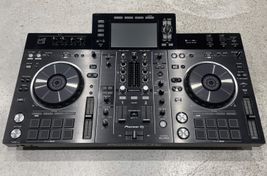
Pioneer XDJ RX2 currently available
See all ->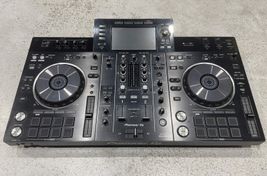
Frequently asked questions
Is the XDJ-RX2 better than the XDJ-RR?
Yes. It sits higher in the range and offers better construction, a touchscreen, more Performance Pads, more Beat FX and better external-source connectivity.
Can both work without a computer?
Yes. Both let you prepare music in rekordbox, export it to USB and play directly without a computer.
What is the difference between their screens?
Both are seven inches, but the RX2's screen is touch-sensitive and the RR's is not.
Which has better Performance Pads?
The RX2. It has eight pads per deck versus four on the RR. In our experience, its pad materials and feel are also considerably better.
Which has more effects?
The RX2, with eight Beat FX compared with the RR's three. Both have four Sound Color FX.
Which can connect external players or turntables?
The XDJ-RX2 has two PHONO/LINE inputs, one per mixer channel. The RR has an AUX input but much less scope for expansion. The RX2 still has two mixer channels.
Which is more reliable?
Our experience with both is good, but the RX2 is one of our workshop's highest-rated models. It is sturdy, and we encounter relatively few serious faults.
Is it worth paying €500 more for an RX2?
For a first step into standalone DJing, the RR may be enough. If you know you want to keep this type of setup and can afford the difference at the September 2026 reference prices, we would pay the extra for the RX2.
Which would Sounds Market buy?
The XDJ-RX2, if the budget allows. The RR is a good starting point, but the RX2's improvements in construction, controls and flexibility justify the difference for someone planning years of use.
Thinking of upgrading your equipment?
If you own an XDJ-RR, XDJ-RX2 or other DJ equipment, you can sell it directly to Sounds Market or put it towards your next purchase.
Conclusion: XDJ-RR or XDJ-RX2?
Both deliver the change many DJs want when leaving a computer-based controller: prepare a USB drive in rekordbox, connect it and play.
The XDJ-RR is a light, simple and relatively affordable starting point. The XDJ-RX2 offers a more substantial step up in construction, faders, pads, touchscreen operation, effects and external-source connectivity. Our workshop experience with it is exceptionally positive.
If you want a system to use for years and your budget allows the roughly €500 difference at the reference prices, we would choose the RX2. If you are starting out and that sum matters, the RR remains a very reasonable option.
- Most complete: XDJ-RX2.
- Best construction: XDJ-RX2.
- Best faders and controls: XDJ-RX2.
- More effects: XDJ-RX2.
- Best for expanding your setup: XDJ-RX2.
- Lighter and easier to transport: XDJ-RR.
- Best standalone entry on a smaller budget: XDJ-RR.
- Our choice if the budget allows: XDJ-RX2.