The 5 best DJ turntables of 2026
Last updated: October 1, 2026
The best DJ turntable depends on your budget, your setup and the way you DJ.
Our five picks for 2026 range from Audio-Technica and Reloop to three Technics generations, considering features, construction, stability and repairability.
Choosing a DJ turntable is not simply about comparing torque, pitch range or price. In fact, this is probably one of the DJ equipment categories where specifications tell only part of the story.
Some modern turntables offer more torque, much wider pitch ranges and more configuration options than models designed decades ago. At the same time, some of those classic models are still working in booths and studios after twenty, thirty or even forty years.
For this selection, we have chosen five turntables we consider particularly interesting in 2026, taking different budgets and approaches to DJing into account.
Three of the five are Technics, and that is no coincidence. If budget were not a constraint, we would personally choose one of the Technics in this selection. They are our overall favourites, we know very well how they age after years of use, and they belong to a family that has been a benchmark in professional booths for decades.
That does not mean you need a Technics to DJ with vinyl. Audio-Technica and Reloop offer considerably more affordable alternatives and, in some specific respects, even greater capabilities than classic Technics.
They are not ranked from best to worst. The aim is to find which turntable makes the most sense for your budget, your setup and the way you DJ.
If you are still unsure what you need for a complete vinyl setup, see our vinyl DJ equipment buying guide.
Quick answer
| If you want... | Our pick |
|---|---|
| To start DJing with vinyl for around €450 | Audio-Technica AT-LP140XP |
| Plenty of features and excellent value for money | Reloop RP-7000 MK2 |
| The definitive classic Technics | Technics SL-1200/1210MK2 |
| A more refined version of the classic formula | Technics SL-1200/1210MK5 |
| A modern, precise, current Technics | Technics SL-1200/1210MK7 |
How we chose these five DJ turntables
At Sounds Market, we work with used and refurbished DJ equipment every day. With turntables, we have particular experience with different generations of Technics SL-1200 and SL-1210.
Our workshop lets us assess things that are difficult to learn from a spec sheet alone: how a turntable ages after decades of use, which components tend to need maintenance, how repairable it remains and how its construction actually affects everyday use.
But we also wanted to include more affordable alternatives.
Not everyone who wants to start DJing with vinyl needs to spend close to €1,000 per turntable. There are currently options around €450 to €550 with direct drive, useful pitch ranges and enough capability to build a serious DJ setup.
That is why we have considered construction, motor, stability, pitch, vibration isolation, repairability, features and price.
Audio-Technica AT-LP140XP
A relatively affordable way to get serious about vinyl
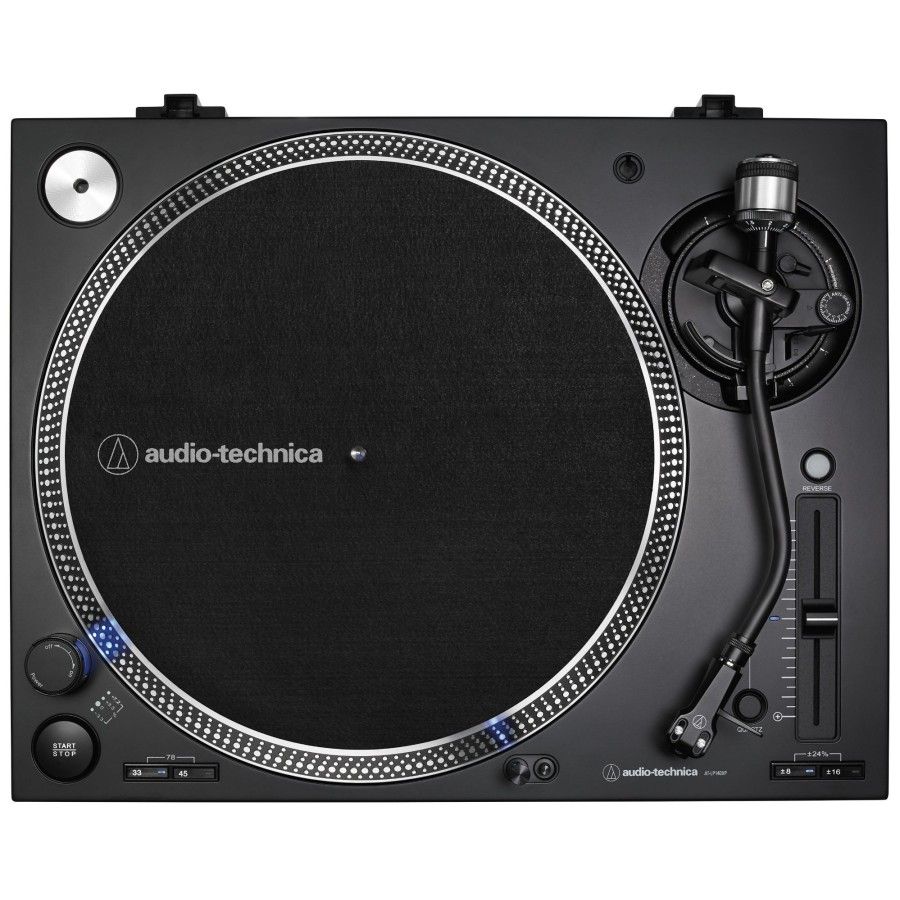
The Audio-Technica AT-LP140XP is the most affordable turntable in our selection and a particularly interesting option for someone who wants to start DJing with vinyl without immediately approaching Technics prices.
For approximately €450, it offers a direct-drive motor, starting torque above 2.2 kgf·cm, three speeds, Reverse and pitch ranges of ±8, ±16 and ±24%.
It also includes an AT-XP3 cartridge and headshell, which should be factored into the real cost of building a setup from scratch.
And this raises an interesting point.
On paper, the Audio-Technica even outperforms the Technics MK2 and MK5 in some areas. Both classic Technics are limited to ±8% pitch, while the AT-LP140XP offers a considerably wider range.
This can be particularly useful when mixing genres with large BPM differences.
Does that make it better than a Technics?
No.
This is precisely the kind of comparison we try to avoid in these guides.
The Audio-Technica has lighter construction and does not have the decades of professional use behind it that we can assess with classic Technics.
Nor do we have enough experience repairing this model at Sounds Market to comment on its long-term reliability from our own experience.
We include it because its features and price make it, in our view, one of the most interesting ways to get serious about vinyl DJing without a much larger investment.
Who would we choose the Audio-Technica AT-LP140XP for?
Someone who wants to start DJing with vinyl, needs a genuine DJ turntable with direct drive and pitch control, and wants to keep the budget around €450 per unit.
If you can stretch the budget a little, the next model in this selection is particularly worth considering.
Reloop RP-7000 MK2
Plenty of features for the money
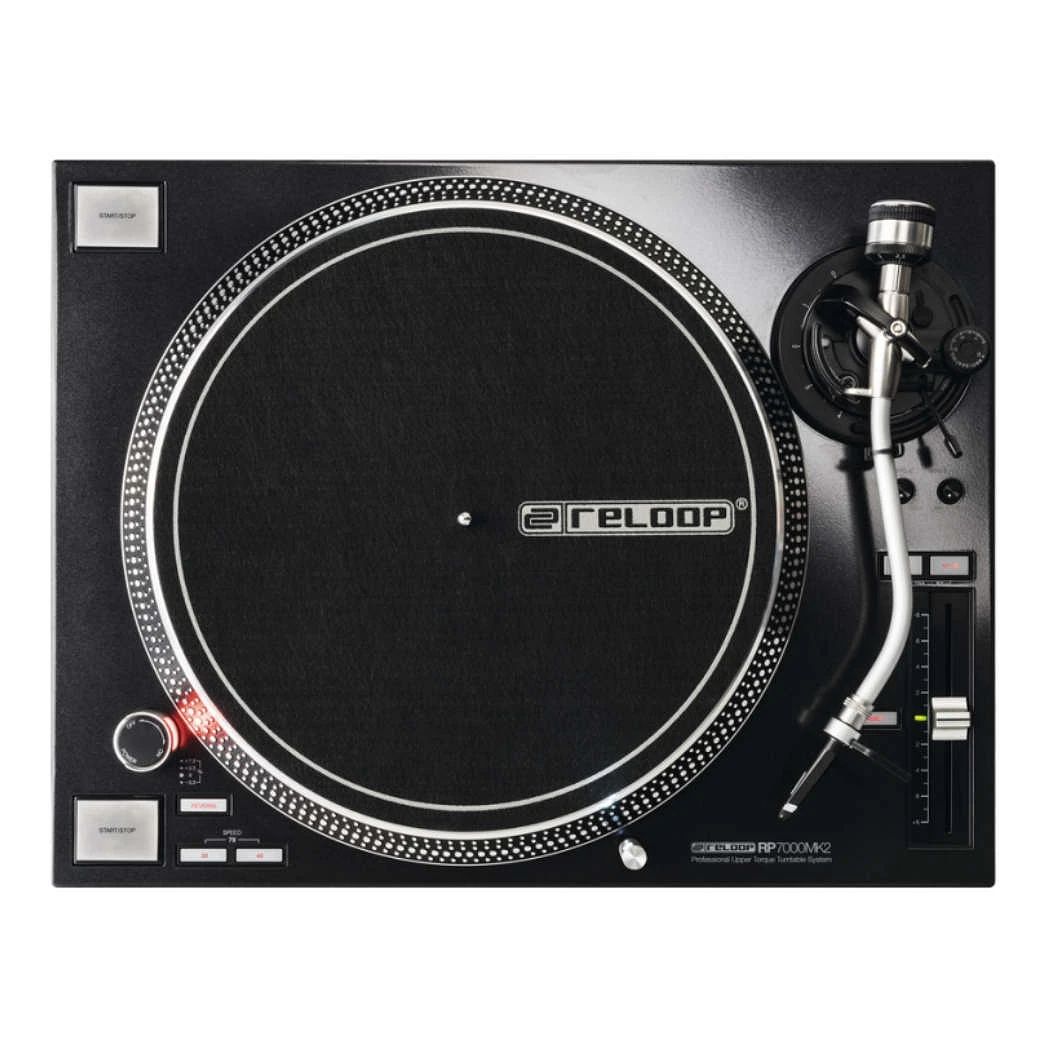
The Reloop RP-7000 MK2 is one of the turntables that currently makes the most sense to us if you want to stay well below Technics prices.
At approximately €550, it offers a considerable step up in capabilities.
Its torque can be adjusted between approximately 2.8 and 4.5 kg·cm, and braking behaviour can also be adjusted.
It offers 33⅓, 45 and 78 rpm, Reverse and pitch ranges of ±8, ±16 and up to ±50%.
That ±50% may seem excessive for conventional vinyl DJing, and in many cases it will be. But it shows how configurable the Reloop is, and it can make more sense in DVS setups with tools such as Key Lock.
It also has detachable RCA and power connections and weighs approximately 11.7 kg, bringing it much closer to the feel of a heavy professional unit than the Audio-Technica.
More torque does not automatically mean a better turntable
On paper, the RP-7000 MK2 has far more torque than classic Technics.
But that does not automatically make it better either.
The MK2 and MK5 offer around 1.5 kg·cm and, after decades of professional use, we know perfectly well that this is enough for beatmatching, cueing and DJ use.
Motor behaviour, stability and the feel when manipulating the platter matter just as much as the maximum figure.
Some DJs who have used Technics pitch controls for years may also prefer their behaviour to the digital pitch on modern alternatives.
We do not have enough first-hand experience with the RP-7000 MK2 to assess its durability after years of use from our workshop, so we prefer not to make claims we cannot support with our own experience.
We include it because its price, construction and features make it an alternative that is hard to ignore.
Who would we choose the Reloop RP-7000 MK2 for?
Someone who can spend a little more than the Audio-Technica costs and wants more torque, heavier construction and many more configuration options.
In terms of features for the money, we think it is one of the most interesting choices in this selection.
Technics SL-1200/1210MK2
The turntable that turned a formula into a standard
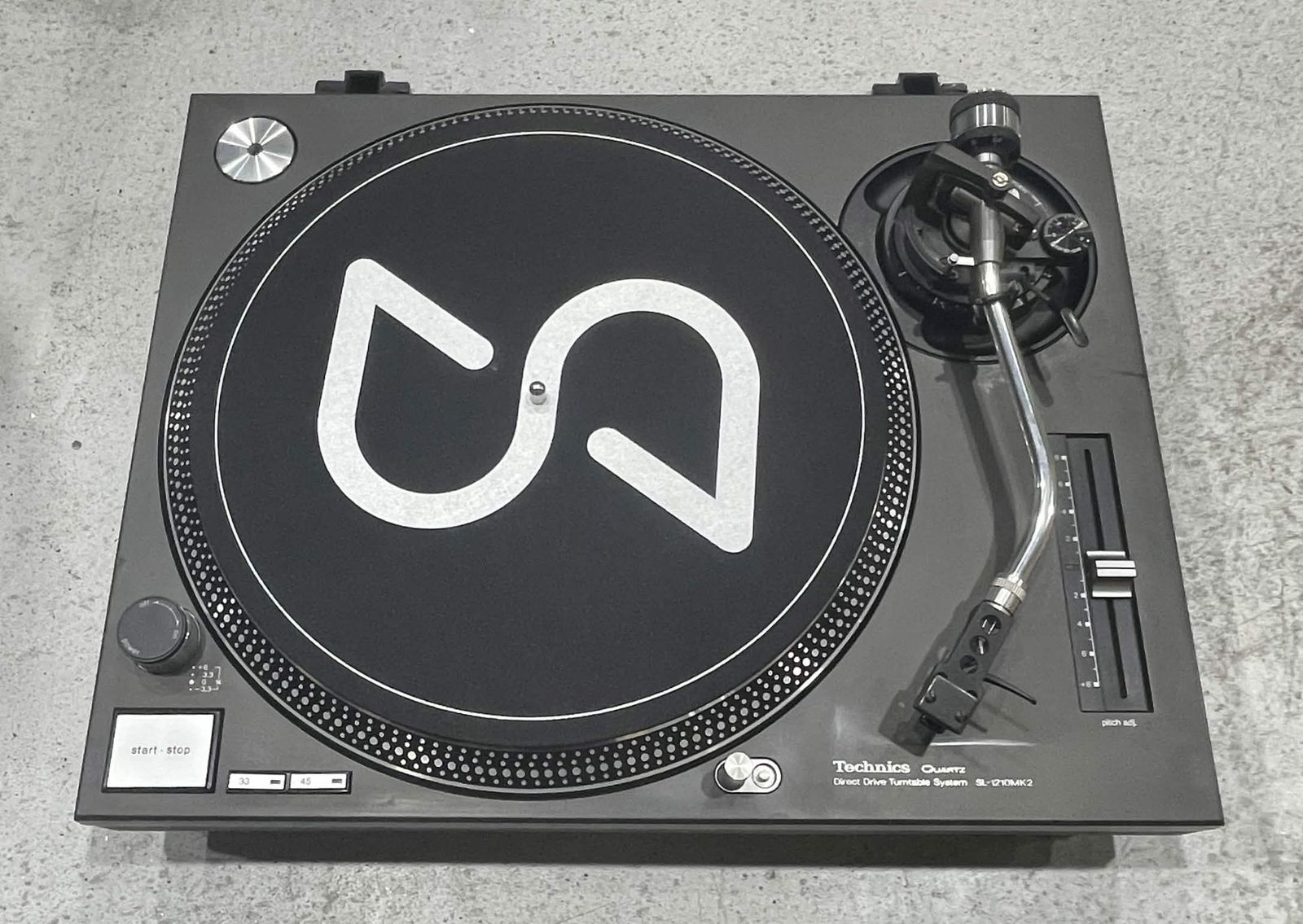
Few pieces of DJ equipment need less introduction than the Technics SL-1200/1210MK2.
It was launched in 1979, and we still find units working perfectly today.
But we have not included it simply out of nostalgia or because it is one of the most important turntables in DJing history.
We have included it because it is still an exceptionally good turntable in 2026.
Browse Technics SL-1200/1210MK2
Construction that is hard to match
This is where classic Technics start to distinguish themselves from many modern alternatives.
The MK2 and later classic generations were manufactured in Japan with an exceptionally robust approach to construction. The MK2 uses a structure with a die-cast aluminium upper section and a base specifically designed to absorb vibration.
It was not simply a heavy casing.
The construction was designed to provide stability even in booths with high sound pressure levels, sub-bass and vibration.
The result is a turntable weighing approximately 12.5 kg, with a solidity that is hard to explain through specifications alone.
Decades later, we can see just how well that approach worked.
In our workshop, we have worked on many MK2s manufactured decades ago that continue to work perfectly after a proper inspection and service.
Deteriorated RCA cables, ground connections, pitch calibration and modifications made by previous owners are relatively common jobs.
What matters is what we do not find: we have not identified a recurring structural flaw that makes the MK2 destined to fail after a certain number of years.
There is also still a huge ecosystem of original, used and compatible spare parts.
Together, these factors keep the MK2 among the most repairable turntables you can buy today.
Where does it show its age?
Mainly in its features.
The MK2 has a pitch range of ±8%, while all the modern alternatives in this selection offer wider ranges.
It also has the characteristic centre click in the pitch control and no separate Pitch Reset.
These are real limitations.
That is why we do not think an MK2 is automatically better just because it says Technics.
But if we find a good unit around €800, we would personally rather buy a properly serviced MK2 than some similarly priced modern alternatives.
Who would we choose the Technics MK2 for?
Someone who wants the classic Technics experience, prioritises construction, stability, repairability and durability, and does not need a pitch range wider than ±8%.
It is perfectly suitable for both home and club use. If you plan to play out regularly, getting used to how a Technics behaves also has a clear advantage: this turntable family has been a benchmark in professional booths for decades.
Technics SL-1200/1210MK5
The classic Technics, but a little better
The MK5 did not reinvent the MK2.
And it probably did not need to.
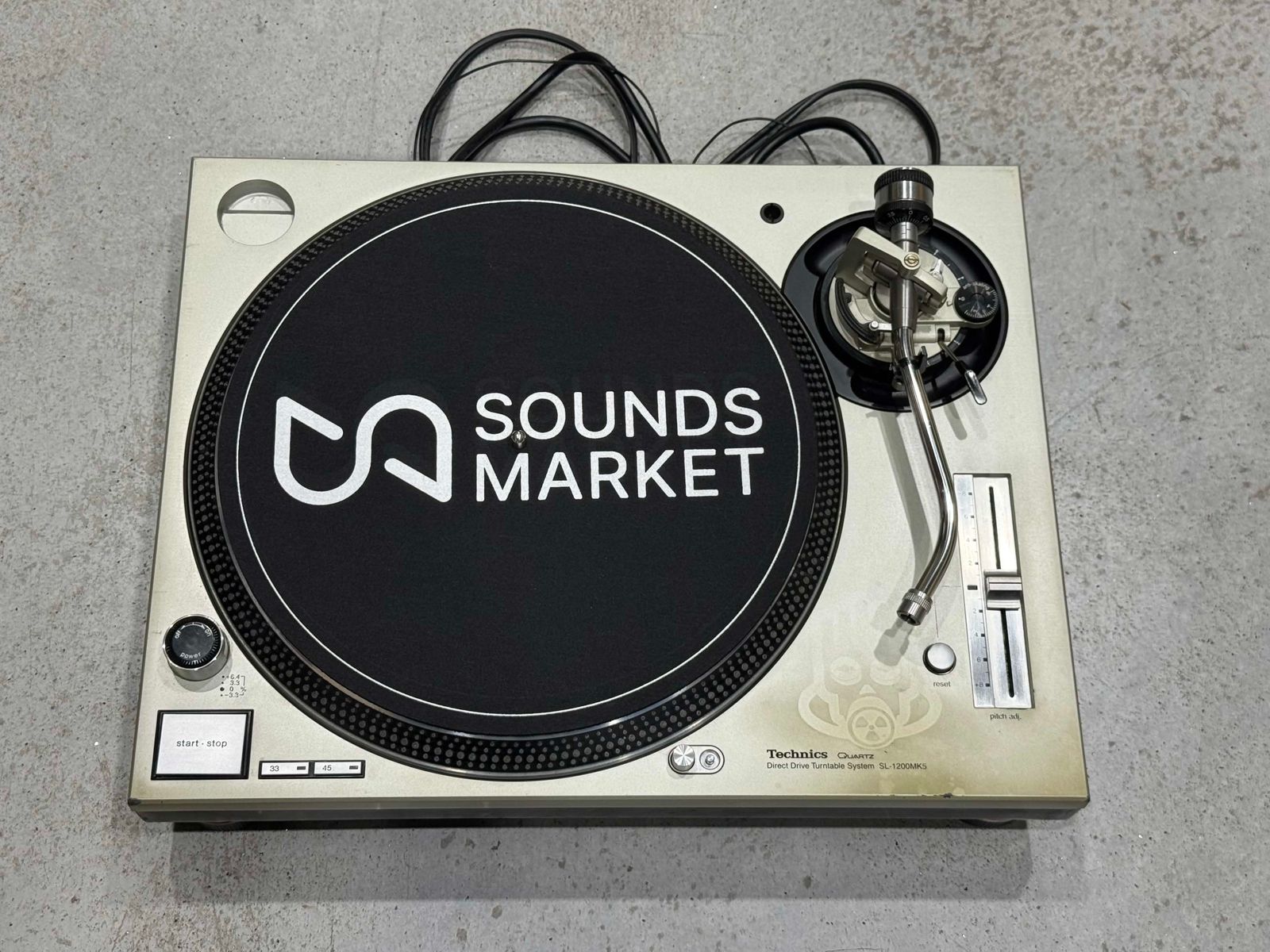
It keeps the construction philosophy of the classic Technics generations almost unchanged, while refining some details that are especially relevant to DJs.
Browse Technics SL-1200/1210MK5
The most important difference concerns the pitch control.
The MK5 removes the MK2's centre click and adds Pitch Reset, allowing quartz lock to be activated independently of the fader's physical position.
It also extends the anti-skating range and adds other small refinements.
The motor and core specifications remain very similar to the MK2: approximately 1.5 kg·cm of torque and ±8% pitch.
Our choice compared with the MK2
If we have an MK2 and an MK5 in the same condition, with a reasonable price difference, we prefer the MK5.
It is simply a slightly more refined product.
But the important part of that sentence is “in the same condition”.
These units may have decades of use behind them. We consider a beautifully preserved, properly serviced MK2 a much better buy than an MK5 that has been heavily used for years and has an unknown history.
That is why, on the used market, the condition of the individual unit matters far more than the generation name.
Technics SL-1200MK2 vs SL-1200MK5: differences and which to choose
Who would we choose the Technics MK5 for?
Someone who wants to retain the construction, feel and behaviour of classic Technics but prefers some of the small improvements introduced as the platform evolved.
Personally, it is one of our favourite classic Technics.
Technics SL-1200/1210MK7
What if you want a modern Technics?
Here, the decision changes completely.
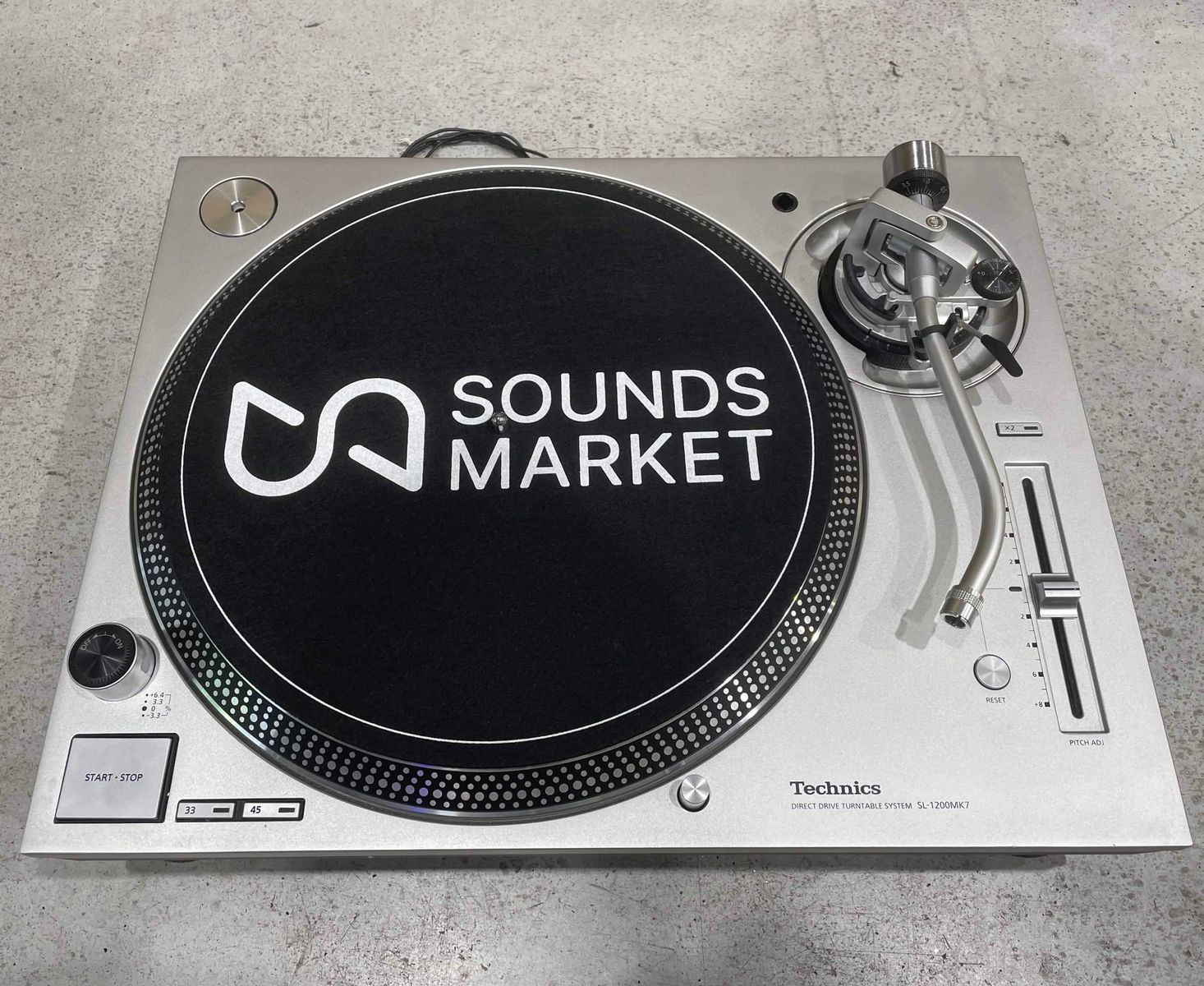
The MK7 retains the general SL-1200 philosophy, but technically it is a modern unit.
It uses a coreless direct-drive motor, digital pitch with ±8 and ±16%, Reverse, 78 rpm, adjustable torque and braking, and detachable RCA and power connections.
Browse Technics SL-1200/1210MK7
It is also considerably lighter: approximately 9.6 kg compared with roughly 12 to 12.5 kg for the MK5 and MK2.
This creates one of the most interesting debates around today's Technics.
More modern does not automatically mean better in every situation
The MK7 is extremely precise.
We think it is fantastic for home use, and if you are comparing a used MK2 around €800 with a new MK7 around €950, we completely understand choosing the MK7.
You get a new unit, current technology, a wider pitch range, Reverse and many more configuration options.
But some DJs still prefer the MK2, MK5, M3D or M5G for certain booths.
One reason is the construction.
Classic Technics are considerably heavier, and their structure gives an exceptional sense of mass and isolation. In environments with high sound pressure, sub-bass and vibration, that behaviour can be particularly appreciated.
That does not make the MK7 a poor club turntable. Quite the opposite.
It simply means Technics changed how it was built, and some DJs still prefer the feel and mass of the classic generations.
Technics SL-1200MK2 vs SL-1200MK7: classic or new generation
Who would we choose the Technics MK7 for?
Someone who wants a current, new and extremely precise Technics.
For a home setup in particular, we consider it one of the most complete options available today.
It is perfectly suitable for club use too, although we understand why some DJs still prefer the heavier construction of the MK2, MK5 or M5G.
Quick comparison
| Model | Pitch | Approx. weight | Main strength | Main compromise |
|---|---|---|---|---|
| Audio-Technica AT-LP140XP | ±8 / ±16 / ±24% | 10 kg | Price and features | Simpler construction |
| Reloop RP-7000 MK2 | ±8 / ±16 / ±50% | 11.7 kg | Features and configurability | Shorter track record |
| Technics MK2 | ±8% | 12.5 kg | Construction, durability and repairability | Limited pitch and older design |
| Technics MK5 | ±8% | ~12 kg | Refinement of the classic Technics | Still limited to ±8% |
| Technics MK7 | ±8 / ±16% | 9.6 kg | Precision and modern technology | Considerably lighter construction |
Which DJ turntable should you buy for your budget?
Around €450
The Audio-Technica AT-LP140XP.
It lets you get into vinyl DJing with direct drive, different pitch ranges and an included cartridge without approaching the price of traditional professional options.
Around €550
The Reloop RP-7000 MK2.
For roughly €100 more, you get heavier construction, much more torque and more configuration options.
Around €800 to €900
This is where used classic Technics start to come into the picture.
We consider a properly serviced MK2 an exceptional buy if construction, stability and repairability are your priorities.
If we find an MK5 for a reasonable additional cost and in comparable condition, we prefer the MK5.
Around €950 and buying new
The Technics MK7.
Particularly for home use, it is hard to ignore what it offers: precision, modern technology, a wider pitch range and the option of buying a completely new unit.
Why are there three Technics in our selection?
Because choosing five different brands just to make the list more varied would not make sense.
After working with numerous SL-1200 and SL-1210 generations, we consider the MK2, MK5 and MK7 three entirely justifiable purchases in 2026.
And if budget were not an issue, we would personally end up buying one of the Technics too.
It is not simply about the brand or nostalgia. We like how they behave, know very well how they are built and age, and getting familiar with them makes sense for a DJ who plans to play out: the SL-1200/1210 family has been a benchmark in booths for decades.
The three models do not, however, represent exactly the same choice.
The MK2 represents the classic formula and a relatively accessible way into traditional Technics.
The MK5 retains that construction and refines some details that matter to DJs.
The MK7 represents the modern alternative: technically more advanced, more configurable and available new.
For a closer look at all the generations:
Technics SL-1200 MK2 vs M3D vs MK5 vs M5G vs MK7: complete comparison
Is a modern turntable better than a classic Technics?
Not necessarily.
The Audio-Technica and Reloop offer wider pitch ranges than the MK2 and MK5. The Reloop also offers much more torque on paper.
The MK7 adds modern technology that is also absent from the classic generations.
But the MK2 and MK5 have something much harder to put in a table: decades of proven durability, exceptional construction and outstanding repairability.
In our workshop, we have worked on Technics that have been running for decades and remain entirely recoverable.
That is why we do not think this decision can be reduced to specifications.
Is a used DJ turntable worth buying?
In this category especially, it can be very worthwhile.
A properly maintained classic Technics can keep working for decades.
The problem is that two apparently identical MK2s can have completely different histories. One may have spent decades in a home, while another has worked in clubs for years, been transported constantly or undergone previous modifications and repairs.
That is why individual condition is fundamental.
If you are buying one yourself, we have prepared a guide to the main points we recommend checking before paying.
How to buy used DJ equipment: what to check before buying
At Sounds Market, we also inspect and refurbish our Certified equipment before putting it on sale and offer a one-year warranty.
Technics SL 1200 & 1210MK5 currently available
See all ->
Frequently asked questions
What is the best DJ turntable in 2026?
There is no single best turntable for every DJ.
An Audio-Technica AT-LP140XP can make a lot of sense for someone starting out with around €450, while a Reloop RP-7000 MK2 offers more features for a little more money.
If budget allows, we personally prefer Technics. The MK2 and MK5 stand out especially for construction, durability and repairability, while the MK7 offers a much more modern and configurable alternative.
Technics MK2 or MK5?
If both are in comparable condition and the price difference is reasonable, we prefer the MK5.
It removes the centre click from the pitch control, adds Pitch Reset and improves some adjustments while retaining the approach and construction of the classic generations.
Technics MK2 or MK7?
For home use and at similar prices, we would usually choose the MK7. It is new, extremely precise, has a wider pitch range and offers much more modern technology.
For certain booths, we completely understand preferring the MK2 for its greater mass, construction and response to vibration.
Is ±8% pitch enough for DJing?
For a great many DJs, yes.
Classic Technics have been used professionally with ±8% for decades.
However, a wider range lets you mix tracks with larger BPM differences. If you regularly need that flexibility, modern models such as the AT-LP140XP, RP-7000 MK2 or Technics MK7 offer a clear advantage.
How much torque does a DJ turntable need?
More torque does not necessarily mean better.
High torque can provide a more aggressive response and recover speed quickly after manipulating the platter, which is especially useful for certain techniques.
But the MK2 and MK5 have proved over decades that approximately 1.5 kg·cm is perfectly sufficient for professional DJ use.
Reloop RP-7000 MK2 or Technics?
It mainly depends on budget and what you value most.
The Reloop offers plenty of torque, very wide pitch ranges and numerous configuration options for considerably less money.
A classic Technics offers construction and durability we know from decades of use, along with a huge repair and spare-parts ecosystem.
If budget were not a constraint, we would personally choose Technics. If you want to maximise features while keeping the price considerably lower, the RP-7000 MK2 makes a lot of sense.
Is buying a Technics over 30 years old a good idea?
Yes, provided it is in good condition or has been properly inspected and serviced.
Age alone does not determine a Technics' condition.
In our workshop, we see older units that are exceptionally well preserved and others that need considerable work because of decades of use, modifications or lack of maintenance.
The five turntables in this selection represent quite different ways to start or continue DJing with vinyl.
The Audio-Technica AT-LP140XP shows that you can now start with a fairly well-equipped direct-drive turntable around €450. The Reloop RP-7000 MK2 offers a considerable step up in features without yet approaching Technics prices.
Beyond that, we enter a family we know particularly well.
If our budget allows, we would personally end up choosing Technics. Not because they always have the best specifications on paper, but for the overall combination of feel, construction, precision, reliability, repairability and the platform's professional track record.
The MK2 remains exceptional not out of nostalgia, but because its construction, stability and durability still make a real case for it decades after launch.
The MK5 refines that formula with small improvements that make it our choice of the two when price and condition are comparable.
And the MK7 offers a modern interpretation of the Technics concept, with more possibilities, a wider pitch range and excellent precision.
That takes nothing away from the Audio-Technica or Reloop. They are in this selection precisely because they let you start out or build a very good vinyl setup for considerably less money.
The aim is not to buy the most expensive turntable, but to understand what you gain as the price rises and decide whether you really need it.